In-depth look at GIK Acoustics’ new diffuser
- Escrito por Redacción ISP Music & Producer
- Publicado en ENGLISH
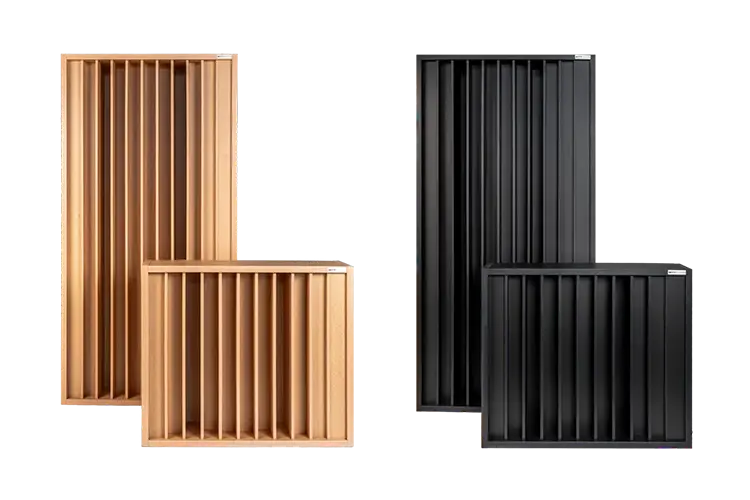
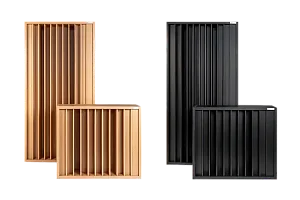
GIK Acoustics introduces the Q11D, a new diffuser designed for already acoustically treated rooms looking to take the next step, maintaining a sense of width and depth without sacrificing control or clarity.
In rooms like this, the most important issues have already been solved: early reflections are under control and bass decay is generally where it should be. This results in greater clarity, better mix translation, and a space that finally stops “fighting” the people working in it. However, relying only on absorption can throw off the balance: the room improves, but it may feel too closed-in and overly dry, with less sense of space. Over time, even without fatigue, spending long hours in this kind of environment can feel somewhat artificial and limiting.
That is the goal of Q11D: to take rooms that already sound good and are well controlled one step further—turning them into truly excellent spaces.
Why Q11D?
After years designing studios, control rooms and listening spaces, we kept running into the same point. Once decay times are under control, continuing to add only absorption often leads to diminishing returns. Because high-frequency absorption is generally more efficient than bass absorption, treble fades faster than low frequencies, and the room can begin to feel unnaturally dry and sterile.
At this stage, the key is how the sound evolves over time: what happens to sound energy after the first reflections. What matters is whether decay remains balanced across the spectrum or, for example, if the highs die out too quickly.
Q11D is designed to address these balance issues directly. It allows late-arriving energy to remain in the room, but reshaped in a way that adds depth, width and spatial clarity, rather than creating comb filtering, harshness or listening fatigue.
Q11D solutions
Q11D is most effective in rooms that are already well controlled and need to preserve spatial information rather than “kill” reflections. A common example is the rear wall of a listening room or control room, where reflections arrive later and play an important role in perceived depth and envelopment. Absorbing that energy often makes the room feel smaller and more claustrophobic, even if clarity improves. In this position, Q11D reshapes that late energy so it contributes to width and depth without interfering with stereo imaging or timing cues.
Another scenario where Q11D performs well is on the front wall of a listening room using dipole speakers. Dipoles intentionally radiate a significant amount of energy backwards toward the front wall, and that reflected energy becomes part of the listening experience. Fully absorbing it can work against the speaker’s intended presentation, while leaving it untreated can introduce comb filtering and blur the image. Q11D allows that energy to remain in the room, but distributes it in a controlled way, supporting a stable soundstage and reducing destructive interference.
Q11D is also a strong fit in live recording rooms with acoustic instruments, where preserving a sense of space is part of the instrument’s sound. In these environments, the goal is not maximum “deadness”, but controlled liveliness. Diffusion helps maintain natural ambience and greater dimensionality, preventing strong reflections from dominating microphones or creating uneven room tone. Used alongside appropriate absorption, Q11D helps strike that balance: an expressive room, but with controlled behaviour.
Why one-dimensional diffusion matters in real rooms
In real rooms, not theoretical ones, diffusion needs to be predictable. One-dimensional quadratic diffusion focuses on redistributing energy laterally. This matters because most rooms already have vertical limitations. Ceiling height, speaker geometry and ceiling-mounted treatment all limit how much vertical scattering is desirable.
By diffusing sound horizontally (left/right, assuming standard vertical mounting), one-dimensional diffusers preserve width and spatial stability without introducing vertical artefacts that could interfere with imaging or clarity.
One-dimensional diffusion is also inherently more efficient than two-dimensional diffusion, producing more overall diffusion even though it operates on a single plane.
This makes one-dimensional diffusion especially effective on rear walls and in the back half of rooms, where reflections arrive later and should be shaped rather than eliminated. The Q11D was designed with these realities in mind.
When diffusion makes sense (and when it doesn’t)
Diffusion is not a shortcut. If early reflections are still strong or bass decay is not under control, absorption should be the first step.
Diffusion only starts to make sense once the room’s decay behaviour is already within a reasonable range. At that point, it is no longer about reducing sound, but about shaping it.
In short, the Q11D is positioned as a fine-tuning tool for rooms that are already well treated but need to recover a sense of space without losing precision. Its one-dimensional diffusion approach keeps and redistributes late-arriving energy in a controlled way, improving depth, width and naturalness in environments such as listening rooms, control rooms or recording spaces. A solution designed not to “fix” basic problems, but to refine the final result and push acoustic performance one step further.