The new tools and features of Pro Tools 2024.6
- Escrito por Redacción ISP Music & Producer
- Publicado en ENGLISH
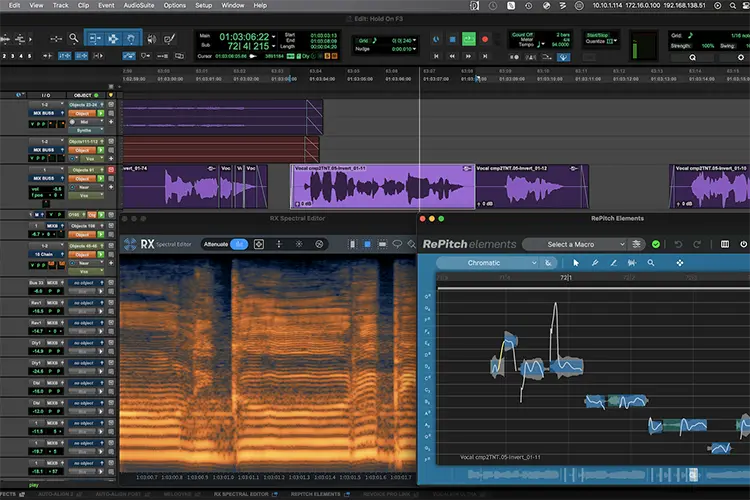
The Pro Tools 2024.6 software update is now available and introduces significant new capabilities for both music and audio post customers, including ARA 2 support for solutions from iZotope, Synchro Arts, and Sound Radix, two new included MIDI effect plugins from Mixed In Key, and session export for Media Composer.
The release also delivers Dolby Atmos® enhancements, MIDI note visualization, improved searching and importing of Session Data, Memory Locations enhancements, and more.
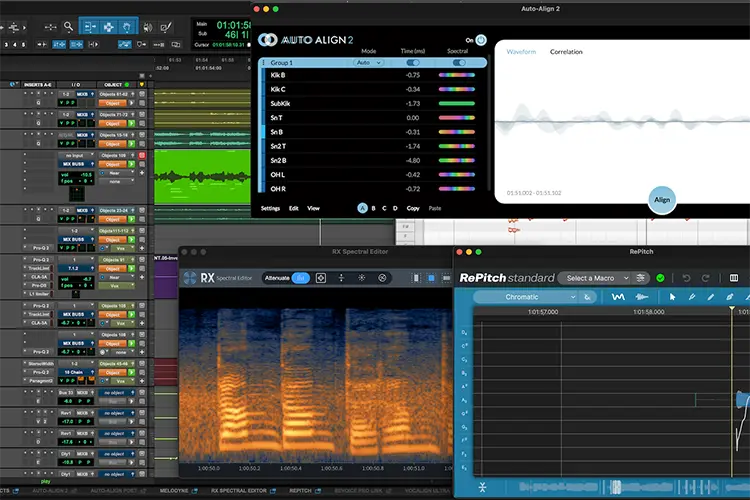
ARA 2 support
Version 2024.6 adds ARA 2 support for six plugins, including iZotope RX Spectral Editor, Synchro Arts RePitch, VocAlign and Revoice Pro, as well as Sound Radix Auto-Align 2 and Auto-Align Post 2. Along with the existing Celemony Melodyne integration, ARA 2 support allows users to leverage these tools much more quickly and easily in Pro Tools without having to go through a back-and-forth audio process. Additionally, customers with active subscriptions and perpetual upgrade plans will automatically receive iZotope RX 11 Spectral Editor and Synchro Arts RePitch Elements as part of this release.
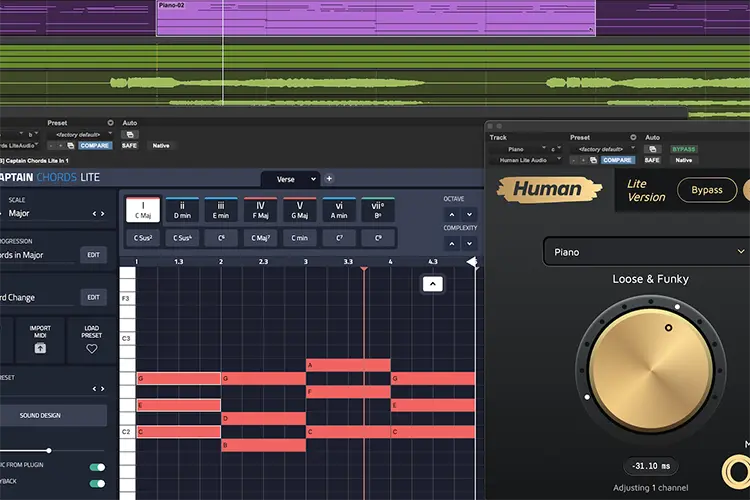
New MIDI plugins included
Version 2024.6 offers Pro Tools customers two new MIDI plugins from Mixed In Key: Captain Chords Lite and Human Lite. Captain Chords Lite is a perfect companion for composition that allows users to choose any key and create chords immediately, with full control over inversions, substitutions, and passing tones. Captain Chords Lite also includes a library of chord progressions and rhythms to experiment with and create something amazing. The Human Lite plugin adds the organic feel of live musicians to quantized MIDI performances, loops, and even full tracks. The Captain Chords Lite and Human Lite plugins are available exclusively to all Pro Tools customers with active subscriptions and perpetual upgrade plans.
Session data import
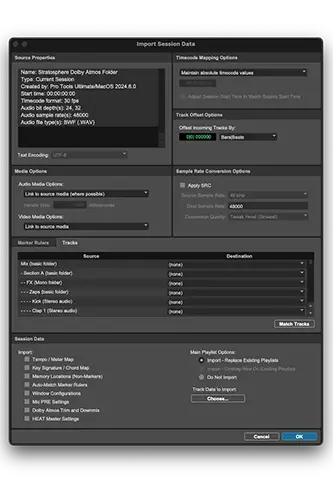
Importing session data is a fundamental part of Pro Tools used by almost everyone for transferring data between sessions. As more functionalities are added to Pro Tools, sessions have grown larger and more complex over time, and the requirements for importing session data have also increased. We had reached a point where even finding a place to add a single checkbox was difficult, so it became clear that broader changes were needed.
 |
|
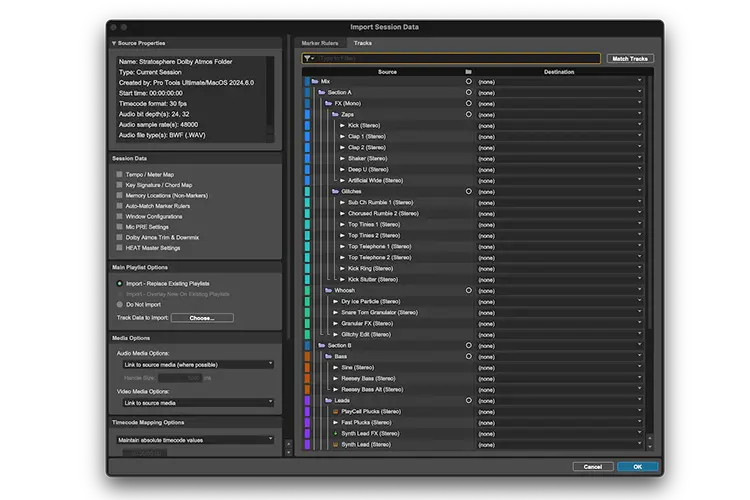
The changes originated from one request: allow the ability to filter inactive tracks. To understand how we facilitated that request, it helps to understand a bit about what happens internally. When a session is saved, Pro Tools stores a small amount of summary data. This way, it can review the surface of the session much faster when opening it. The existing session summary already gave us information about track types, widths, and names, so we just had to add “inactive tracks” to the list. But since we added new data to the summary, we thought about other types of data that could be useful—track color, hidden status, frozen status, are there clips on the track? And what about automation or markers? This allows us to visualize more information about tracks, as well as filter the data. Since track names were another obvious element to filter, we added them.
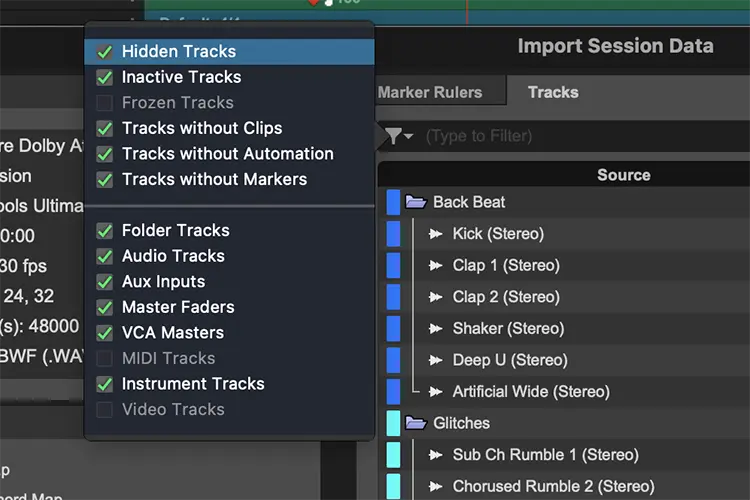
With filtering, you can limit the number of tracks to which “match tracks” is applied. This means you can filter a set you want to match, press the “match tracks” button, change your filter, and then match again, without destroying your previous match.
After these changes, we took a look at the window. Since there wasn’t enough space for the track list, we moved it to the right side and made it horizontally resizable. We also optimized the overall layout of the window and made the source properties section collapsible, to make it easier to adjust more import options on the screen.
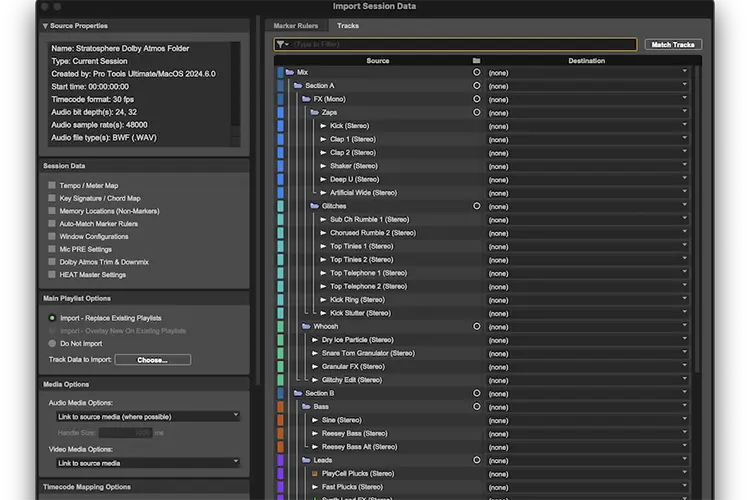
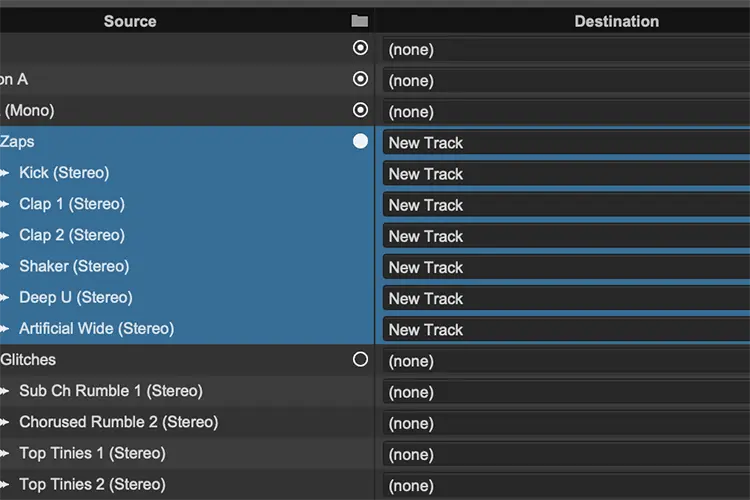
Using text had taken up a lot of space to describe track types, so we used established iconography for track types instead. This gave us folder icons, which you can click, just like in the edit and mix windows. Another common request we heard was that when importing a folder track, the members were not included. Although we didn’t want to force this to always happen, we added a new button next to each folder, allowing you to import it and all its members. The great thing about this is that you can even close the folder to hide the members while still being able to import them all.
Smart show and hide
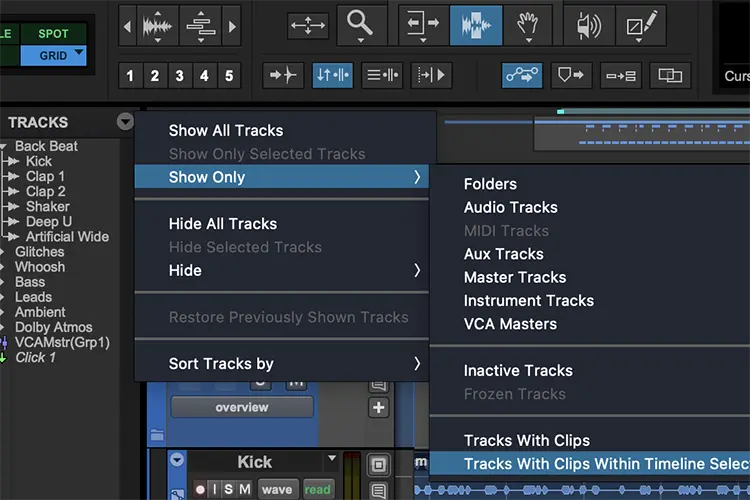
The work we did to filter track data in the session data import window also opened up several possibilities in the edit window. You now have the option to show only tracks that have clips on them, even just within a selection or at the insertion point. This way, if you have a session built from a template with tracks containing empty material, you can easily find the tracks contributing to the mix. And yes, this command only filters empty tracks that have the capacity to have clips (Audio, Instrument, MIDI, and Video).
It is now possible to expand tracks containing automation. This will help you find tracks with automation breakpoints as well as portions of tracks with gradual changes without a breakpoint.
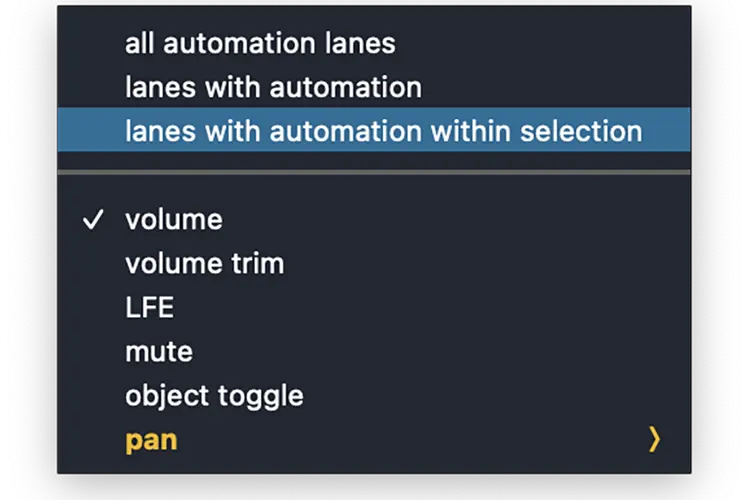
All these commands now have assignable keyboard shortcuts, including a shortcut for the “Restore Previously Shown Tracks” command.
Search and filtering
The addition of the text filter in session data import also opened the door for more search and filtering functionality throughout the application.
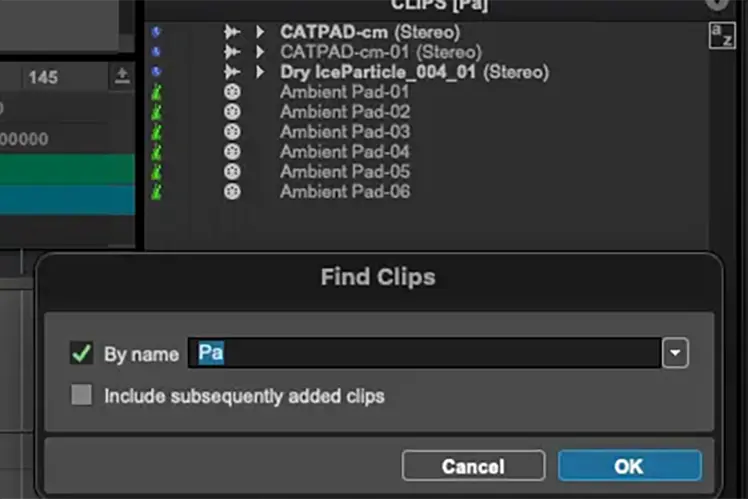
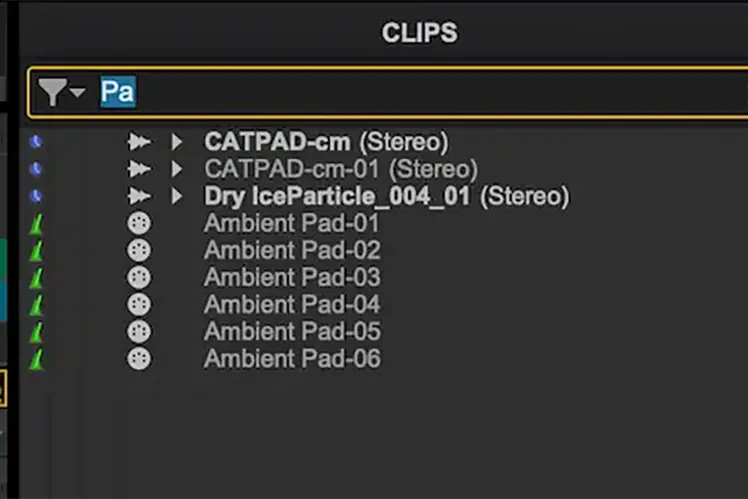
The Clips list has had the ability to “Search Clips” using a separate search window for a long time. The challenge with the previous functionality was that it was hard to see if a filter was being applied. We have now added the same text filter box from the session data import window to the Clips list. This makes filtering much more noticeable and easier to access. Accessing the Clips list filter via a keyboard command will even open the Clips list if it is closed.
 |
 |
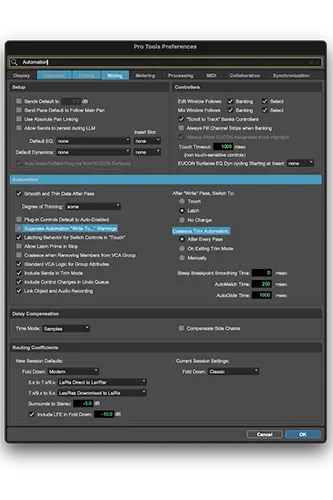
We have also added a search box in Preferences, which uses much of the same functionality as the other new filters. Instead of filtering, it highlights both the tab it contains and the specific area where a text match is found. This makes it much easier to find items in Preferences by keyword if you don’t know the exact name or location.
Dolby Atmos enhancements
Pro Tools 2023.12 introduced the internal Dolby Atmos renderer and Pro Tools 2024.3 introduced custom live re-renderings. Pro Tools 2024.6 has even more improvements in Dolby Atmos.
Together with Dolby, we have introduced several new formats for monitoring and custom live re-renderings. 9.1.4 and 7.1.2 unlock the internal renderer for more listening environments. Stereo Direct allows you to listen to a direct stereo representation of the mix, without going through cascading downmixes.
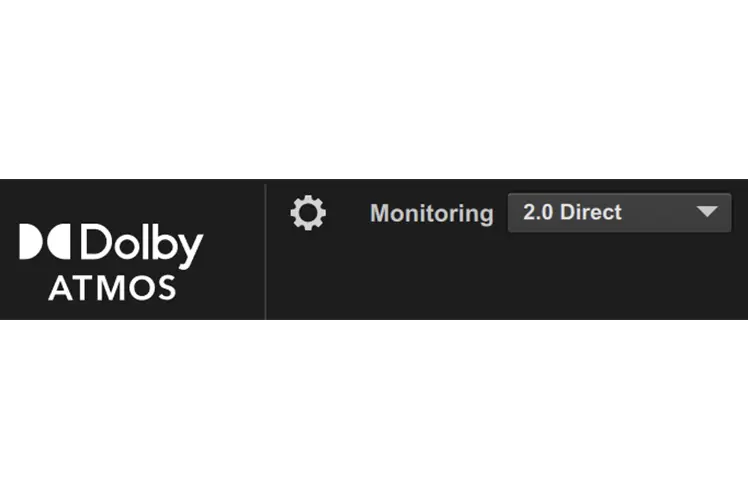
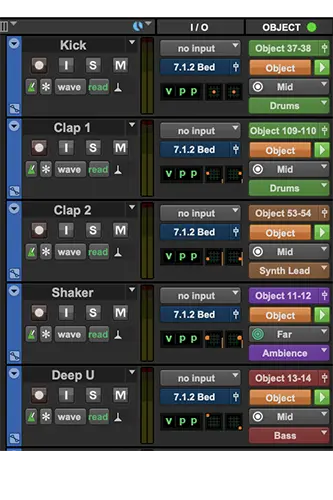
Binaural mode adjustments can now be assigned directly from the edit and mix windows, allowing you to hear the effect in the mix immediately during playback. Dolby Atmos group settings can also be assigned from the edit and mix windows, giving you better context when making assignments.
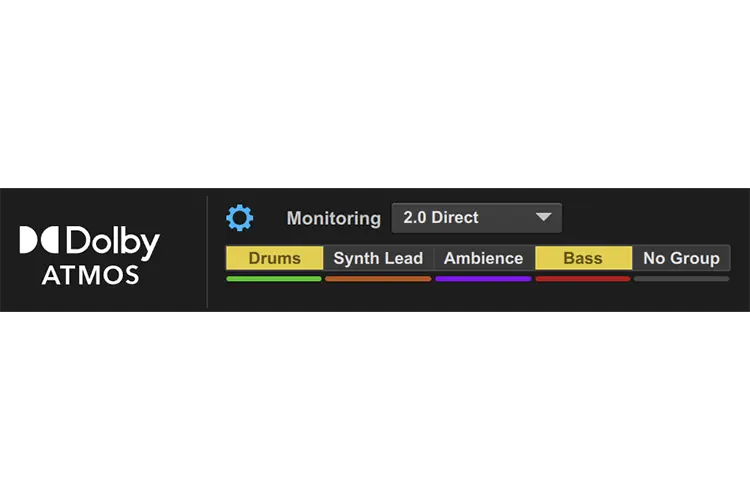
You can now solo and mute Dolby Atmos groups from the renderer window. This means that as soon as you assign a group to a bed or object, a solo/mute button is automatically available to quickly isolate or mute all elements assigned to that group.
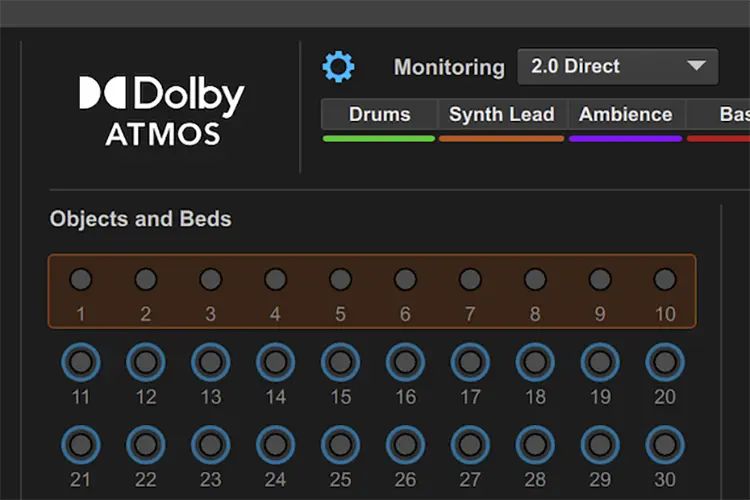
A new settings panel in the renderer window gives you quick access to essential Dolby Atmos controls, including various re-rendering settings, I/O setup, adjustment and downmixing, and group settings. In previous versions, we used orange text to indicate when adjustment and downmixing settings of a session differed from your personal defaults. Since the adjustment and downmixing button is not always visible now, we made sure to carry this color over to the settings icon when the panel is closed, so you still receive the same notification.
Finally, we've added the ability to bounce, commit, and freeze signal from the internal Dolby Atmos renderer. This means that if you're using the internal renderer, you can use Bounce Mix and select the physical output of your monitoring path, which is the output destination of the renderer. The bounce will include the renderer’s output, any signal manually assigned to the monitoring path, as well as any processing on the Master Faders for the renderer or monitoring path.
You can also freeze, consolidate, or bounce tracks that are receiving live re-renderings as input. This is very useful when dynamic processing is required for any re-rendered stem deliveries because any inserts on the receiving tracks will be included.
Memory address enhancements
We have been continuously improving our memory addresses and marker functionality. Pro Tools 2023.6 introduced track markers; Pro Tools 2023.12 added four additional marker rules, the ability to select multiple memory addresses in the memory address window, and keyboard shortcuts to navigate between previous and next memory addresses; and Pro Tools 2024.6 further refines this functionality.
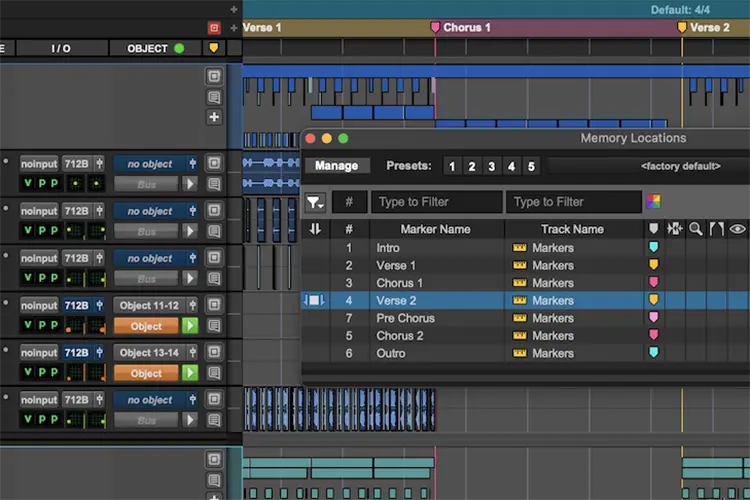
After launching the multiple selection functionality, we kept an eye on forums and continued talking with customers. Although people were very happy to batch delete memory addresses, we noticed that the implementation introduced some inefficiencies for certain workflows as well. People were discovering that certain key commands, such as the up and down arrows, were being processed by the memory address window instead of the edit window if the memory address window was accidentally selected. We also noticed that people were having trouble figuring out how to use the shift+click modifier in the recall column to select from the current insertion to the marker address. Due to this, we decided to adjust the implementation a bit. There is now a “Manage” mode. The manage mode allows you to select multiple memory addresses, delete them, and even rename them in batch. When manage mode is off, you can only select one memory location at a time, making it function similarly to previous versions of Pro Tools.
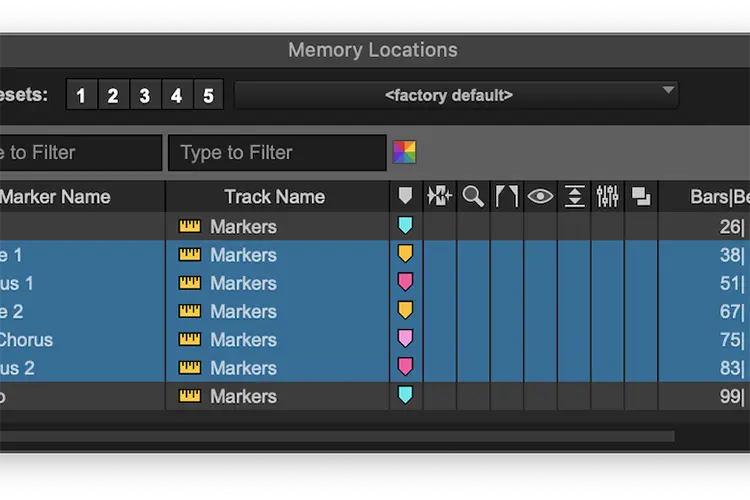
We also received feedback on the previous and next commands. There was a strong desire for the command to apply relative to your position on the timeline, so that's what we did. Now, in Pro Tools 2024.6, there is a new mode that allows the “go to” and “select” previous/next memory address commands to be applied relative to your insertion point on the timeline. Since these commands are still based on your filtering in the memory address window, you can filter to just the desired track or rule, and limit which markers are affected by the commands. This is useful if you have a rule dedicated to song sections or director’s notes. You can focus only on that rule and ignore the rest.
Media Composer session export
We have a combined team of Media Composer and Pro Tools engineers actively working on improvements for each application to enhance interoperability and sound-to-picture workflows. The first feature the team developed was Media Composer's ability to export Pro Tools session files in Media Composer 2022.12. Since then, the team has been making general improvements in each application, with the ultimate goal of enhancing interoperability. Track markers and exporting a session range were examples of this. Now, in Pro Tools 2024.6, there is the ability to export sessions compatible with Media Composer (.ptxm).
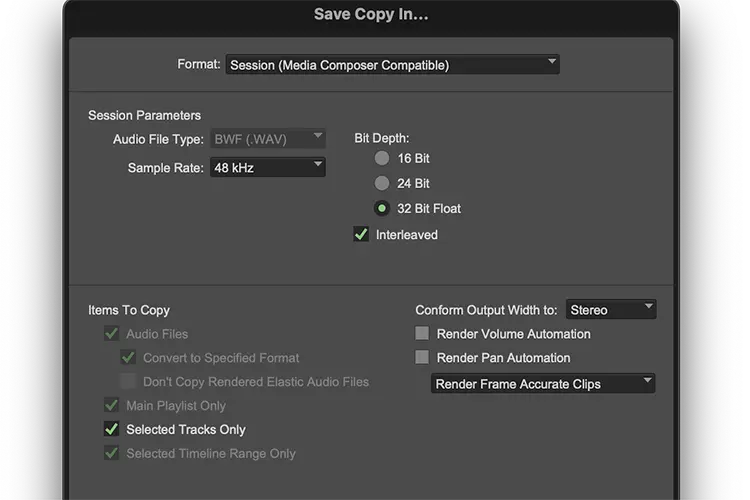
.ptxm files are created by selecting the track set you would like to export, opening the Save Copy In window, and choosing to export a session compatible with Media Composer. Pro Tools will render the audio at the frame boundary for each clip or as a complete stem. If the panning format is stereo, 5.1, or 7.1, Pro Tools also gives you the option to retain precise volume and panning automation. Alternatively, you can choose to always render. Any downmix will use Pro Tools’ coefficient preferences, which means you have control over how the downmix will sound.
It is also possible to export Dolby Atmos re-renderings as a .ptxm file. You can assign any live re-rendering to an auxiliary input track, then select those tracks and a timeline range. This is a great way to leverage Dolby Atmos grouping and split re-renderings into different groups, resulting in rendered Dolby Atmos stems that can be delivered directly to Media Composer. Any markers added to the Aux tracks or the timeline will be included.
Media Composer 2024.6 will be the first version to support these types of sessions. It adds 16 marker colors as well as support for receiving precise volume and panning automation; it can also continue editing automation at sub-frame boundaries.
A .ptxm file is, for all intents and purposes, a session file. It can be opened in Pro Tools just like any other session file, but ensures that all its content can be supported by Media Composer. Over time, we will expand the capabilities of each application, bringing their functionality closer and increasing what the .ptxm file will support.
MIDI note visualization
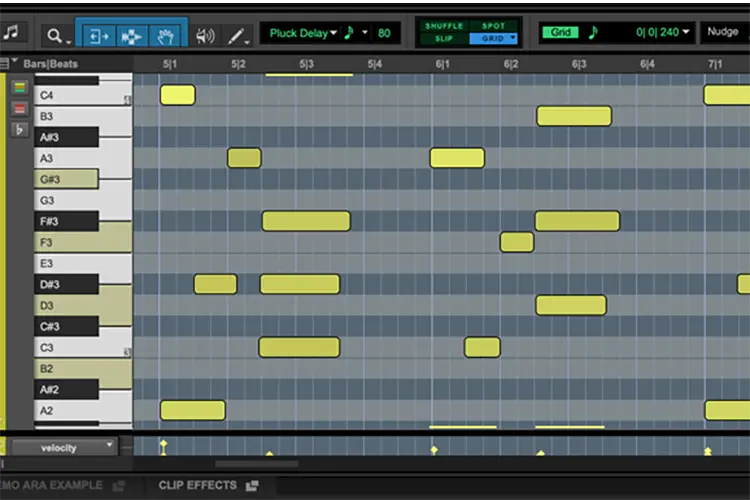
Previously, there was no way to see the pitch value of recorded or played notes. And for those not familiar with music theory, it could be challenging to track notes in the Piano Roll, as notes that were not C had no pitch indication. A new display options menu entry with two settings in the MIDI editor (docked and floating) now allows you to show pitch labels on MIDI notes and on the keyboard. Additionally, the new sharps/flats display button allows you to toggle between showing sharps and flats on both MIDI notes and the keyboard. All these settings can be saved separately for docked and floating MIDI editors.
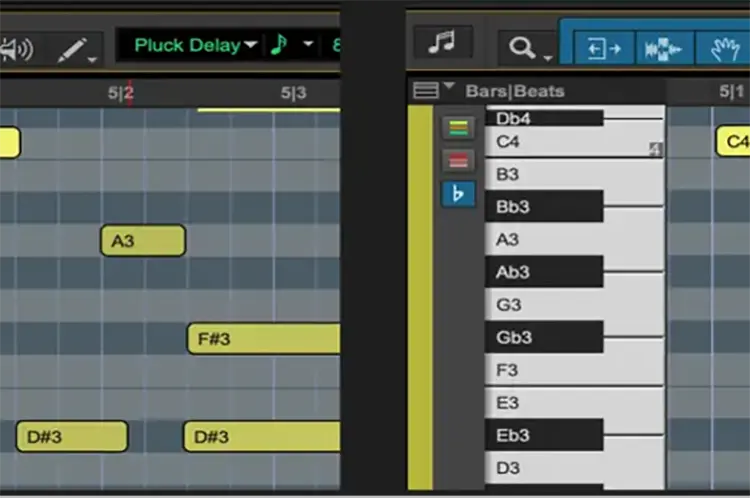
Finally, played notes (either from an external MIDI keyboard or the virtual keyboard) are now colored for better visibility.
Copy/paste improvements between Pro Tools and Sibelius
Pro Tools 2024.3 introduced seamless MIDI copy/paste to and from Sibelius, allowing composers and producers to easily move music between applications. Enhancing this functionality in 2024.6, users can now copy and paste key signatures, time signatures, and tempos between the two programs, providing a more efficient workflow for music creation.
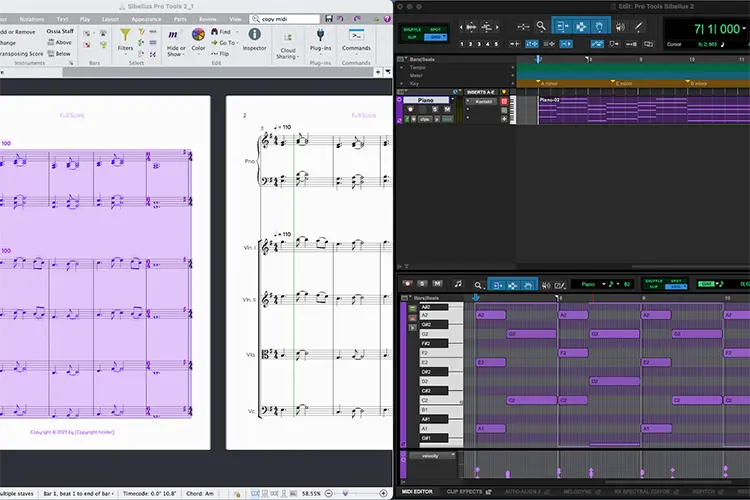
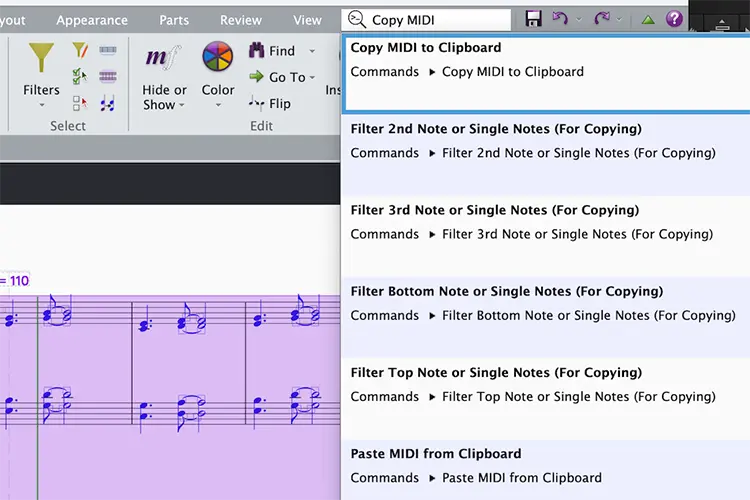
In Pro Tools, when copying a MIDI clip, key signature, time signature, and tempo data for that specific section will also be copied. By including the rules in a timeline selection, you can now easily paste all note data, key signature, time signature, and tempo from Sibelius.
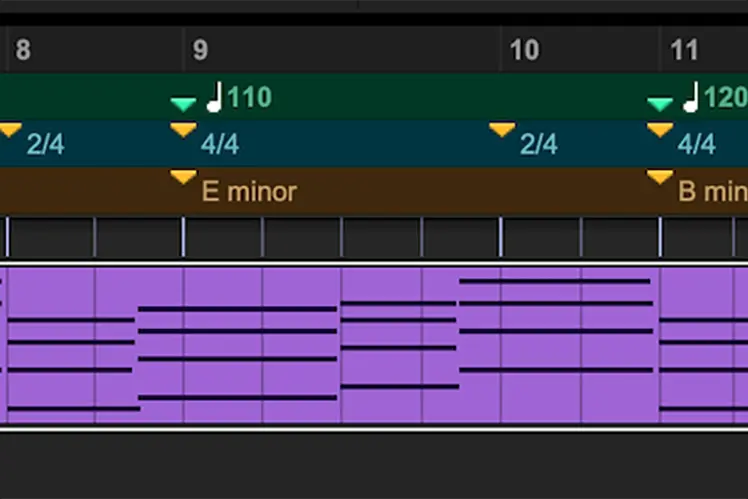
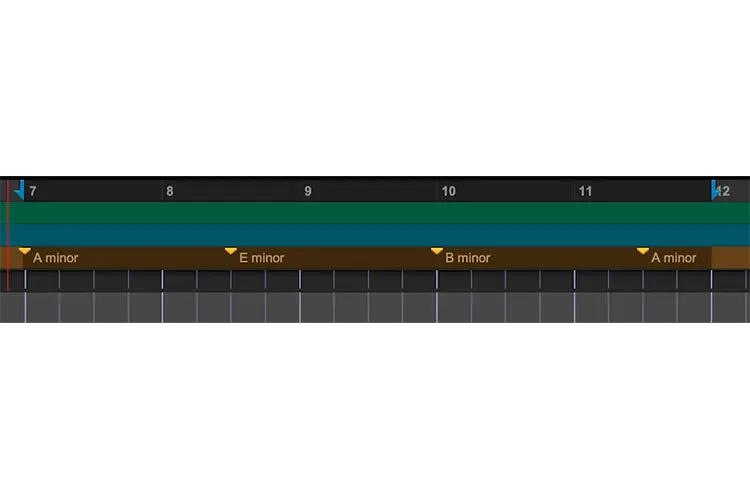
For added flexibility and control, you can paste rule data separately into MIDI notes by selecting one or more rules and using the paste command as usual.
Sibelius allows you to copy and paste notes, key signatures, time signatures, and tempos simultaneously by creating a system selection and using the MIDI copy or paste commands to the clipboard.
Drag-and-drop improvements in Sketch
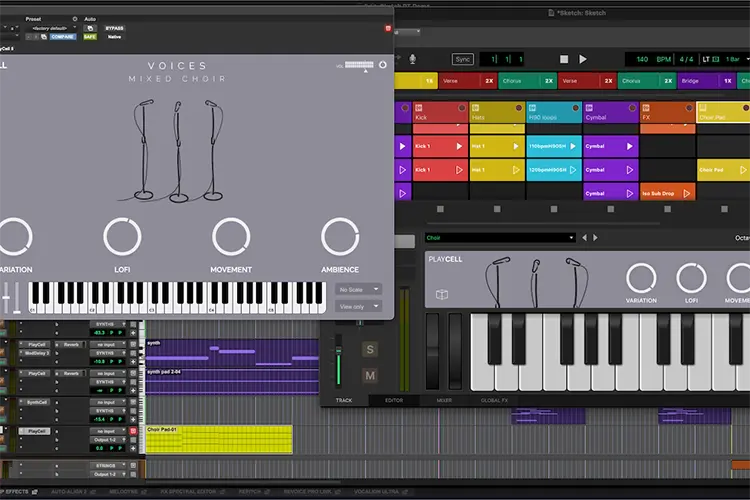
Users can maintain their creativity when working between the Pro Tools Edit window and the Sketch window thanks to the convenient drag-and-drop workflows. It is now possible to drag complete scenes and the entire arrangement from the Sketch window to the Edit window, preserving both audio and MIDI elements. Starting from version 2024.6, this will include support for Pro Tools | PlayCell on both platforms. When dragging an idea from Sketch with a loaded PlayCell preset to the Edit window, Pro Tools will automatically add the corresponding AAX plugin with the preset.
And much more
Here are some of the highlights:
- - Enable/disable checkbox groups in multi-selection menus by holding Opt+click (mac) / Alt+click (win).
- - Move the current edit selection to the marker ruler by holding Cmd+click (mac) / Ctrl+click (win).
- - Assign a keyboard shortcut to show and hide all marker rulers at once.
- - Use new advanced keyboard shortcuts to reduce the current edit selection, match only the start or end of the timeline and edit selections, and adjust the pre/post roll using the current edit selection.
We hope you’ve noticed some of the trends in our recent updates. We are working to provide ongoing improvements as they are ready, rather than waiting years to release a full version with all the features. Additionally, we are closely monitoring the features we release and making adjustments as necessary. We understand it can be concerning if a new feature doesn’t include all the features you expected, but we want to show you that each update is just a step in the process. Thank you all for your continued support, from the Avid team.
Availability
Pro Tools 2024.6 is now available to all Pro Tools customers with an active subscription or perpetual license with a current upgrade plan, as well as to all Pro Tools Intro users. You can update through Avid Link or find it in your Avid account. You can download the Pro Tools Sketch app for iPad for free. If you need to update your perpetual Pro Tools license to get the latest features, you can find options to do so on the official Avid website. And if you're new to Pro Tools, you can try the latest version with a 30-day free trial.