Dan M. Hulse: from his early days with Amy Winehouse to Bandicoot Studios
- Escrito por Redacción ISP Music & Producer
- Publicado en ENGLISH
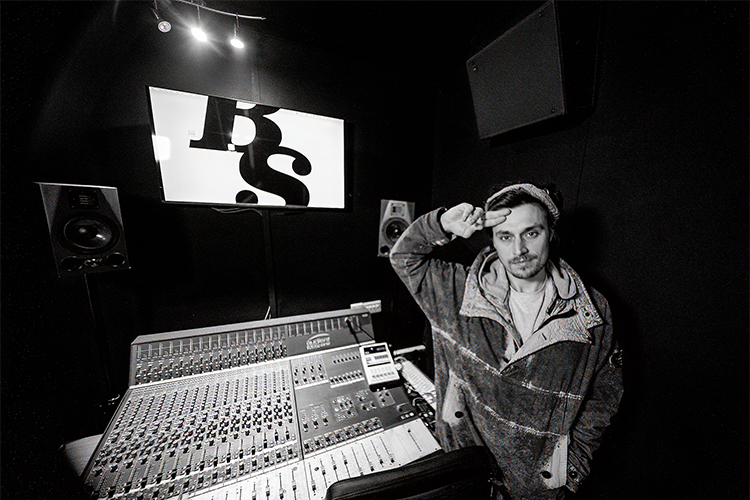
Located in St. Albans, Bandicoot Studios has spent more than a decade hosting some of the biggest names in UK Drill, Grime and British pop. Artists including Wiley, Dappy, Lily Allen and Professor Green have all recorded there in search of a raw, energetic sound.
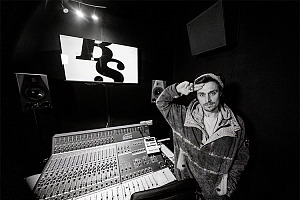
At the heart of the studio is the Audient ASP4816, the analogue mixing console that has accompanied its owner and producer, Dan M. Hulse, for the past ten years.
When Audient technician Isaac visited the studio to give the console a service, he came back with plenty of stories about Dan's way of working, his infectious energy and his unique approach to studio life. Known to everyone as Bandi, he carries out his day-to-day work while living with narcolepsy, a condition that has profoundly shaped the way he records and mixes.
In this interview with Audient, Bandi reflects on his career, describes the ASP4816's microphone preamps as "crazy" and explains why its tactile workflow remains fundamental to the way he works.
You've said that your way of working requires you to stay constantly on the move. How does the design of the ASP4816 support that workflow?
It was never a choice. I'd just achieved my dream of owning my own recording studio when, by Murphy's Law, I developed narcolepsy during the first year. I had to adapt very quickly. Imagine how an artist feels after delivering the performance of a lifetime, only to look into the control room and find the engineer fast asleep.
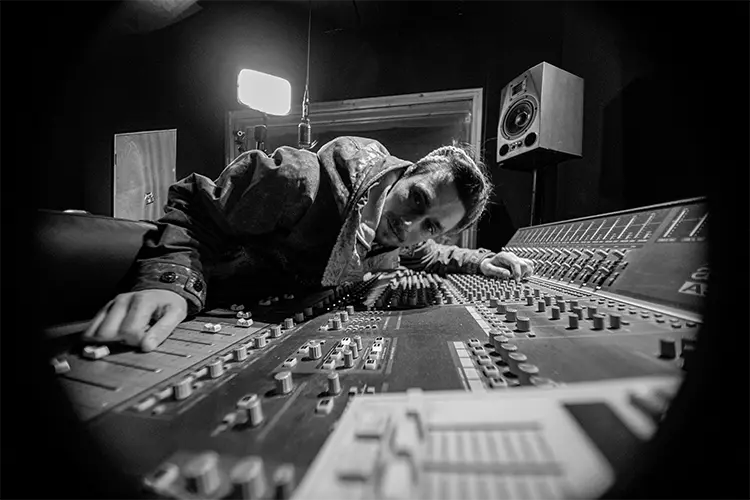
But what first felt like a curse eventually became a blessing, and the way I survived ended up defining my working style. The Audient became my greatest ally. It forces me to take my eyes off the screen and focus on the monitors. I need to work quickly and capture ideas before a microsleep makes them disappear or prevents me from responding to a client's creative suggestions.
The ASP4816 allows me to get through much of the work quickly thanks to the responsiveness of its EQs. I believe levels are best adjusted with both hands on a console rather than with a mouse. That way, decisions are based on what you hear instead of what you see on a screen. The artists can also watch me working on the console and immediately hear the result of every adjustment.
You've been working with this console for ten years. What still surprises you most about the ASP4816?
The thing that still amazes me most is the microphone preamps; they're absolutely crazy. They do most of the work for me. I've tried Neve, SSL and many other brands, but these are in a league of their own. Since I started livestreaming my sessions, it's obvious straight away that even the raw takes already sound remarkably close to a finished radio-ready recording.
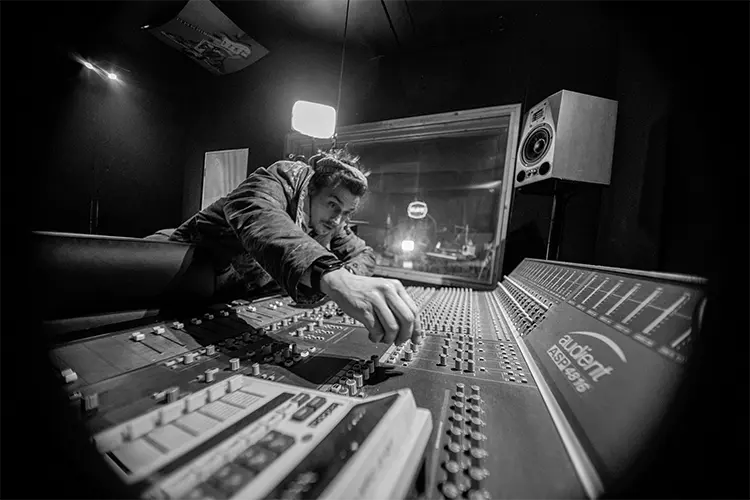
Your sessions are known for the energy in the studio. What role does the console's routing play in maintaining that momentum?
Working with a fully analogue Audient console changes the way you approach a session. It forces you to trust what you hear through the monitors rather than relying on what the meters on a screen are telling you. That's a philosophy I've always tried to follow.
When it comes to routing, the possibilities are enormous. I can configure the studio so an artist can move from playing a Wurlitzer to recording guitar or livestreaming the entire session without stopping the creative flow. I've even hosted a Grime Xtra Radio show while recording scratch guitar tracks for a band at the same time.
We've also heard about some memorable moments in your career, including a session with Amy Winehouse. Which ones stand out the most?
The Amy session happened when I was 18 years old. I'd landed a runner job at Sensible Music and was working under Jon Moon. He pointed to a huge empty warehouse space and said, "You've got two hours because Amy Winehouse is coming," before walking out of the room. My heart nearly stopped. I started running around like I'd lost my keys.
I plugged in the last XLR cable just as Amy walked through the door and greeted me with a simple, "You alright?" We recorded several songs and covers, and even set up a studio in her basement.
But the magic also found its way to Bandicoot Studios. A few months before the pandemic, I got a phone call at three o'clock in the morning. Milli Major told me I couldn't afford to miss it. Tion Wayne and M24 arrived to write and record London, a track that went on to become a huge hit and a defining moment for drill music. The sound of the Audient is a fundamental part of what gives that mix its aggression, one of the genre's defining characteristics.
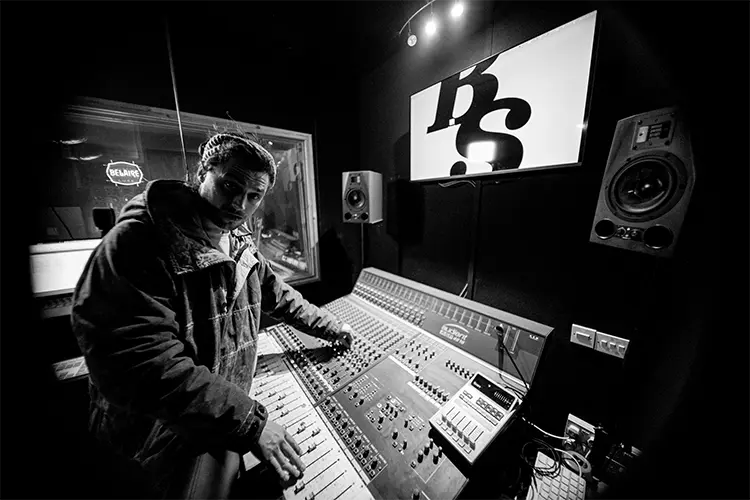
Over the years, Dappy, Lily Allen and Professor Green have also recorded here. They all have access to major label studios, yet they keep coming back to reconnect with music and enjoy the sound of the ASP4816 once again.
What does the future hold for Bandicoot Studios?
We're entering an exciting yet uncertain era for music with the arrival of artificial intelligence. I've started livestreaming my sessions on Kick and TikTok to show the magic that happens inside the studio.
The ASP4816 puts the sound engineer back at the centre of the creative process. By handling all the routing, it allows livestreams to run smoothly. For Bandi, that creative experience is what makes music generated simply by giving instructions to an AI and clicking a button lose much of its magic.
Photos: Alex Frances.