There's so much gear within our reach now, even at our workplaces, that it's getting hard to patch everything together and control it all effectively from a single point. We tend to try things out on computers and in various audio programs, but we soon start to notice that “our studio” doesn't handle multiple input sources well.
Different mics, electronic instruments, lines coming from other sound-generating devices) to end up with a suitable, professional stereo mix, including individual effects on each independent line (echoes, reverbs, and so on).
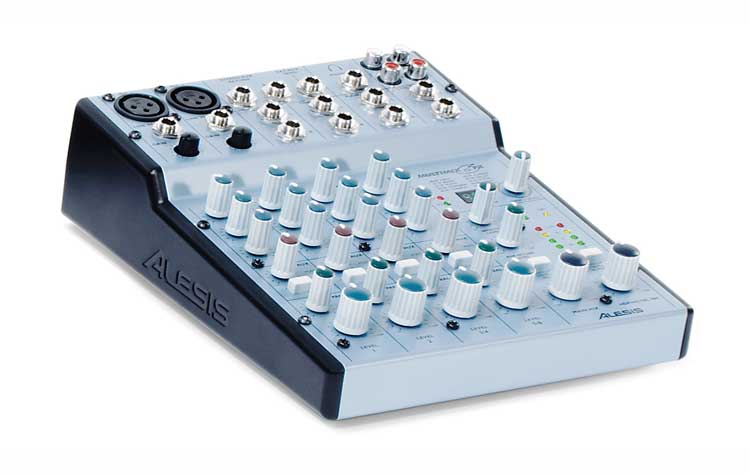
In past decades, this was only possible in professional recording studios with expensive components, far beyond the financial reach of far too many people. At last, a company like Alesis uses its machine and price to bring many more people into the world of professional sound, whether in a small home studio, a small recording studio, or even for controlling the sound of a band playing live on stage, delivering a proper level of effectiveness and quite sufficient resources in each case, especially in mid-sized venues, or even for handling the monitors or the instrument groups performing on the stages of some larger rooms.
Different Types of MULTIMIX USB
Alesis currently offers three models:
MULTIMIX 8 USB: has four preamplified inputs (mic or line, interchangeably) and four stereo inputs as well (for signals coming from equipment with more widely differing impedances, such as audio lines from CD players, radios, turntables, other mixing consoles, etc.).
MULTIMIX 12 USB and MULTIMIX 16 USB: these add more preamplified mic/line inputs, plus four stereo line inputs.
In general, they show an excellent analog signal-to-noise ratio, and their USB connection lets you use and combine them with practically any music software you can install on your PC (via Windows) or on Mac computers.
What the MULTIMIX 16 USB Brings to the Table
With professional quality, it has distilled the essential tools needed to properly mix sounds from any audio source, adding other components such as its high-performance 28-bit digital effects and low-noise digital stereo inputs and outputs, comparable to those of the highest professional caliber.
High-end condenser microphones that require extra power, known as 48-volt phantom power, can be connected to the eight main inputs of the MULTIMIX 16 USB. This power can be supplied from within the unit itself, or switched off if the type of mics attached (the majority on the market) don't require that extra current.
Through those same input channels, instead of a mic, we can plug in a guitar or any other electronic device (keyboards, line-level audio from another unit, or from a computer or a sampler, for example).
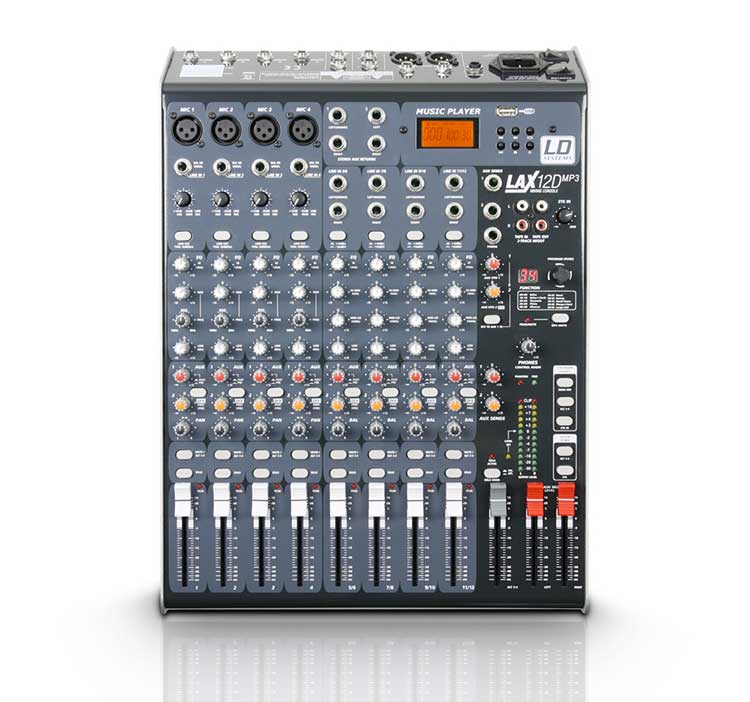
Each channel has its own independent, very effective and easily adjustable three-band EQ (treble, mids, and bass). With “GAIN,” we can match the most suitable level to any signal input.
Each channel also has two auxiliary knobs (A and B) to which we can assign whatever effects we see fit. We can also control the signal sends from that channel to the outside or, for example, to another external effects processor.
The unit already contains up to one hundred preset sound effects internally, many of them essential today in almost every mix. The MULTIMIX 16 USB's effects are many more than usual, a great selection to choose from and of high quality (many kinds of delays, chorus, flanger, pitch shifter, etc.).
Each channel has its own “aux” knob for sends to the pre/post-fader submixes we find most appropriate on any given occasion, plus another for post-fader aux sends, with which to send from that channel to processors external to this unit, a recorder, or an amplifier driving some monitors (whose channel mix can differ from the one on the unit's main output) and even, if we feel like it, to other sound-effects processors separate from those built into this mixer.
We can also individually control the “gate level” at the sound input, eliminating unwanted noise floors from some of the instruments or mics connected to the channels that could cause problems for the rest, thus avoiding, for example, unwanted feedback or background noise from electronic gear connected to the line inputs (from guitars, other preamps, etc.).
It has two separate tracks for sends and returns, for example, to control recording machines outside this mixing console or from a CD player, another external mixer, etc. Each channel can also control its “PAN,” or panoramic placement in the overall mix.
Through its USB connection, and therefore when hooked up to a computer system (such as a PC), the output and return paths for audio signals from this console are extended with two tracks of excellent sonic performance, since they run at 16 bits, that is, with digital quality of 44.1 kHz (like that used on CDs), which also corresponds to an effective frequency response between 20 Hz and 22 kHz +/- 0.5 dB, that is, a frequency range much wider than most of us humans can distinguish with our “battered” ears.
Its technical specifications claim a distortion level of around 100 dB, which seems strikingly high and which I can't dispute.
The input connections for each channel are either XLR (also traditionally called “Canon”) or ¼" (the connectors most used on the cables we use to hook up electric guitars), which are also used on the send and return lines added to this unit.
It also has S/PDIF connections, which require their own specific cable to carry the digital signal from this mixer to any other device that accepts it, such as a DAT, though the cable must not exceed five meters or it would lose effectiveness.
It also includes special RCA connections (in the upper right corner) for input and output signals, to connect it to sound recorders or similar devices.
LED indicators on each channel warn us of any that are muted at some point, or whether we want to listen to just one or a few channels to check their levels and effects (solo). Likewise, several LEDs in two columns on the right of the upper front let us easily monitor nasty peaks at the signal inputs or the saturation that could cause unwanted distortion, finally obtaining the best sound quality at its most suitable level.
It has an independent headphone output, with its own dedicated volume knob, with which we can run various checks on how everything is working.
Several switches on the right side of this mixer route the mix signals according to whichever options we find suitable (to the main output, the monitors, the recording systems linked to the unit, the master control of the built-in effects, etc.).
This MULTIMIX is powered by an 18-volt transformer supplied with the unit.
Its dimensions are “comfortable,” or manageable: 331 mm wide, 386 mm deep, and only 80 mm high, with a total weight of a surprising 4.4 kg.
Almost all the connections sit at the back of the top panel, in plain view, except for the USB connection (to the computer), which is on the rear panel, along with the power supply and power switches.
General Impressions
There are other mixers in our music stores that compete with the Alesis proposed here, even at lower prices, which out of respect for this brand I won't name. The reality is that all of them, with similar size, don't deliver the same features, since they vary widely in specifications. The essential job of this type of machine is to efficiently mix the different independent sound channels fed into it, generally to two stereo (master) tracks, which we'll finally record or listen to on other external equipment connected to this console.
I'd say a great, noticeable advantage of this MULTIMIX is its portable, very manageable format, in terms of size and weight, relative to all the features it offers, among which I'd also highlight its built-in effects, not just for their number but also for their effectiveness and low background noise, which avoids having to attach another unit containing that kind of effects, without which a mix that wants to call itself professional is unthinkable today. Its knobs seem reliable and comfortable.
I miss some rear-mounted XLR connections from which we could take the stereo output of that master, for example, to route it to the power amp stages that professionally tend to include this type of connection. It's true that we can also get those master signals from here, even split off for different purposes (to power amp stages, to sound recording centers, sends and returns, other external sound processors, monitor line, or headphones), using the connectors provided on this unit.
It seems a good idea in the design of this device that all audio signal inputs and outputs connected to the mixer always remain in view of the user, at the back and on top, without having to turn it around or crouch down and search around the unit, as with others, thus adding agility for any improvised changes we want to try “on the fly” in its connections.
Its appearance, even at its size, is quite attractive, as are its achievements in signal-to-noise. Something like this is very efficient and now necessary, even as home equipment, but with professional quality.