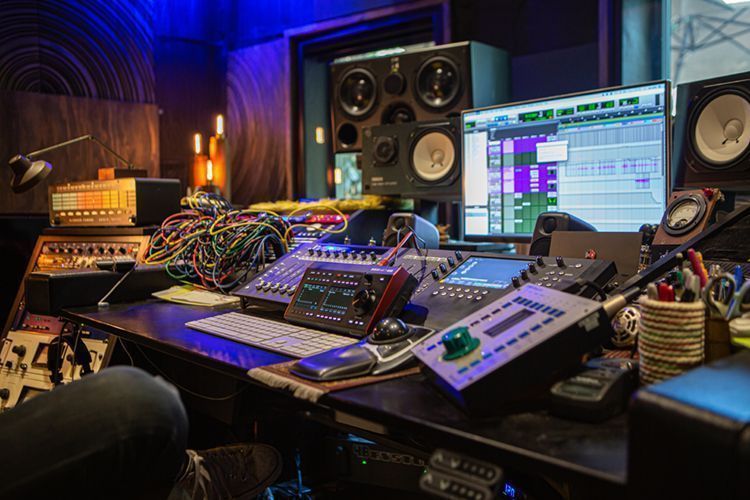
Twenty years ago, musicians recorded themselves at home or in their rehearsal space with small analog multitrack systems. People worked miracles with 4 tracks to sketch out ideas and shape their songs. Today, we wonder who listens to music in any quality other than an MP3 on a phone. Is it worth recording yourself well?
As to whether it's worth recording yourself well, it has to be said that every musician, band, producer and songwriter wants to hear their creations in the best possible way: rich, powerful, full of nuance. On the other hand, even if the end listener hears the song as an MP3 on a phone, the better what they hear is, the less distortion there will be in their listening, wherever they hear it.
How does your studio evolve? And your ears?
Let's imagine you're one of those who, some time ago, got into a small interface, a pair of monitors, a computer and DAW software. Inevitably, as you record and look for results in your "demos," you start poking around. You experiment, even if you've never had any kind of experience with technical production in your life. There comes a moment when, as a musician, you find yourself facing a bunch of gadgets and buttons and you're not quite sure what they're for. It's as simple as putting trial and error into practice.
Often the mix of ingredients—a) lack of knowledge and b) lack of gear—makes it quite hard to make progress. But there are stubborn types who don't give up in the face of the acoustic disasters they get as a result and keep looking for ways to move forward.
Leaving aside lack of knowledge, which improves with reading, courses, experimentation and guidance from others who know more than you, today we'll focus on gear and how it evolves.
The natural tendency is to gradually expand your recording resources. Maybe you started with a truly mediocre interface and have moved up to a slightly better one: no latency, somewhat better preamps, phantom power for your condenser mics, etc. That tendency is progressive, because every time you add new tools to your studio, you sense that your possibilities grow and, if you're a bit savvy, your songs sound better. Let's assume you've already done all that.
We start thinking about moving further ahead. Some say the song is the essence, not the gear. Fine, that's obvious. But once we have the great song in place, it's time to try to make it sound amazing.
Monitors
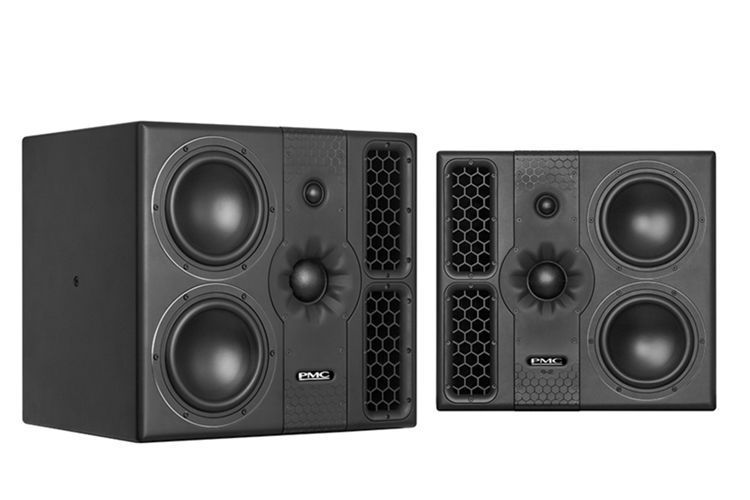
The first limitation is usually monitoring. Low-end or lower-midrange monitors keep you from noticing many nuances. We're not thinking now about how people will listen to it, but about the mix. If you're working blind, it's much harder to get results.
The first step would be to move to good monitors—upper-midrange or high-end. This step leads us to the "light," to clarity in listening, since we start gaining high frequencies we didn't hear before. What used to sound bad now sounds very bad on good monitors, and what used to sound so-so probably now sounds bad. Why? Because you notice many more things: mistakes in your mix, imbalances. Your view of the project is more focused and sharper.
The same thing happens with headphones. When you move to upper-midrange or high-end studio headphones, the first impression is usually that everything sounds horrible—thinner, harsher. This is where you'll start training your ears and your mixing skills better. It takes a while to get used to, but once you've climbed that step, you won't want to go back down.
 Microphones
When your monitoring is substantially better, you'll start to notice that some things that used to sound good to you now seem dark, thick, lacking definition. Your range of frequencies is now much wider, and mics that used to measure up now fall short.
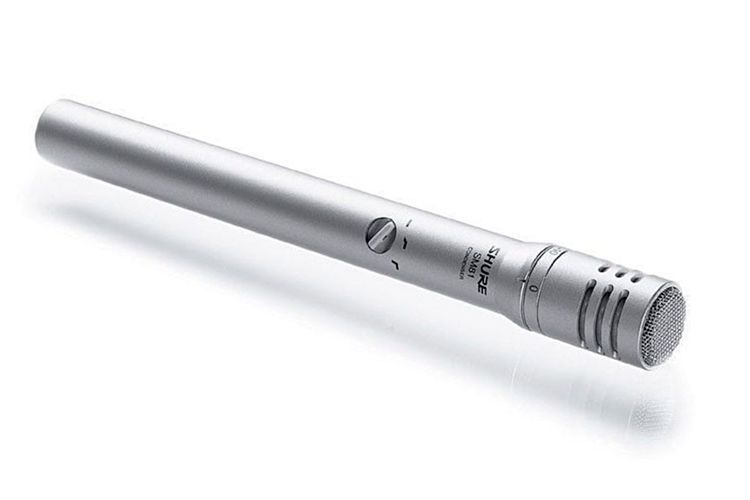
This is probably the moment when you'll start to perceive much more clearly all the differences between one mic and another—for example, on acoustic guitars. You can spend hours recording with different mics: ribbon, tube, large-diaphragm, small-diaphragm, with different polar patterns. This process will become part of your ear training. And now you'll notice big differences between the different types of mics, the distances at which you place them, etc. Not only in the quality of the takes (that too), but in the production "vibe" you can create, depending on the mics and techniques you use to record each thing.
 Preamps? But the interface already has them
Curiosity keeps pushing. Now that my monitors are showing me things I'd never noticed—mix depth, noises, nuances, "colors"—and my mics are expanding my palette, why does the preamp play an important role?
Just as experimenting with different types of mics (I'm talking upper-midrange and high-end) teaches you that the same instrument or voice can be recorded with many different "nuances," the world of preamps will open a new door for you.
Perhaps you've sometimes noticed that your interface's preamps fall short on gain. But that's not the fundamental issue. Your interface's preamps always give you the same "color." Ideally they would be neutral. Now is when you can repeat your acoustic guitar recording experiments, with your favorite mics, adding different preamps one by one to see what happens. To begin this new ear-training course, which will undoubtedly raise your production quality, you can get 500 Series outboard gear, starting with a 6- or 8-slot rack frame into which you'll "plug" your different "outboard" modules.
The 500 Series will give you access to units of recognized prestige in a somewhat more affordable format than 19" rack. You can read on ispmusica.com about the basic differences between the 500 Series vs. 19", since we covered the topic with our dear and never sufficiently praised Dalama, of Dalamix studios.
Summing up in a nutshell what preamps will give you, you could say you'll start delving into the big difference each of them brings to your takes. For example, the character, size and thickness a Neve 1073LB will give you, in contrast to the faster or more crystalline tone of Millennia, API, SSL and a long list of other options—each more appropriate depending on the type of instrument (percussion, vocals, guitars, basses, etc.).
Other outboard gear / peripherals
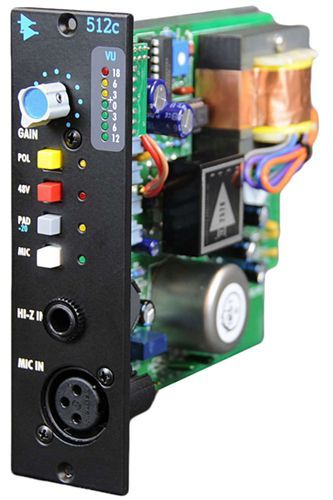 As with preamps, if you gradually add good-quality hardware to your new 500 Series frame, you'll gain more detail, resolution and possibilities: equalizers, compressors, limiters…
When you start working with all these new elements in experimentation mode, you'll learn a lot. Let's say your mind will light up in your productions, because you'll be able to perceive many more contrasts and possibilities. Not just because with a good preamp you'll notice your recordings have a very different touch, but also because by working with finer precision you'll begin to better understand how a compressor works and why you need it, how to separate layers and define each element by working the EQs and, in short, keep moving toward the evolution of your recording system, which will also become compatible with a good studio—one from which to bring in some tracks, or where you can later finish off all your ideas in a big way, if you have the budget, time and desire.
The Internet is a great tool that adds to this whole concept, because you can export and import tracks from other musicians and other studios, and receive or contribute collaborations from musicians, technicians, mixing and mastering engineers, etc. So your recording session isn't closed off; it has doors. This chapter aims to provide a quick summary and some focus for all those who feel a bit stuck in their sessions and want to evolve, but don't know whether spending money on a more expensive "gadget" will really be worth it—which one, or simply where to continue climbing the ladder.


