 Although the music industry is going through uncertain times and is immersed in a process of metamorphosis whose outcome nobody dares to predict, this crisis does not affect the most basic rung of the industry: musicians, the real foundation on which the entire record industry rests and is built.
At many companies, musicians don’t get the support they deserve and are treated like dairy cows, taken from the pasture to the barn and from the barn to the pasture, with the sole aim of producing the milk that keeps the record industry going.
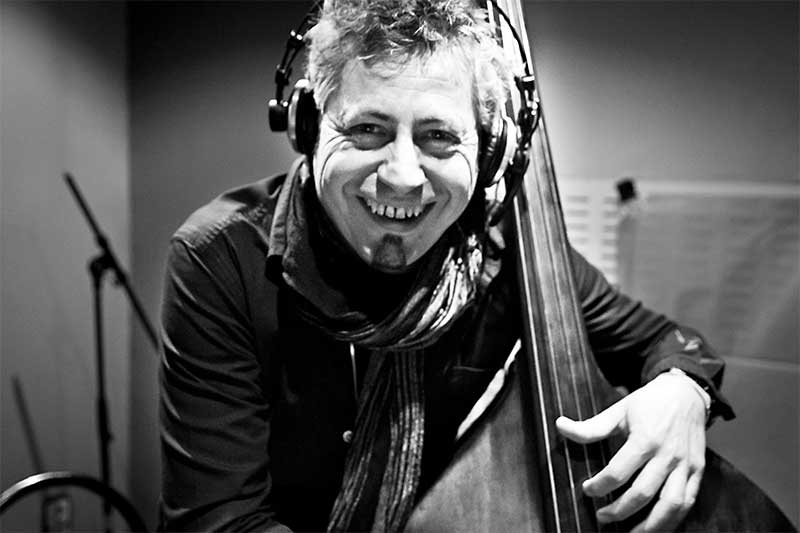
All over the world, and especially in our country, musicians have always had an unkind press, usually being regarded as bohemians, hippies or hustlers. This picture is not just magazine fodder; it’s a reality that hurts especially in a country that loves music and consumes it in large quantities.
This same view is shared by others, such as Antonio Blanco, a music executive who, after doing important work promoting Latin music and becoming the driving force behind TAF (The Artist Factory), is taking on the project of offering support services to new musicians, from renting rehearsal rooms to anything else that can help these young musicians take their ideas to the stage and the recording studio. This determination is summed up by the battle cry that adorns, along with an illustrative image, the home page of its website, www.taf.es: “We have plenty of ... to change the music scene.”
ISP Música visited TAF in the town of Arroyomolinos, next to the Xanadu shopping center, and was able to interview the two pillars of the project: Antonio Blanco and Vanesa Blanco, head of the Marketing department and a fine example of well-judged communication and promotion work.
You’ve talked about two important facets of this project. Tell me about the first: providing Madrid with high-quality rehearsal rooms.
As for rehearsal rooms, we found there was a need for a product developed from the ground up for musical work, so the whole project has been designed from that perspective. The building was built from the foundations up with state-of-the-art technology rarely used in Spain, such as the box-within-a-box concept, which provides isolation and acoustic treatment performance that is hard to achieve with any other system.
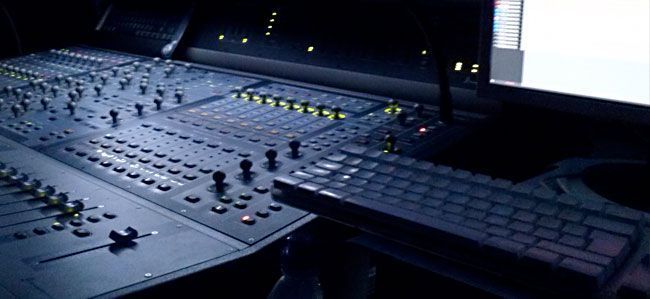
Bringing this company to life took us four years and has resulted in what you see: a building with 1,900 m² of usable space spread over 38 rehearsal rooms, all of them with truly innovative performance in terms of isolation, acoustic treatment and climate control. We also have a recording studio with three rooms and variable acoustics. And finally, a live venue with the largest stage in Madrid. It is connected to the recording studio so that, if necessary, an event can be recorded on the fly in multitrack format.
And the second? How have you approached the music community?
With a lot of affection. One of the facets of this project is to offer young people a place where they can develop their creativity in an environment that respects their independence and personality, both necessary for creative work. An environment different from the usual one today, in which the people in the music industry surround the musician and want to make decisions for them, when what they should do is help them, without steering their life and work. These people, consciously or not, are hindering the creative work and development of musicians, bending their creativity to the needs of the industry, when the real protagonist of this whole industry is the musician. They are the ones who create the music. All these figures, managers, executives, etc., cannot see themselves as the absolute stars, nor put on airs, nor anything else.
The most important thing about this project is the philosophy behind it. TAF is committed to intense cultural work to offer opportunities to young people and one more leisure option for those who enjoy music. TAF aims to be much more than a music venue; it wants to become a music community of support and collaboration, offering not only quality facilities and services but also opportunities for all the artists struggling to make their way and change the music scene.
All of us who are part of this project are fighting to make TAF the most important support for music in Spain, since there is no project as technologically and humanly advanced as this one in the country.
What gap in Madrid’s rehearsal room offering do you aim to fill with TAF?
One of the things that sets us apart from other companies, besides the physical quality of the project, such as acoustic and climate comfort, livability, etc., is that we offer another kind of comfort that is very important for musicians: professionalism, with all due respect to the offerings of other very worthy companies. But where we have invested a great deal of effort to be different is that everyone working on this project is connected with the world of music; besides, this is a project for music and for musicians. TAF is not simply a service company or a real estate venture; there is a lot of passion and a lot of romanticism in this project, and that above all is what can set us apart from similar places. And I say similar because the quality offered at TAF can’t be found elsewhere.
You’ve told me a lot about TAF’s technological quality. Tell me more.
Each of the rehearsal rooms and the recording studio follows one of the golden rules of soundproofing, the “box within a box” concept. This means that each wall of the rehearsal rooms, including floor and ceiling, belongs to that room alone and is not shared with any other room. Each room rests on the floor on shock absorbers, and the ceiling is likewise suspended from the common structure on shock absorbers. Between the walls of the rooms there is a space filled with acoustic insulation fibers.
The fact that the whole building was purpose-built from the start has helped solve problems in the structure itself that would otherwise be difficult or impossible to fix. All the beam structures rest on shock absorbers to cut off vibration transmission and thus keep sound from traveling through the structure. The air conditioning motors and the like are also on the roof, mounted on damping pads.
Many of the benefits in terms of acoustics and livability have been achieved at the cost of great financial, design and organizational effort. We’ve gone through blood, sweat and tears to get here, but I think we’ve made it and we’re very satisfied.
The result of all this work is that these rooms operate at sound pressure levels of 75 or 85 dB SPL, whereas without this treatment and isolation the pressure would rise by some 20 or 25 dB SPL until the reverb saturates, which causes considerable listening fatigue, reducing the amount of time a musician can work continuously.
Do you focus only on renting rehearsal rooms, the live venue and the studio?
No, of course not. The services we provide to customers go beyond rehearsal rooms: we have a concert hall, a recording studio and, what I think is most important, the concept that young musicians can find everything they need here for their musical concerns and ideas to develop with our help, to give them shape.
There are other options, such as a music school; classes will be given in the most common instruments, such as bass, drums, guitar, piano, harmony, music theory, singing, etc.
For example, another idea we liked is keeping the concert hall open almost constantly, so that it becomes a meeting place for musicians and they don’t have to stay shut in their room or wander up and down the hallway. Bands are born and merge through contact and rubbing shoulders with other musicians; it encourages cross-pollination of ideas.
As I was telling you, we are interested in helping musicians take their first steps in the music industry, and to that end we are going to offer talks, such as a debate on how the music industry works. It’s a subject on which musicians starting out are very disoriented, and it would be useful to guide them on contracts, management percentages, how they work, what they should look for, etc.
And finally, in addition to all these ideas directly related to music, there are other initiatives taking shape, such as building a creative environment. One example is the idea of putting on exhibitions of images, paintings, etc. on a previously chosen theme. This also motivates musicians, because being surrounded by creativity rubs off on them and their imagination grows with ideas that perhaps wouldn’t have occurred to them at that moment.
Couldn’t the equipment and these projects make you look like an elitist product?
No, we don’t want people to think this is a facility only for privileged pockets. Prices are on the same level as other rental companies; otherwise we wouldn’t be promoting the philosophy of our project, which is to be a point for promoting music from its very beginnings.
Why this location, in southwest Madrid?
This location was chosen because southwest Madrid is the area with the highest concentration of rock & roll in the whole region. We looked at other options, such as central Madrid, where we even looked at an entire building on Gran Vía, but the ability to modify the internal structure to adapt it to what we were looking for was very limited, and despite the advantages of the location, the idea was dropped.
Here in Arroyomolinos we’ve found the right balance: we are 20 minutes from Plaza de España by public transportation and even less by car. Shortly, although I can’t give you an exact date, we will have a stop very close by on the future light rail line to Arroyomolinos.
TAF (The Artist Factory) www.taf.es
Tel. 902.278.478
Polígono Industrial Valdefuentes. Calle Fresadores, 35. 28939 - Móstoles Oeste - Arroyomolinos. Madrid - Spain
Antonio Blanco
Antonio Blanco is the driving force behind the TAF project. He is a heavyweight of the Latin American music industry who began his career at the Mexican record label “Industrial la música” and later came to Spain after being hired by BMG. Some time later he went back to the Americas to run the Latin music division of the same label from Miami. He must have done well, because shortly afterward he was sent to run all of Mexico for BMG. After all these comings and goings he returned to Spain and embarked on TAF, and we at I.S.P. wish him the best of luck with the project.
Thanks to the perspective his career has given him and having worked in other music environments, such as Latin America and the USA, he felt that the way things are done in Spain is not the fertilizer that makes a new crop of musicians grow. That is why he decided to set up this project, to put on the table what he believes is fertile ground for musical creativity.
To carry out this project, he has surrounded himself with other professionals, most notably his daughter, Vanesa Blanco, in the Marketing department. Together they have brought this project forward, in which, in their words, “Absolutely everything has been designed for music and musicians, with the idea of fighting to change the music scene.”
Project Year Zero
A musician is a professional who can’t play just anywhere; they need to be given a suitable, dignified environment. It’s very typical for a musician to be asked: “What do you do?” “I’m a musician.” And the typical reply is: “No, seriously, what do you do?”
This is a profession of great sacrifice, day and night; you work constantly, and a musician must be very disciplined in their work. That’s why they must be given all the support and recognition possible. Many people outside this world see it from the wrong perspective and think that musicians, and especially rockers, are maladjusted romantics and loose cannons.
The image of the musician has to change, and one of the ideas aimed at improving this situation is the “Year Zero” project. Together with Juan Rodríguez of “NH Magazín,” we are organizing a music festival, not a competition, which will be called “Año cero primera era musical” (Year Zero, the First Musical Era). This title sums up a philosophy: everyone talks about how bad things are in the sector, internet piracy, street bootlegging, etc., but nobody does anything. In this festival, young people can send in their demos, or perhaps their albums, because more and more you find true albums, in terms of recording quality and presentation, that are ready to go into the oven.
There will be radio promotion of the songs and, as finalists are chosen, they will come through the concert hall to show their work live.
The stage
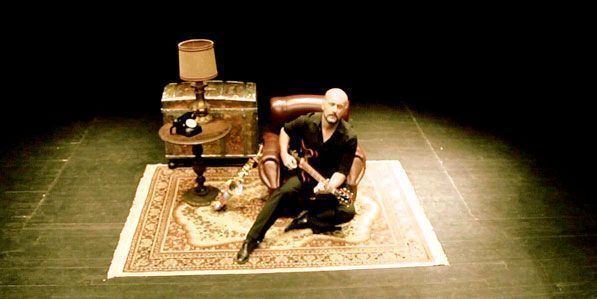
The stage is one of the rooms where we have made a special effort. The entire design of the concert hall has been carried out with great care to give musicians the atmosphere they need to feel at ease, not only physically but also emotionally, making sure that musicians and audience are as close as possible and that both feel comfortable, with an intimate capacity. With this same idea in mind, columns that block the view have been eliminated, and the stage has been raised above the audience so everyone can see it well. With this we also want to create a small metaphor, since to look at the stars you have to look up, toward the sky. All this with the intention of paying respect to the artist, which I think is what is needed right now in this city, and I would almost dare say in the rest of Spain. I have lived abroad a lot and have seen the respect musicians enjoy in other places.
In designing this room, and specifically the stage, we consulted not only engineers who did their acoustic calculations, or architects; we also took into account the opinions of many musicians, who contributed their experiences to tell us which things add value and which are a problem.