We Interview Andy Timmons: “Virtuosity Is Expressiveness”
- Escrito por David Martín
- Publicado en ENGLISH
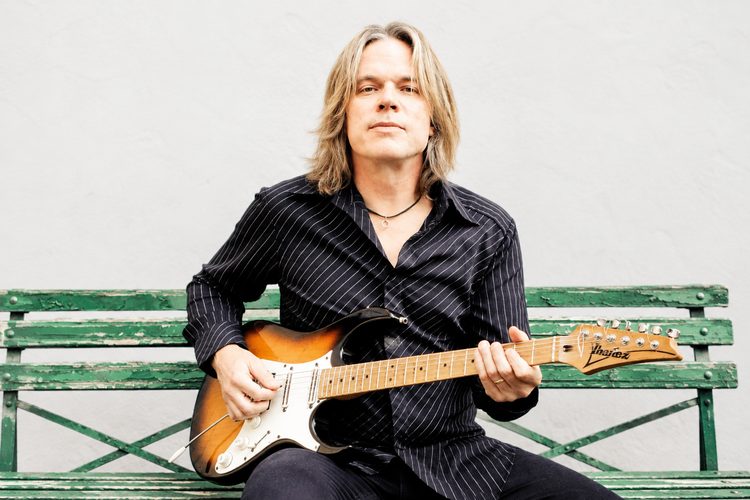
We interview a guitarist for whom combining technique and passion simply comes naturally. Throughout the interview, Andy talks to us about humanity, modesty and treating everyone equally. We can confirm that he genuinely does. In our previous issue we published an article entitled “Divinely Ridiculous”, in which we discussed the foolishness that affects some pseudo-artists when they begin to believe they are important. Andy Timmons once again confirms our belief that, generally speaking, the greater the talent and stature of an artist, the more down-to-earth and approachable they tend to be.
We would especially like to thank him for his kindness, dedication and wise words. Don't miss the interview: every word is worth reading.
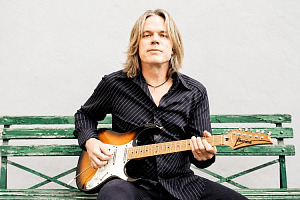
Andy Timmons, musician and guitarist
It may seem obvious: if you're a guitarist, you're a musician. But that statement deserves some qualification, as a guitarist may be a performer, composer, instrumentalist or a complete artist. The latter is precisely the case with the musician we are featuring today. We spoke to him in depth about subjects that concern us and that we often discuss: virtuosity versus expressiveness. In our view, Andy Timmons is a perfect example of a musician who masterfully combines technique —speed and knowledge of the instrument— with the ability to communicate a message. For ears attuned to art and emotion, it is almost impossible not to get goosebumps when listening to him. We love this guitarist. We are passionate about his playing.
The Interview
Hello Andy. It is a great honour for us to have you join our conversations between musicians, a space we devote to talking with people who are genuinely involved in music beyond its commercial aspects. It is a real pleasure to have one of our favourite guitarists on the international scene with us. We are sure ISP readers will make the most of every one of your words.
Many musicians are forced to work as hired guns for others or collaborate with different bands in order to make a living from music. How and when do you know you are ready to make the decision to leave bands behind and pursue a solo career as a guitarist? Was it difficult for you?
All of this happened without me thinking too much about it. By the time I was 15, I realised how important it was for me to learn about every style of music if I wanted to work as a studio musician. I was greatly inspired by Guitar Player magazine and its stories about the studio sessions of Tommy Tedesco, Larry Carlton and Steve Lukather. I had been playing and learning entirely by ear since I was five years old, and I went straight into playing rock fairly well (Ted Nugent, Kiss, Rush, etc.), but I knew that in order to play in a studio I needed to be able to read music and play any style. So I studied with a guitar teacher in Evansville, Indiana, where I grew up. His name is Ron Pritchett, and he started by teaching me the basics of music reading as well as jazz. He is a huge fan of Barney Kessel and Joe Pas; he would play their records for me and turn the chords into jazz standards for me to learn. It was a very important period of growth for me!
When it was time to go to university, I attended the local one, which offered classical guitar. For two years I studied classical guitar with Renato Buturri, continued taking jazz lessons with Ron, and played three or four nights a week with my rock band, The Taylor Bay Band. From there I transferred to the University of Miami, where I studied jazz guitar. It was the best possible situation: studying all day in class and then playing gigs six nights a week. I had the opportunity to apply everything I was learning in a real musical context, which is a very important factor in truly assimilating what you are being taught. Yes, Charlie Parker's music can sound great in a Madonna song, ha, ha, ha! From there I moved to Denton, Texas, and formed a band called Brinker with drummer Ray Brinker and bassist Steve Bailey. That lasted several years and eventually led me to form the Andy Timmons Band with drummer Mitch Marine and Mike Daane in 1988. In 1989 I received an offer from Epic Records to join Danger Danger, and that was my first step onto the international music scene. While I was in that band, I continued returning to Texas to play and record with my own group whenever I had time. My first solo CD, Ear x-tacy, was recorded during those years. Since then, I have managed to combine touring and recording with other artists (Simon Phillips, LeeAnn Rimes and Olivia Newton-John) with playing and recording with my own band. I love both equally, although of course they can be very different musical situations. Fortunately, my solo career continues to grow and more and more opportunities are coming my way.
What is more important to you: talent or learning?
Obviously, they are inseparable. If you have natural talent but don't work hard, you won't be able to grow either as a person or as a musician. Conversely, if someone doesn't have a natural ability but works extremely hard, they can reach a very high level. The greatest guitarists of all time (Hendrix, Vaughn, Beck, Johnson, Metheny, etc.) all seem to have been born with a gift, but they then devoted themselves completely to music and their instrument. Personally, I feel that I have only scratched the surface, and I need to work much harder to achieve my goals as a person and as a musician.
Among guitarists there is an apparently endless debate that pits virtuosity against expression. Some guitarists devote their efforts to playing faster than anyone else or performing extremely complex passages. In your case, from our point of view and judging by what can be read on many Internet forums, your richness of musical language combined with your expressive ability is particularly highly regarded. The feeling, your guitar coming straight from the heart. Is this innate, or can it be developed?
What great questions, ha, ha, ha! Just because a guitarist plays slowly doesn't mean he plays with soul. Likewise, the fact that a guitarist plays at great speed doesn't make him a virtuoso. I firmly believe that virtuosity is expressiveness, regardless of whether speed is involved in the performance. In my opinion, Yngwie is every bit as expressive as Jim Hall. Two very different approaches, but equally effective. I have always thought of it as painting with a large palette of colours, so to speak. If playing fast is red, and all you ever do is play fast, you'll end up with a very red painting! Speed works best when it is used as something exciting, rather than as a “look at everything I can do” technique.
By the way, virtuosity or expressiveness?
Listen to Jeff Beck's new CD Emotion and Commotion. His playing on that album is the perfect example of how virtuosity and expressiveness can be combined in the most beautiful way.
Your music is sincere; you manage to communicate your feelings when you play. How do you do that?
First of all, thank you for the compliment! This is a very difficult question to answer because these are things I don't usually think about; they simply happen. What I do know is that it is always better when I play something that feels natural to me, rather than what I think people want to hear. That way you will sound honest. And the audience can always tell the difference!

Who is Andy Timmons and what defines him?
I think someone else should answer that question! I suppose the summary would be that I am someone who tries to live a good life, always putting others first. Treating everyone equally, with respect and compassion. I am very human. I feel things very deeply and I have many ups and downs. It is actually a little difficult to live that way, but I wouldn't change anything. I express all of these experiences through my music.
How can someone develop their own style? Is there a formula?
I think each of us is the result of everything we absorb and experience throughout our lives. Eric Clapton lived the blues, Stevie Ray absorbed the blues and Hendrix and combined them in his own way. I think the key to developing your own style is listening to a wide variety of artists. If you focus on just one, you will end up becoming merely a shadow of the original. Learn as many songs as you can from different musical genres. I have played a lot of jazz over the years, and that has had a huge influence on the way I play every other style.
Age often affects the final result of records, perhaps because of experience. How has your career evolved? Where are you now?
I feel that my career continues to grow, although I must admit that it is something I didn't pay much attention to for many years. After my years with Danger Danger, I realised that the music business wasn't really for me. I only wanted the music side of things, and I decided to do only what interested me musically so that I could be artistically happy rather than worrying about all the little traps of the business. That may have meant that I didn't become very famous, but I am very proud of my work. I didn't start playing guitar to become famous. I play because I love it and because it is my greatest form of expression. Despite all this, things continue to get better and better. I am very surprised by how many people seem to connect with my music, and I am very excited about the new records I am working on.
Many musicians believe that the real challenge lies in playing guitar without excessive effects: just the guitar, the amp and you. This is what some flamenco musicians in Spain call “playing with real honesty”. What do you think?
I agree with this to a certain extent. However, I don't think that because Edge uses a lot of effects his music is any less relevant. I think it is more challenging to play with fewer things, and lately I have been playing more in this way. But I'm still fascinated by my Echoplexes!
Do you prefer the studio or playing live?
I don't have a preference. Both are equally rewarding.
How important is your gear in expressing your personality? What does a guitar have to give you in order for you to feel comfortable? And what about the amp?
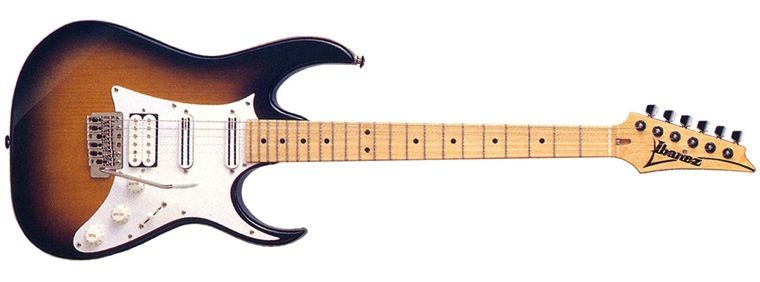
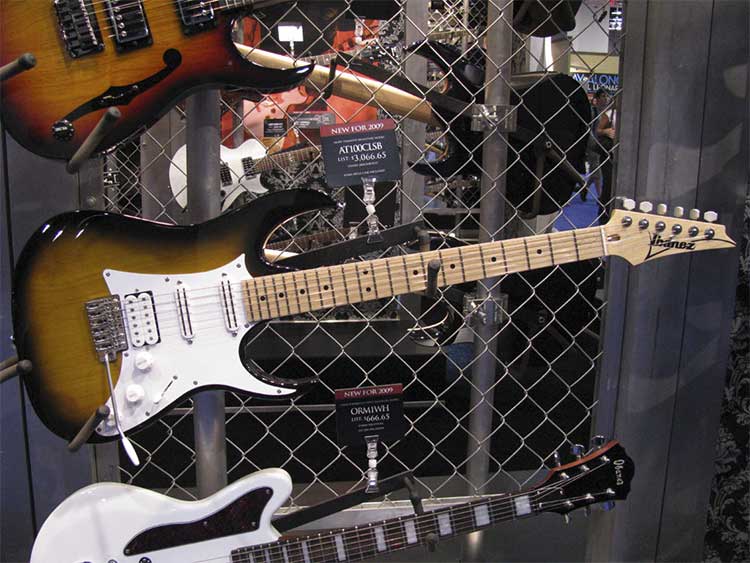
I have noticed that my guitar is the key element influencing how comfortable I feel. Amplifiers come second and effects last. I absolutely have to have my AT100 to get the best out of myself!
There is a rumour on the Internet that your guitars are usually tuned half a step below standard tuning. Some guitarists are said to use this approach to gain more body and thickness in their sound. Do you actually tune your instruments down half a step?
No, my guitars are generally tuned to standard. Although it is true that there were some songs on my first CD, Ear X-tacy, that were tuned half a step down.
What part of you does your latest album reflect?
Hopefully all of me! I am very proud of Resolution musically, spiritually and sonically.
Where can we find your concert schedule? Are you planning to play in Europe?
We always have information about upcoming concerts at andytimmons.com.
Finally, we would like to leave this space open for you to express your thoughts freely. The music world is almost always tough, and many people starting out become discouraged by the difficulties along the way. What advice would you give them about learning, not giving up and becoming a great musician?
I have already mentioned some of the keys to moving forward: Play because you love doing it. If you always keep that in mind, you will enjoy playing and will never see it as work. Play what is in your heart. Learn as many songs as possible by ear in order to develop your ability to translate what you hear onto the guitar strings. Balance the time you spend practising alone with the time you spend playing with other musicians. It is all about application —applying your ideas in a musical situation.
With our greatest admiration and respect, we would like to take this opportunity to thank you on behalf of all ISP Music readers and to let you know that you awaken powerful emotions in us when we listen to you. You are truly great. Thank you very much, Andy, and see you soon.
Thank you, guys! I really appreciate your interest in my music!
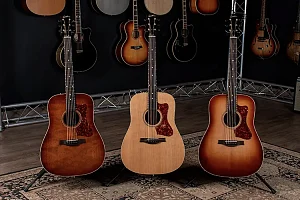
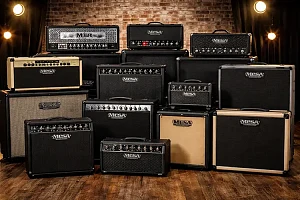
Andy uses: Ibanez Guitars - Mesa Boogie Amplification - D’Addario Strings - Dunlop - DiMarzio