* These three videos, showing its Strat®, Les Paul® and jazz-style sounds, offer a graphic sample of its versatility.
Rock & roll showed its influence in Germany before other parts of Europe because of the American troops stationed in the area. American instruments were very hard to come by, or too expensive for the average income. So German manufacturers faced growing demand from young guitarists who wanted to reproduce the rock & roll sounds they heard on the records of the day.
That demand fueled the expansion of German manufacturing: Höfner, Framus, Klira and Hoyer, among others. After the initial phase of success came a certain decline (in the 1970s) in which production was largely limited to making copies of the two big makers: Gibson and Fender. During the 1980s, falling demand forced many of the good German manufacturers out of business and, today, guitars from this origin are good-quality instruments, made in small numbers and competing fiercely against low-priced Asian and North American models.
Framus, founded in 1946, built many solid-body guitars in the sixties with strong Fender influences. Years later it began releasing its own designs, such as the Jan Akkerman or the Nashville (1975), aimed at fans of Gretsch guitars.
While still a child, Hans-Peter Wilfer learned from his father Fred-Andreas Wilfer the secrets of craftsmanship, manufacturing and distribution of musical instruments. In 1982, at just 24 years old and with a solid grounding in the field, Hans-Peter founded Warwick together with two luthiers.
In 1995, after almost ten years, Framus was able to celebrate its successful rebirth, with a completely new product line. That is how Hans-Peter Wilfer brought his father's company back to life. More than 50 years of experience and consolidation speak for themselves about Framus's success, the result of its diligence, perseverance, innovation and perfection.
Carrying the Framus Panthera Studio Pro
First of all, thanks for including the Rockbag "Premium Line" gig bag in the price. As we carried the guitar, before even opening it, I was already thinking how comfortable the bag was: light, sturdy and easy to carry. When you're spending what this guitar costs, a gig bag isn't much, but it's a detail we appreciate, especially when it's a good one like this.
Opening the Bag
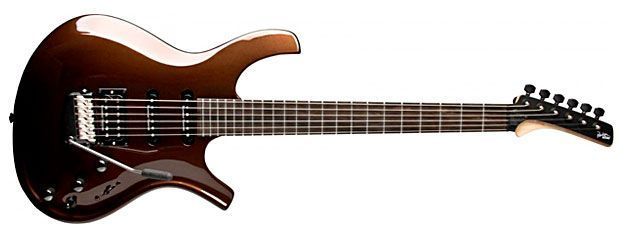
Arriving at the studio, I set about taking the "Framus" out of its packaging and, as soon as I unzipped the bag, my first reaction was to fall in love. The treatment of its fine woods (which you can see in the spec sheet a bit higher up), in natural finishes with the grain left showing, makes the guitar especially attractive. Aesthetically speaking, the combination of this handcrafted, bare-wood finish with the two Seymour Duncan humbuckers and the modern look of its many switches is curious. Without a doubt, to my eyes, the guitar is a beauty. The cutaway recalls the lines of the Les Paul, with certain variations that give it a more personal air.
The Electronics
This guitar is cared for from start to finish. After admiring its gleaming looks and flawless finishes, we moved on to investigate the possibilities of its electronics. For one thing, speaking of pickups, we find Seymour Duncans: two humbuckers and one single-coil. Even before playing it, it promised versatility, thanks to the possible combinations of its components.
Moving on to the circuitry and hardware, the guitar offers not one but two switches on the upper part of the body, and to our surprise the three lower controls (volume and tone) can be pulled up to act as switches, giving even more adjustments between the pickups.
Its flexible elements let us search across a very wide range of timbres, colors and sounds.
Bridge and Headstock
Responsive, reliable and precise tuners. A simple fixed bridge, adjustable and robust.
Plugging In
As soon as I fired it up, I felt a bit let down by the sound. As I discovered that the switches pulled up and my range of configuration options grew extensive, I realized that the first sound I heard from the Framus was just one of the dozens it lets us produce. As I kept experimenting, I found more than one exceptional sound that kept me hooked on the instrument for quite a while. In the end I concluded that this guitar let me go after almost any kind of voice I asked of it.
After the session, I reaffirmed my initial impression: this guitar is a powerhouse.
Conclusions
It had been a long time since a guitar other than the exceptionally well-known ones pleased me this much. Pleased by its finish, its looks, the care you can detect in its construction, the versatility, the sound, the intonation...
We're talking about a mid- to high-range guitar (retail price: 1,174 € including VAT) and it probably won't be the first or even the second one you buy, but if you've already gone through the beginner models, or you want to step up to a powerful guitar now, be sure to try this one, because its level is completely professional and it has "a lot to say."