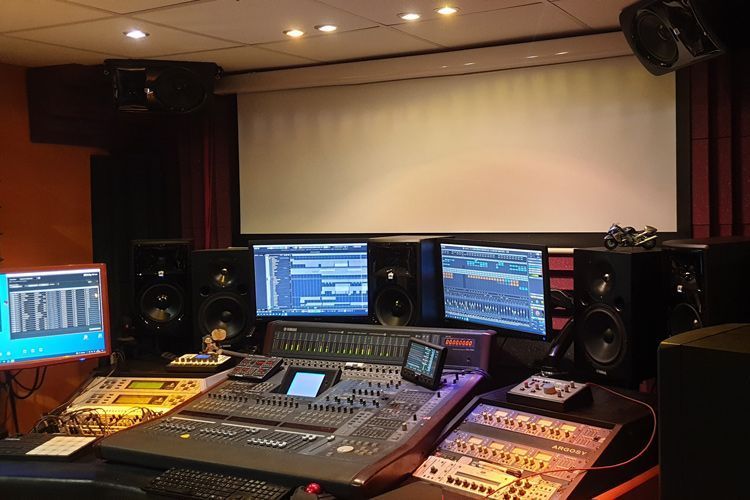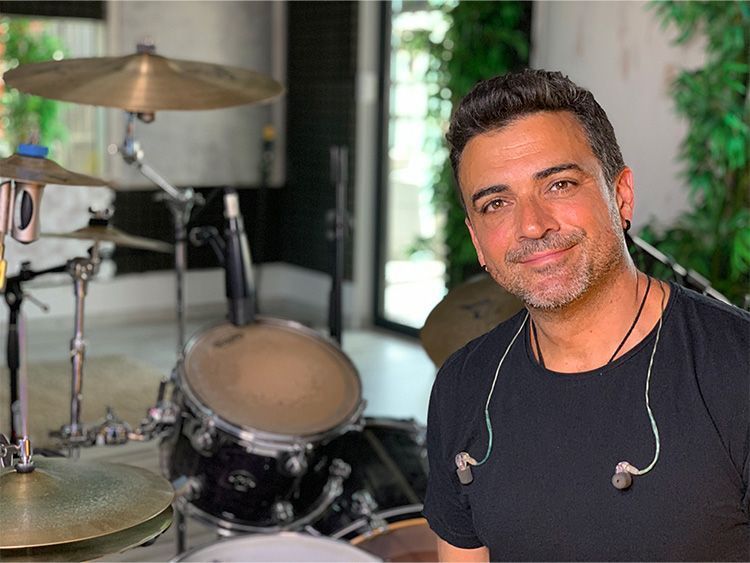
Technology is advancing by leaps and bounds, making our daily lives and our work easier. In recent years we have seen tremendous progress in music production software. Today a single person can compose, record, mix, master and distribute an entire album from the comfort of home, with nothing but a basic computer. But are we missing something along the way?
Music has always drawn on the contributions of the people involved. Of course, there has always been the (indispensable) figure of the songwriter, but he or she leaned on musicians, producers and sound engineers to deliver a song rich in nuance and interesting ideas.
Go back and listen to the work of The Beatles, The Rolling Stones, Jimi Hendrix, Bob Marley, Queen, Elvis, Aretha Franklin... You can recognize the indelible mark of the professionals who played a part in their songs.
Today I want to talk about something close to my heart: MIDI drums. Far from badmouthing them, I would like to take a look at this useful tool by comparing it with recording real drums, the old-fashioned way.
We will look at the pros and cons of each way of working, and at the end of the article we will present some tracks recorded both ways (samples and real acoustic drums) so you can judge for yourselves. Let's take it step by step.
Styles
Obviously, certain styles of music (techno, reggaeton, trap, etc.) call for electronic sounds, leaving little room for acoustic drums. Our comparison focuses on only those genres where a machine can stand in for the human touch (pop, rock, blues, jazz, reggae, country, soul, etc.).
Recording QualityLet's face it: the drum sample libraries in use today sound spectacular. On YouTube you can find videos showing how they were recorded: huge studios with endless microphones, preamps and top-quality AD/DA converters.
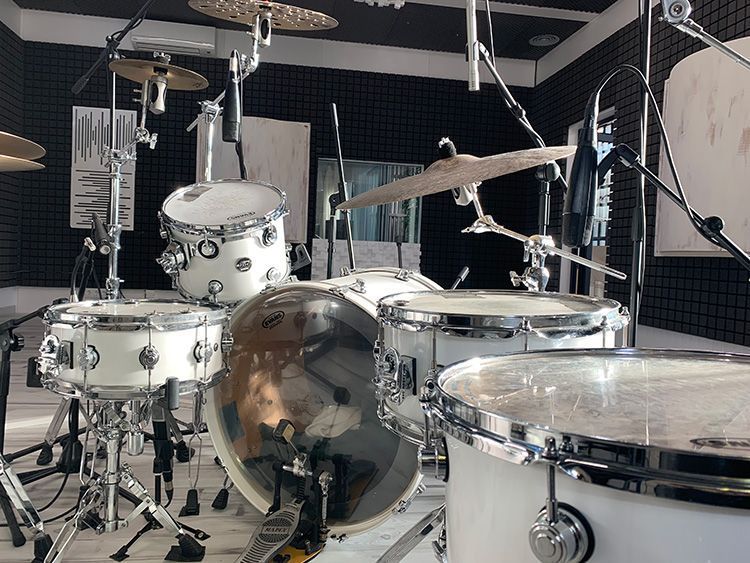
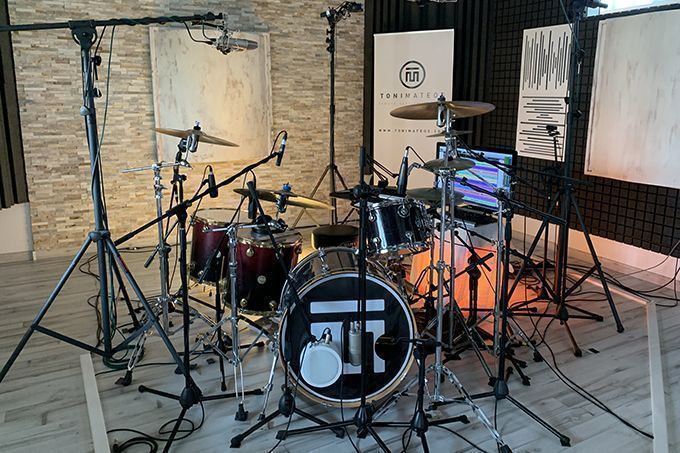
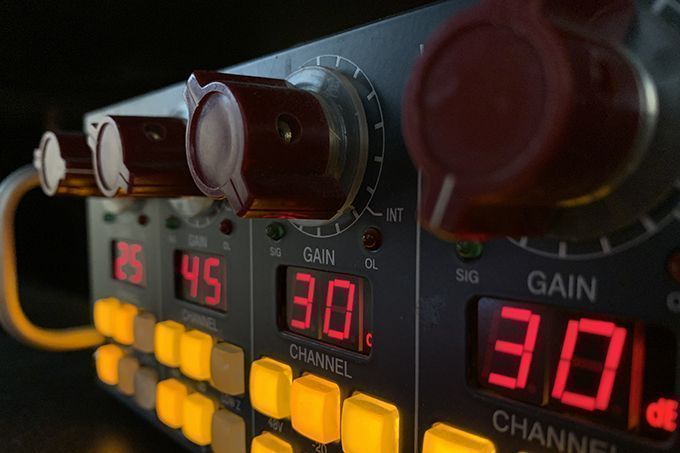
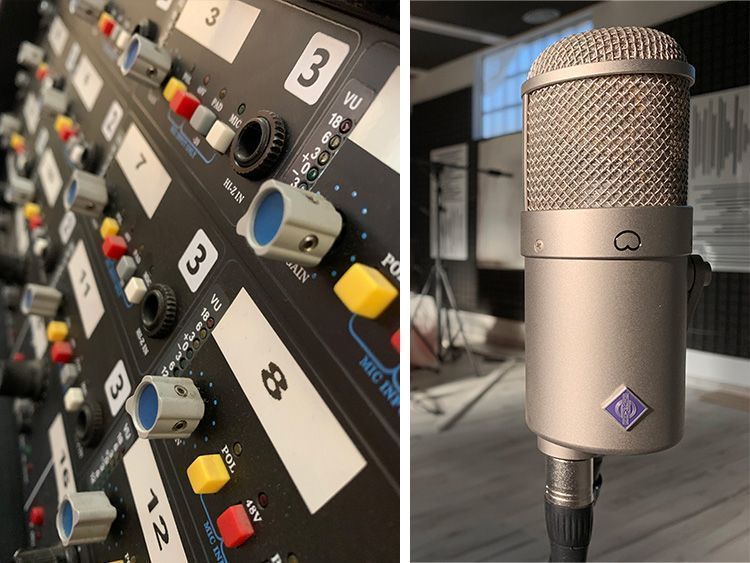
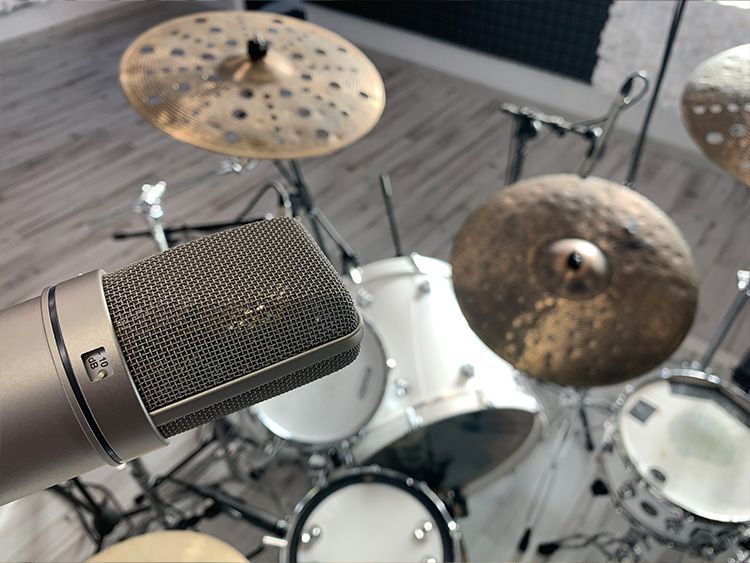
Real drums are recorded the same way, too, and for the comparison to be fair we need to go to a studio with first-rate gear. Our drums were recorded with high-end equipment, with attention to every detail, including mic placement, tuning, gain and so on.
For now, let's call this one a tie: MIDI drums 1, real drums 1.
Listen to the audio from the recording sessions and comparisons to understand the result of the experiment. Below you will find 3 sessions for each of the two excerpts of the songs used in the comparisons. 1. Programmed drum recording, 2. Real drum recording (Toni Mateos) replicating the performance of the sequenced parts, 3. “What the drummer would do” recording (Toni Mateos). Takes two and three were mixed in a professional studio (Dalamix). The article continues after the demos, analyzing every detail.
Revista ISP Música · -------------------------------------------------------------------------------------------------------------------------------------------------- Demos 1, 2, 5 and 6 sequenced drums. Demos 2 and 5 recorded and mastered in a home studio.
- Demos 3, 4, 7 and 8 acoustic drums (recorded by Toni Mateos), mixed at Dalamix and mastered by Antonio Moreno.
---------------------------------------------------------------------------------------------------------------------------------------------------------------
Time RequiredWe discussed this subject with various producers and programmers in the industry. Working with MIDI drums is indeed very fast... up to a point. While it is true that you can get a few beats that “work” in a matter of minutes, most of those we spoke to agree that it takes endless hours before the result starts to sound “human.”
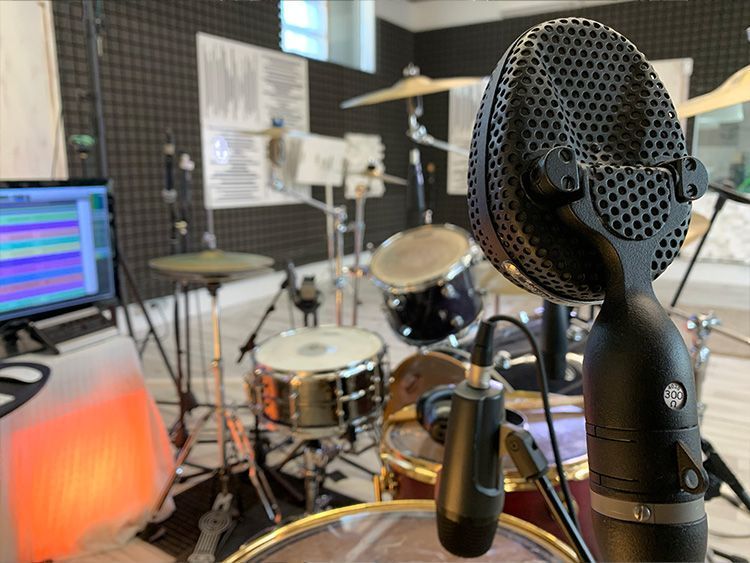
Choosing the right sound for each piece, programming ghost notes, adjusting the velocity of each hit so it doesn't sound robotic, making sure it doesn't sound like “three hands” at once... these are processes that can take whole days.
By contrast, hiring an online real-drum recording service can save an enormous amount of time. Many of the sites you will find online quote turnaround times of between one and five days. And, of course, you don't have to travel or attend the recording session.
In our case, it took a total of two hours to record the drums you will hear on the sample tracks. Looking at the time-to-result ratio, I think recording real drums wins this round. Score so far: MIDI drums 1, real drums 2.
One of the big advantages of working with MIDI drums is that you don't need any prior knowledge to “start sounding good.”
There are even plug-ins that will build a drum part for you in a matter of seconds, adapting to your bass line or melody. What's more, some of these samples come pre-processed, with a more than acceptable final sound.
Working with fifteen or twenty acoustic drum tracks, however, is another story. You'll need to review your gain structure, clean up tom tracks, EQ, compress, create subgroups, add effects... Without a doubt, it's a process only for those who have had some training and put in a few hours of practice.
What a goal, top corner! Definitely: MIDI drums 2, real drums 2.

In my view, the danger of “one-man-band” productions (do it all yourself), where the same person plays guitar, drums, keys, and also handles mixing and everything else, is inbreeding. We already know the historical consequences...
No offense to anyone, but a drum part programmed with a mouse will never surpass a groove from the maestro Steve Gadd, to give just one example. And although we have all listened to plenty of records, it takes more than twenty years of intensive practice to become an expert at anything (the famous “10,000-hour rule”).
I often hear programmed drums that are impossible to play or that would simply never have come out of a drummer's head.
As we said at the beginning of the article, music has always drawn on the contributions of different professionals working on the same song. Doesn't the same happen in film, architecture or theater?
If we were talking about basketball, this score would be a three-pointer.
But let's call it one point for humanity: MIDI drums 2, real drums 3.
One of the main arguments in favor of virtual drums is a lack of budget, which often forces people to program everything with MIDI (bass, percussion, horns, strings, etc.). Indeed, at some point we musicians decided to give our work away in exchange for popularity, a handful of likes or a few thousand plays. To this baffling phenomenon were added the great advances in music computing, and the result was the collapse of the industry.
Anyone with a basic computer can now release an album. You don't even need a shred of talent, because our software will take care of covering up our musical shortcomings.
With this landscape, it is understandable that very low-budget productions abound, where one person does everything. And although recording quality drums remotely is very affordable today, it is impossible to compete with the free libraries floating around certain corners of the internet.
Point for the robot: MIDI drums 3, real drums 3.
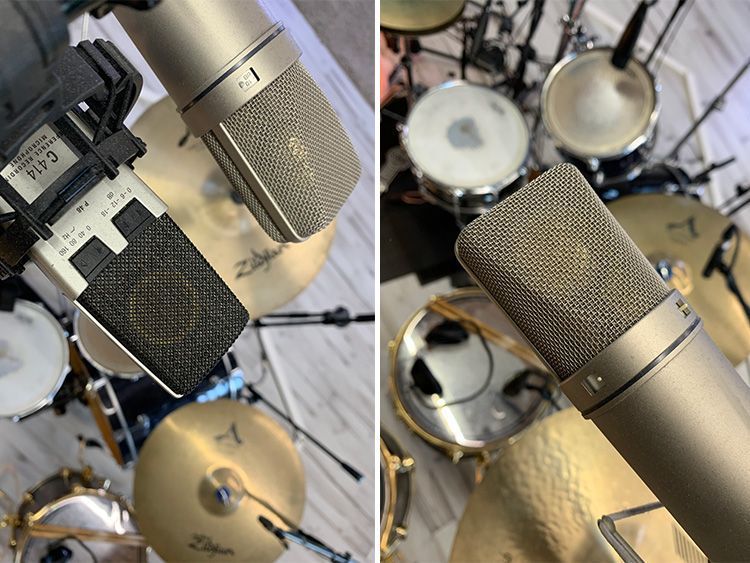
A few years ago I had the chance to chat with the great Simon Phillips (drummer and recording engineer, best known for Toto, among many others). I asked him how he recorded and mixed the spectacular drum sounds on his records, and he told me the key was bleed: when you hit one piece of the kit, its sound is picked up by all the microphones... naturally.
The drum set, dear readers, is a single instrument. Phillips told me he always uses a kit with lots of toms and cymbals, even if he isn't going to play them.
“When I hit the kick drum, every piece of the kit vibrates sympathetically. That creates a tonal and harmonic richness that I take advantage of in the mix to get a gigantic sound... but you have to know how to do it.”
The renowned engineer Chris Lord-Alge (Green Day, Madonna, Rolling Stones, Prince...) also uses specific miking techniques to enhance bleed and get spectacular results.
The samples used in MIDI applications, by contrast, lack that profusion of nuance.
Don't take my word for it, the greats say so... point for the organic! MIDI drums 3, real drums 4.
PrecisionIn recent years we have accustomed our ears to “musical perfection”: everything seems to have to sound 100% in tune and on tempo. That is why many producers say they prefer MIDI drums: everything sounds perfect from the start.
The result is often so artificial that much MIDI drum editing software now includes a “human factor,” a margin of error we can dial in to make it seem as if a person played it. Have we lost our minds?
In my view, the small fluctuations in tempo and/or sound that a professional drummer may have are among the things that give him or her groove and personality. And if we don't like the result, we can also edit it and leave it perfectly quantized with tools like Beat Detective or Time Stretching.
When it comes to precision, I don't think there is any difference between the two ways of working. Let's call it a tie, one point each: MIDI drums 4, real drums 5.
Although “library drums” include samples recorded at different volume levels, these are not infinite. What's more, programming them at different intensities so they sound believable is one of the most tedious and costly jobs in MIDI editing.
That's where you can burn through the little budget you had for the production. In my opinion, this is one of the weak points of MIDI drums.
A professional drummer, on the other hand, can adapt every single hit to the required dynamic range. Or at least the finished product will sound “natural” from the start, because... it is!
Put one on the scoreboard for the human team: MIDI drums 4, real drums 6.
Some of my producer friends say they have lost a lot of time arguing with musicians. Getting an instrumentalist to play the producer's ideas isn't always easy, especially when there is no sheet music. Some of those musicians will try to impose their own view, other times they won't understand what is being asked of them... Often the producer's arduous task is to convince them to play the idea he or she has in mind.
Canned drums, in that respect, are faithful squires. They will repeat your programming over and over, no matter how good or bad it is.
Likewise, if you have an experienced professional musician, he or she will be able to interpret your idea with maximum fidelity. In the tracks at the top of this article you can hear how in take 1 I copied the client's demo exactly, while in take 2 I proposed different ideas.
When it comes to fidelity, I think it's fair to call it a tie: MIDI drums 5, real drums 7.
Variety of SoundsRight now, in my studio I work with twenty different snares, four kick drums, ten toms and six sets of cymbals. Of course, all those pieces can be swapped and tuned differently, offering the client a huge number of possibilities.
Even so, they all fall short of the endless range of samples a 5-gigabyte sample library can offer. I admit it, I lost that round... If you're the type who can spend a week listening to every snare sample until you find the one you like, MIDI drums are for you.
Still, in my opinion so much variety can drive us crazy, costing us valuable time (and money) that could go to other tasks. Let's not forget that the great records of history were recorded the old-fashioned way, most likely with the single drum kit the drummer had at the time.
You can look up videos of Vinnie Colaiuta recording for wildly different artists (from Herbie Hancock to Alejandro Sanz), or of Simon Phillips (with Toto or The Corrs). You'll be surprised to see they recorded them with the same kit.
Still, in all honesty, this round goes to the hard drives: MIDI drums 6, real drums 7.
We reach this final point with a question that is hard to answer: Why do we make music? What is the ultimate purpose?After much searching, my own answer is that we do it to share emotions, to express our feelings, trying to get our audience to catch them on the fly, make them their own and be moved by them.
Over my life I have fallen in love many times. I have laughed and cried... I have gotten angry and made up again. I have felt rage and resentment, but I have also learned to forgive. And you know what? Those feelings were never provoked by a machine, much less by a plug-in.
In my view, this is the drubbing, the hat trick, the “manita” (the 5-0 rout) or the “bath” (call it what you like) that a real instrument can hand a MIDI one.
It is true that virtual drums are a useful tool, fast and inexpensive, for getting ideas down on your own without needing anyone else. But we can't accept the part for the whole, self-gratification for sex, the demo for the record.
Let's bring back old recipes, or explore new formulas, so we don't leave behind what once led us to make music: the pleasure and the need to share.
* ISP Music & Producer magazine would like to thank Toni Mateos, The Chickens ®, Dalama / Dalamix and Antonio Moreno.
* Can't hear the demos in the player above? Try updating your browser to a compatible version, or listen to them on SoundCloud, here: