 I would say he is one of those artists who devour you with their talent. His magic cuts through the shell. His music and voice pierce the senses and nest in the engine of the listener's feelings. Chance, coincidence or passion led me, in the past, to experience this songwriter's musical energy up close, and I have always wanted to soak up his overflowing vitality.
Among musicians and artists, we spend long stretches debating technique, inspiration, learning, composition, virtuosity, etc. Today's guest is a clear example that the fire of getting the message across is far more powerful than dazzling, breakneck technique on an instrument.
Pablo is a multi-instrumentalist. I would venture to say that the technical discipline that has always intrigued him most is singing. A technique now refined, which he adds to his powerful vocal qualities and his personal way of telling songs.
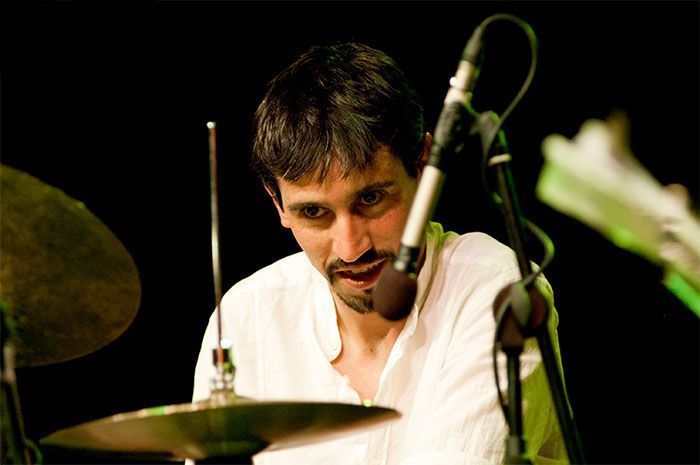
But what is most striking about this musician, to me, is his sharp power of communication. With regard to his multi-instrumental ability, I have had the chance to see various sides of Martín: drums, guitar, vocals, etc. And I have always perceived the same thing: an overwhelming energy that spreads to whatever instrument he is playing.
Lyrics and music. Always restless about composition, I know that he has been carving out a place for himself, among other things, in the "songwriting" field. To the point of becoming a seal of quality for the record labels and artists who release or perform his works.
I always make an effort to find personalities, artists, musicians, producers, etc., who can be a source of learning for ISP readers looking to grow. To compare lessons and ways of understanding creation. To exercise the sponge effect, taking talent or technique from here and there. Pablo Martín is one of those people who has devoted his life to music. And that is not the quality that made me think of asking him to join our ISP conversations. It was his charm and his powerful way of expressing himself when writing and playing. That magic he possesses that I cannot define in words. I can only feel it when I hear him.
He accepted our invitation, thank you. We will take advantage of his kindness to uncover the mystery of making songs. Minutes that slip through the cracks of almost any human being until they reach the soul.
Don't be stingy, and tell us the secrets.
Thanks to Pablo Martín, and welcome to ISP's musicians' conversations.
David Martín
The interview
By Mamen Diaz-Alersi
You have devoted practically your whole life to music. When and why did you start? What were your beginnings like?
At eight years old I would finish my homework and put on "Crazy Man, Crazy" by Bill Haley and His Comets as a reward. Also the single of "Singin' in the Rain" or the LP "The Sound of Philadelphia." At ten I sang nuns' songs with my sister and her guitar, and I felt an inexplicable fullness when I sang.
At 12 I met my friend Michu, who was repeating a grade (a dirty word) and had a ton of rock records from the era (it's been a long time since I was 12), and with him I started playing at putting a band together. It was a game with your friends. The most fun game I had ever known.
All that, seasoned with an older brother who was a music lover and spent his allowance on records of all styles, a sister crazy about the "Jesus Christ Superstar" soundtrack and flamenco, my other brother who bought me my first kick drum pedal, a father who played folk music at home and listened to classical, and a mother who had to balance all of that... What do you expect to come out of it? Someone who, through play, listened to everything without prejudice and over the years discovered that he could do nothing but be a musician to be happy. Any attempt to do something else was a physiological necessity.
Although you've never set performing aside, I believe you have been (and still are) deeply involved in the creation, production, etc. of big hits, not only your own but other artists' as well. Tell us a bit about where and with whom you have worked.
Professionally, that started happening to me 10 years ago, when I began working as a backing vocalist for Alejo Stivel on the first albums by El Canto del Loco, La Oreja de Van Gogh, La Quinta Estación, David Broza, Los Lunes, and many more. I was writing songs for my own band, and I wrote a song that was dropped from the album that was starting to take shape at the time with Josu García (La Tercera República). The song was called "Sólo tus canciones," and I had written it years before I presented it. It was sent to Argentina to launch a young woman named Daniela Herrero, and I learned what it means to be blown away: 13 weeks at number one in Argentina in "airplay" (the most-played song on the radio). That awakened my self-confidence, and I have also worked with Rosa ("Caradura") on her first album, as associate producer and songwriter; with Lolita on "Si la vida son dos días," which was both a campaign for O.N.C.E. and a single from one of her albums; I produced Verónica's first album and wrote her first single ("Bésame"); I was also associate producer for Sr. Trepador, a young pop-rock band, and Manolo Breis, a rocking singer-songwriter and a great guy, and a boring et cetera for the reader. Wake up, we're not done yet!!!
Which part of the musical process do you prefer?
Without a doubt, songwriting and playing live. The one I like least is recording, within the pleasure that working in music is.
I consider composition a very intimate act aimed at communicating something to another person, anything that moves them when they listen to you. For the one who writes, it explains what he had inside, and for the one who listens, it draws it out and explains it to them. It is a solitary act that unites (a solidary one, too).
Playing live is like life itself. You have to use what you've got to keep pushing forward.
People often talk about the artist's ego... in cases where success comes to others thanks to your work, is it hard to stay "in the shadows"?
I must keep my selfishness somewhere else, or I'm just odd. The shadows are a very peaceful place where you feel very comfortable and work at whatever pace you set. You earn just as much if you write well, and you are very much the master of your time, which is not the case with an artist's promotional commitments and concerts, something I know firsthand.
How do you make a "big hit"? What's your secret? (at least give us a hint)
Now we've run into the church, my friend Sancho.
Things have gone well for me a few times, and luck, if you've been writing songs for 20 years, is less a matter of luck. But there are variables that can be identified (who the artist is, what sound they want... They always tell you to make it sound like something, and you run the risk of sounding too similar, which is already a mistake in its approach, but the publisher calls the shots). When it comes to songwriting there are no rules, but I use what is hardest for me: SIMPLICITY, which is the most difficult thing—forgetting that you're a musician and that you don't have to impress your peers, but rather please the audience. This sounds obvious, but it takes years to learn.
Listening to what you're asked for, even if it's brief or seems absurd, in order to know what the artist wants, is essential.
Who knows?
What does it take to succeed in music: talent, image, luck or good connections?
If you have talent, you need good connections, and you can look for them while you work.
If you have image, you need an audience that likes it, someone with the talent to write you the right message, and luck while you work.
If you have luck, all you need is to know how to hold on to it and why you had it.
If you have good connections, you need talent while you work.
For me, succeeding in music means that music is the job that lets you pay for your home, your food and a treat every now and then.
You have also been involved in the world of film and television, as with the series "Raquel busca su sitio," where we saw you perform in an episode. What draws you to that kind of collaboration? Have you done any other work of that kind?
Four months ago I produced a show for "La Sexta" with a live band (a sort of live karaoke), and it wasn't an experience where you could talk about music as art, but rather as entertainment and a contest—something I don't think I'll repeat that way again, out of respect for musicians and for music. TV is madness.
The "Raquel…" thing was a collaboration singing the show's theme song as promotion for the band, nothing more. It's usually done for promotion.
I write songs that have been picked up for a few films, and now I'm going to get into theme songs for series and things like that.
Can you make a living from music alone without being "the hit" of the moment? Who do you have to "make a deal" with for that?
Yes, you can. In fact, very few people are the hit of the moment, and a lot of people would be going hungry. Making deals with advertising, theme songs and opening titles for series, music for documentaries, films, music for stage plays, etc., are artistic and wonderful ways to earn your bread and what goes inside it.
What brought you and Josu García together? Your passion for singing? Tell us a little about your work with him.
You got it. We were brought together by our passion for bands like Cánovas, Adolfo, Rodrigo y Guzmán or the Eagles, and our love of good songs.
We are two songwriters and instrumentalists who work individually, but we know that what we produce together is much greater than what we achieve separately. Each of us works at home, we get together to listen to songs, we pick what we like best and the rest is pure enjoyment.
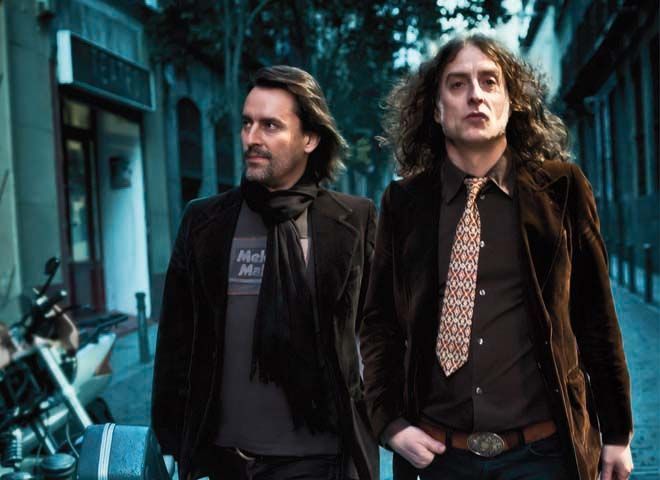
Martín & García: why did you decide to drop the name "La Tercera República," which you had been known by until then, when releasing your latest album?
We opted for a name without "sharp edges" for anyone or for any town hall, and that's as much as I can say.
Tell us about "Asociados," your latest work. What can we find on it?
You'll find adult rock, country, a '70s touch and a pop-rock song or two—songs that had been written and recorded for some time, which belong to an earlier phase as far as we're concerned, though not for the public, and we wanted to release them before recording another one.
Do you have a tour or new projects planned...?
We're presenting the new album that came out in May of last year. We've just come back from the Valencia region and we're heading to Galicia, Santander and other places across this bull-hide land of ours that keeps us so busy.
We already have the fourth album almost written. I'll tell you more later on.
How does "your own music" differ from the work you may do for other artists?
When I write for others, more ways of thinking, solving and imagining come into play. I can even say something I don't feel but believe someone else does. But in my own work it's only me, and I hope to please you, because that's why I do it.
When you write, do you decide which songs you'll keep for yourself and which ones you'll "shop around," or in those cases do you only work on commission?
From the moment I write something, I know whether it works for me or whether I need to pass it to the publisher for another artist.
If it's a commission, Pablo follows the commission.
How do you "shop" a song so that it gets noticed, someone picks it and includes it on their album?
First of all you have to make a good demo, ask the big publishers for the list of artists who need material and tell them who you think the song is right for, and then they send it to them.
It's much more direct and effective to know the artist or the album's producer personally, since you skip the publisher step, but for that you need to be very well informed and well connected.
In our magazine's own forum, we see daily discussions about an artist's "integrity," whether one should stay true to one's own style or "sell out" to the majors to achieve success... It seems that you, so far, have managed to handle both sides successfully and stay in harmonious balance. What's your secret?
That I respect people above music, that I respect myself, and that balance is found in the personal circumstances of both the one who "sells out" and the one who criticizes it. I HAVE SPOKEN!!!
Thank you so much for your time.
Thank you for such intelligent questions, to David for writing such lovely things about me, and because this interview has been a beautiful exercise in reflection for me.