 In every professional field there is always a role model to follow. When the editors of this magazine suggested I go see a production José Dalama was working on (he prefers to be called simply Dalama), I didn't hesitate for a second, even knowing which musical production I was going to see.
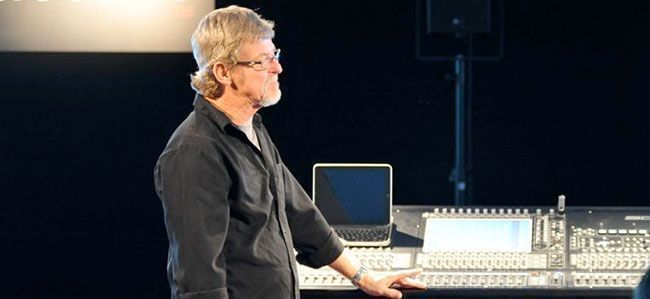
He (along with a few others, of course) is not only one of my professional role models (put Vega on the list, for example), but a self-made sound engineer who has clearly laid the groundwork for becoming a "true" professional. He is one for many reasons, but mainly because he knows how to meet challenges with complete professionalism. In fact, it took us just a few minutes to see that we clearly shared some points of view, things you'll certainly never find in any telecommunications, acoustics or systems engineering textbook, and that make the professionals in this industry different and special. Perhaps that's why this article will seem dull, impractical and even uninteresting to you; but as I tried to frame it in my mind throughout the night, it became clearer and clearer to me that what I wanted to get across to you wasn't which mics he had chosen for the event or how he had set up his Venue… there are already dozens of identical articles online. My idea is to show you what other aspects make Dalama a truly special professional. It's something I knew I could learn, and after eight hours together, I understood it and learned it all over again. I don't want to forget those things, and since they're no secret, here they are.
No secrets
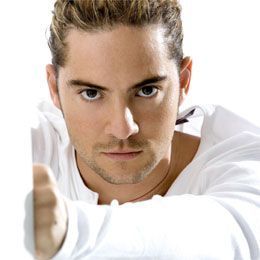
I was asked to be at the Terrassa athletics track at around six in the evening, for that night's David Bisbal concert. This year Dalama is touring with this young Spanish musical star. "It's a job and, regardless of whether or not I like his musical style, as you'll see, the challenge is more than significant." I'm usually punctual and this would be no exception. At 6:00 p.m. sharp I was at the first security checkpoint. Armed with my camera, I raised some suspicion among the security guards on duty. Dalama wasn't available at the time, so someone came to get me.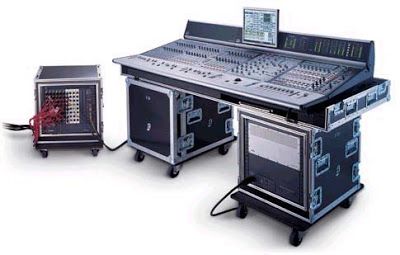 Dalama was on stage, an impressive stage. I've been going on tours and to concerts for years, and it had been a long time, if ever, since I'd seen a technical setup as massive as the one Bisbal has for this tour (understand me, I'm talking about Spanish productions). I had plenty of time to study that mega stage. Dalama was surrounded by a dozen students from Microfusa. Invited by Lexon, these young people seemed to be paying attention to Dalama's explanations about the type of microphone chosen and its placement on every single instrument setup installed. From a distance, I could make out a certain eagerness, like a student listening to the master. I have no idea what level each of those young people was at, but someone should probably warn them: getting to where Dalama is isn't easy; it takes a lot of work. Dalama played his role as host. A while later he confessed to me that he didn't feel entirely comfortable in those situations: "However much you explain things, what you're hoping for is that they'll ask you questions; they never do." He spent half an hour in front of the percussion setup and then went on to unveil the drums. I knew that all (or most) of the mics used were Audio-Technica, since it's one of the brands he trusts most. Now do you understand Lexon's role in this master class? While the students seemed attentive (although perhaps the heat or boredom was starting to take its toll on some of them), I began to focus on the stage techs: nothing escaped them. With the Fluge logo everywhere, I was surprised to see a tech conscientiously cleaning the nearly twenty subwoofers in front of him, and they already looked perfectly clean to me! He did it lovingly, as if that Meyer Sound rig were his own. The dozens of meters of aluminum truss looked new, although it's true that this concert was one of the first on the tour. They had started setting up the gear at nine in the morning ("you'll see how complicated this gets tomorrow and the day after, since we have gigs then too," Dalama predicted) and, with the scorching sun still far from the horizon, there were things left to do: the two high-resolution video screens, the pyrotechnics, the sound checks, the lighting checks…
Forty-five minutes after I arrived (right on time for my appointment), Dalama and his students disappear from the stage. I don't know where they are. The unusual shape of the stage begins to sketch out in my mind some challenges to overcome. The stage is rectangular, as always, but rotated about 45º, leaving the front in a V shape. The PA is placed right in the middle (on the axes farthest out to the sides), with the musicians behind it and an immense space in front for Bisbal to flex his muscles every night. Won't that be a problem for feedback? I'll find out later.
Not a single monitor on stage. "We were clear that with so many instruments we needed a stage 'clean' of sound… in fact, there aren't even any guitar amps," Dalama says. Everything is in-ear, but without eliminating the role of the monitor engineer.
With the same order and silence I sensed during that first hour, the lighting tech, with the sun still high, began testing every single series of moving lights that crowded the truss.
There was a fairly strong wind. Those of us from the area know that's very normal when it comes off the sea (even though we're 50 km from it). "It'll stop at night," I bet Dalama. The PA couldn't be flown until the last minute. The audience would witness it.
At seven minutes to seven in the evening, Dalama manages to say goodbye to his chance students. "Finally a generation of more or less well-trained techs is coming along," he says. "I had to learn everything by myself."
At seven sharp the musicians appear on stage. Is Dalama a musician? "I'm a magician, or that's what I'm supposed to be," he declares. "I spend a lot of time studying the band, the music, and discussing with whoever I need to, song by song, what should be heard and how. The secret is knowing how to do what they ask of you, but not explaining it (he laughs)." We agree on many things, such as the idea that the sound engineer should be seen as an essential part of the band. "There are three guitarists, three horns, a percussionist, the drummer, the two backing singers, the keyboard player, David… but also the lighting guy, the monitor guy and me… we make up a band, even if we like to go unnoticed." Go unnoticed? Is it that you perhaps aren't proud of what you achieve? I ask. "Of course I am! But it's only very recently that our work has been taken seriously… We've fought hard for sound to be taken as seriously as it should be. Maybe now people are starting to criticize the sound and, therefore, us engineers; but there was a time when nothing mattered." And he's right.
Shortly before quarter past seven, he sat down in front of the Venue. Dalama has his own Venue, although in this case the tour organizer, while accepting the use of this console, installed a rented one for him. "It's a console I love. It gives me everything I ask of it and gives me a flexibility I've never had before. I have everything under control. I can spend more time on how it sounds instead of figuring out why it doesn't sound the way I want." (And what if I ask him what he thinks of digital?) "Sit down and listen," he tells me. "Besides," he continues, "it complements Pro Tools perfectly. I can record a concert or some rehearsals and then discuss some arrangements, mixes, etc. with the musicians. It's great."
The sound checks took barely half an hour. "We had the first concert a couple of days ago, but before that there was a long, well-prepared production rehearsal period. One of the advantages of the Venue and the gear I'm using on this tour is that it lets me have more flexible, faster and more effective sound checks." The only problem is that the PA is still down. The wind won't let them fly it. It's about 100,000 W of power, and a damn wind. When the checks were over, the person in charge of the mics had already promised Dalama to have all the necessary windscreens as soon as possible.
LIVE
At 8:09 p.m. the first David Bisbal fans arrived. I'm convinced that many of them (yes, boys and girls alike) had never run so fast and for so long on an athletics track. In the stands, quite far from the stage, some of their parents calmly sit down and begin to wait for the end of the concert: one eye on the stage, the other on their child.
There was still an hour and a half to go before the first chord. Would these "youngsters" notice Dalama's work? "I hope so… after all, it's musical culture," he says, and laughs again. "They'll enjoy concerts like we never did at their age… Back then there wasn't this kind of gear; now it's more common. So sound engineers are more important now; they have to be more professional." During that half hour, Dalama devotes his efforts to tending to several personal and family commitments. I stay at front of house, trying to understand what's on the minds of such a devoted audience.
Everything is brimming with calm, except for one person. It's the Fluge systems engineer, who finally decides to fly the rig. With less than 20 minutes to go before the concert starts, he goes for it. The thousand-plus spectators watch closely, since, apart from the spectacle of seeing all that paraphernalia of boxes rise up, there's little else to look at.
Is Dalama nervous? "Like a little kid. I always am before we start. You wouldn't believe it. I know everything works, I know the Venue won't let me down, that the Fluge guys have set everything up right… but it's unavoidable." What would happen if you weren't nervous? I ask him. "I'd have to quit this job." The lights go down. Bisbal draws thousands of screams.
The live show is spectacular, for many reasons. It's a production designed for pure spectacle: images and lights. Yes. There's no "sound." It's not that you can't hear it, but the audio on this tour is designed to do its job. What makes this stage different are the two video screens and the spectacular light show, which, from the very beginning, leaves even me open-mouthed. But I don't want to see it; I want to hear it.
The first song, although it sounds very good, won't go down in the history of Dalama's résumé. That's logical. The checks were relatively quick, more a check of channels and levels than anything else. "That's the advantage of the Venue. Everything is ready and I can focus on other, more artistic things," he says. Art? Is sound an art? Of course it is.
"We have to know about music. We need to understand what's happening on stage. Detect what might be going wrong, what needs to be brought out, how and when. It's essential (…)."
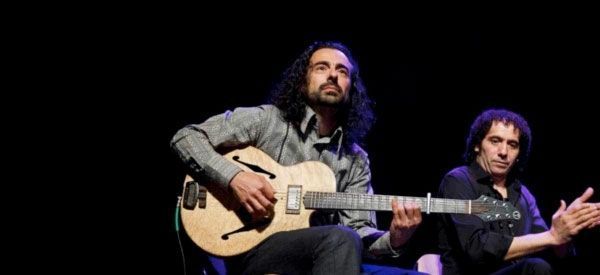
Dalama differs from many of us in that he wasn't "born" to be a sound engineer. It was pure chance. "I spent the first years of my life going from one side of the world to the other. You know, back when this Spain wasn't for everyone," he says. "I landed in Madrid at around 30, and my contact with this world was as a musician. I played weddings, baptisms and communions… what times those were! I was drawn to all those knobs, since I'd take the time to help whichever tech we had. Sometimes we even set up the gear ourselves; I'd put the console on stage and play guitar while doing the sound 'blind.'" (Wouldn't he mean "deaf"?) So he didn't put down the guitar until he was 30? "Either I kept painting apartments or I took the offer that came my way out of the blue from a sound company… that's how I started. They liked my work and here I still am. I don't get it," he jokes.
If I set aside the first and second songs, Dalama's work is based on what it should be based on. The gear is good enough that EQ and dynamics processing aren't complicated. Given time and a console like the Venue (a magnificent one, by the way), almost anyone could achieve the same results, though it might take them more or less time. "The art is in the mix… it's my magic," he says.
He has the Venue laid out so his brain doesn't have to search for channels. His hands move across the generous long-throw faders blindly, like small living beings that know exactly what to touch and when. "It's my console; I've placed my complete trust in Digidesign and, although it's never given me any problems, this Venue is like an essential part of my body." His work is constant. I can't watch him for more than a minute without him doing something… there's always something to do. Remember those Microfusa students who came? One of them (just one) stayed to watch the concert. They let him come up close to Dalama, and a while after he came out he confessed to me that he hadn't understood what Dalama was doing at the console. "Since he's working with a thousand plug-ins, I don't understand what he's doing." Maybe he just didn't know how to listen.
That late-flown PA was undoubtedly a small problem for Dalama. Not a single bit of feedback was noticed by the audience, but it was easy to see Dalama juggling to keep it from happening. While he controlled the volume of Bisbal's voice with his little finger, the rest of his fingers had the job of carving out the space needed for that prodigious voice to have its place in the highly orderly musical dynamics. Every instrument (and there are quite a few) had its presence. "If I detect something I don't like, I never mute it: I learned that lesson. I leave it at the lowest possible level… if someone says something to me, I can always tell them, 'You can hear it, can't you?'" he confessed.
An hour and a half later, the relatively small audience was exhausted. It was a little after eleven at night. Less than five minutes after the musicians, led by Bisbal, had left the stage, a dozen black ants began dismantling that vast stage piece by piece: the next day in Lleida, the day after in Andorra… time grants no leeway.
Dalama blushes when I tell him I've always followed his career. I know he's aware of it, but after spending an entire afternoon and evening by his side, I can confirm his excellence at his work. His humility as a person makes him very great, but his professionalism as an engineer makes him simply brilliant. Simple in manner, complete in results, Dalama reminds me that in this world there are dozens of principles to keep in mind, and that all of them, absolutely all of them, matter, however small they may be.
Interviews