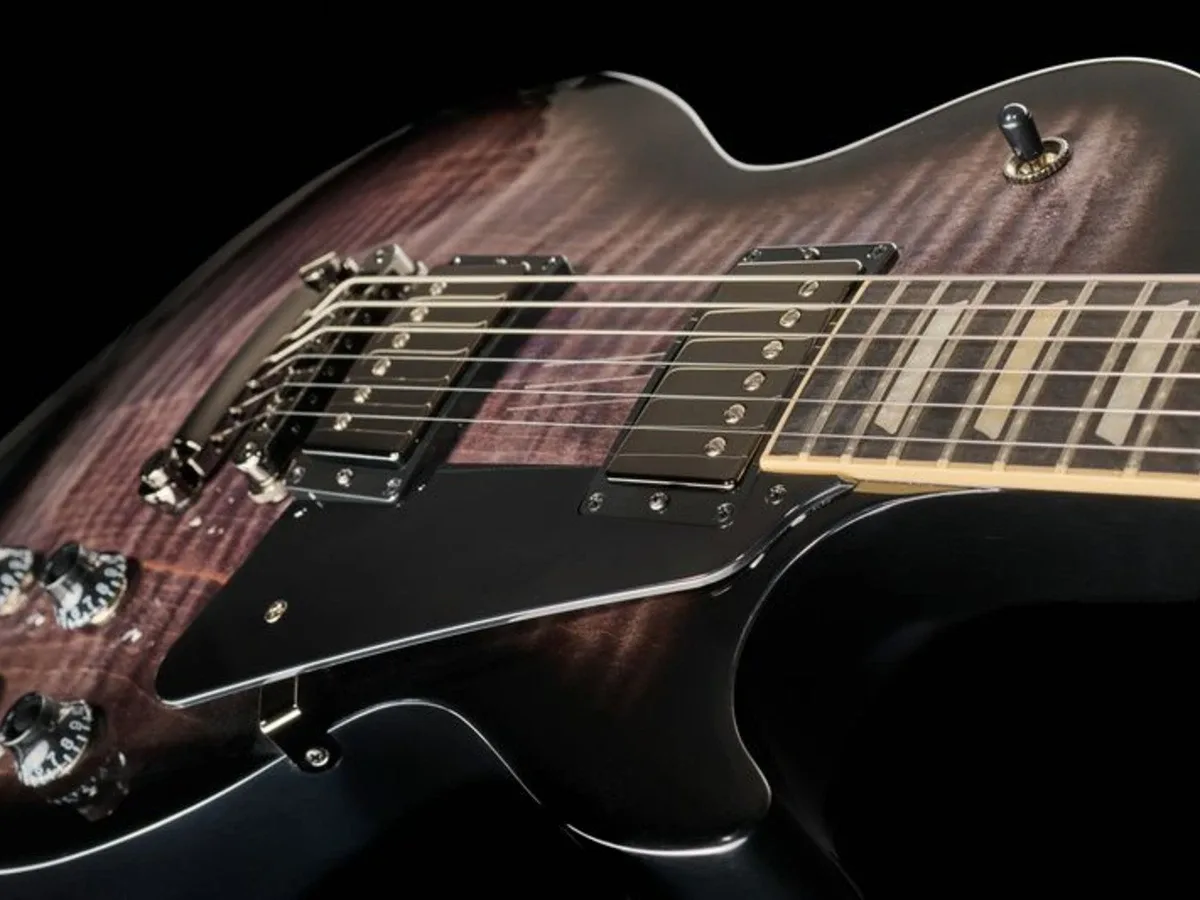
The Les Paul Studio was born in 1983 with a very clear idea: deliver the sound of a Les Paul without paying for the cosmetic extras of the Standard and Custom. Forty years on, Gibson has turned that idea into something far more ambitious. The Les Paul Studio Session keeps the essential recipe (mahogany, maple cap, glued-in neck and two humbuckers), but adds an AA figured maple top, a bound ebony fretboard, a contoured heel, Ultra Modern weight relief and, above all, electronics with four push/pull pots that multiply its range of sounds. We tested the Translucent Ebony Burst (TEB) version, which stands out in the range with its black nickel hardware.
Specifications
| Body | Mahogany with Ultra Modern weight relief, carved AA figured maple top, single-ply cream binding |
| Neck | Glued-in mahogany, SlimTaper profile, Modern Contoured Heel |
| Fretboard | Bound ebony, 12" (304.8 mm) radius, 22 medium jumbo frets, acrylic trapezoid inlays |
| Scale length | 628.65 mm (24.75") |
| Nut | Graph Tech, 43.05 mm wide |
| Bridge and tailpiece | Aluminium Nashville Tune-O-Matic and aluminium stop bar |
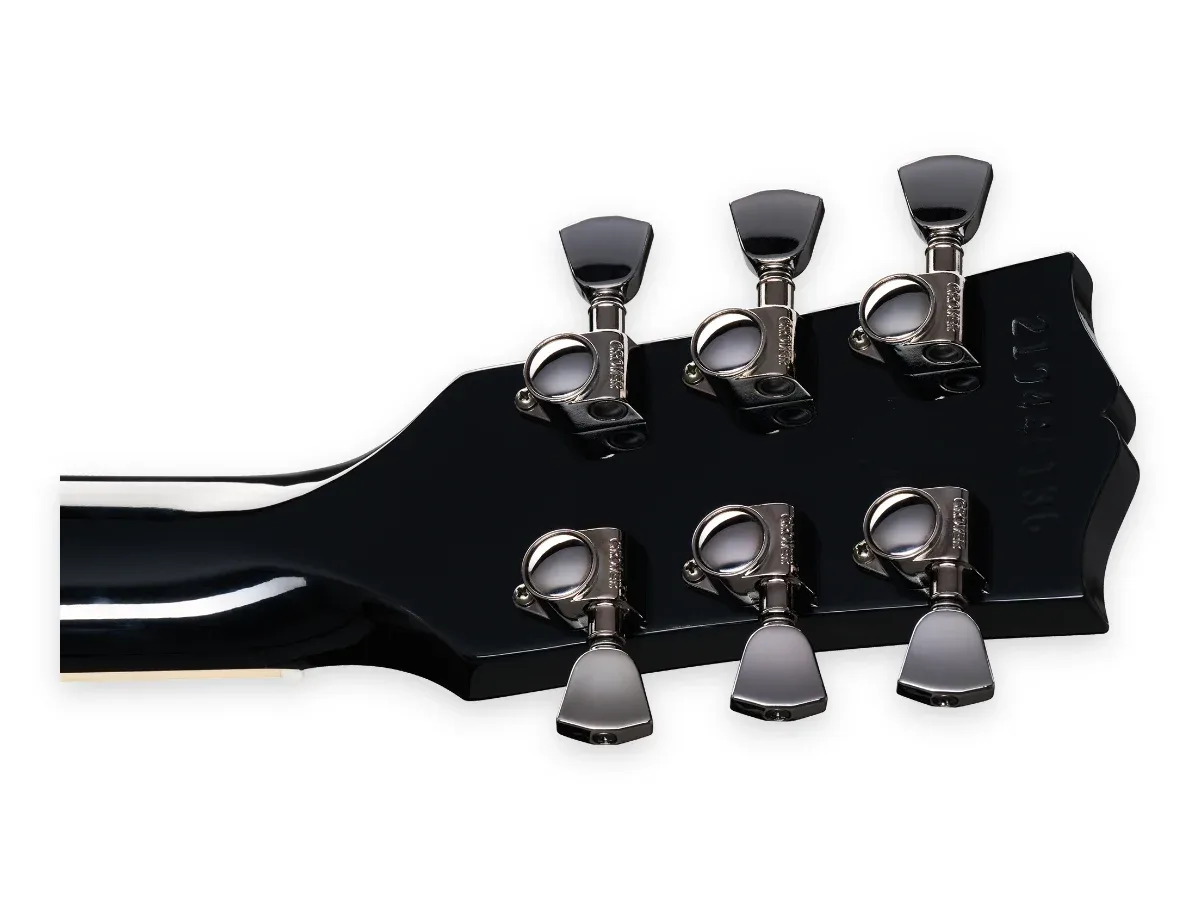
| Tuners | Grover Rotomatic with Keystone buttons |
| Pickups | '57 Classic (neck) and '57 Classic Plus (bridge), both with Alnico II magnets |
| Controls | 3-way selector, 2 push/pull volumes (coil tap) and 2 push/pull tones (phase and Pure Bypass) |
| Finish | Translucent Ebony Burst, gloss nitrocellulose lacquer, black nickel hardware |
| Factory strings | .010 – .046 |
| Included | Gibson soft shell case |
| Made in | USA |
| Price | Official European price: €2,199. Around €1,699 from online retailers (November 2026) |
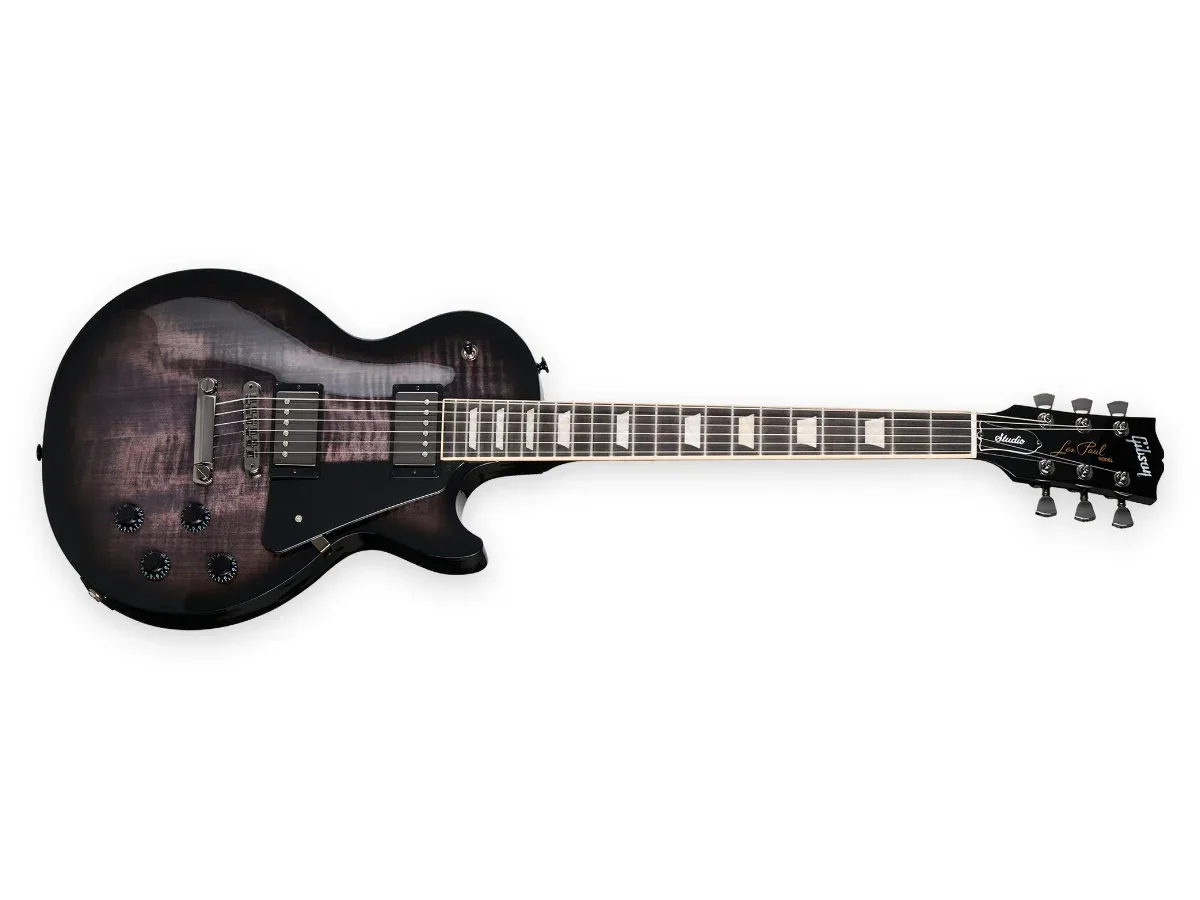
Build: a Studio that no longer looks like a Studio
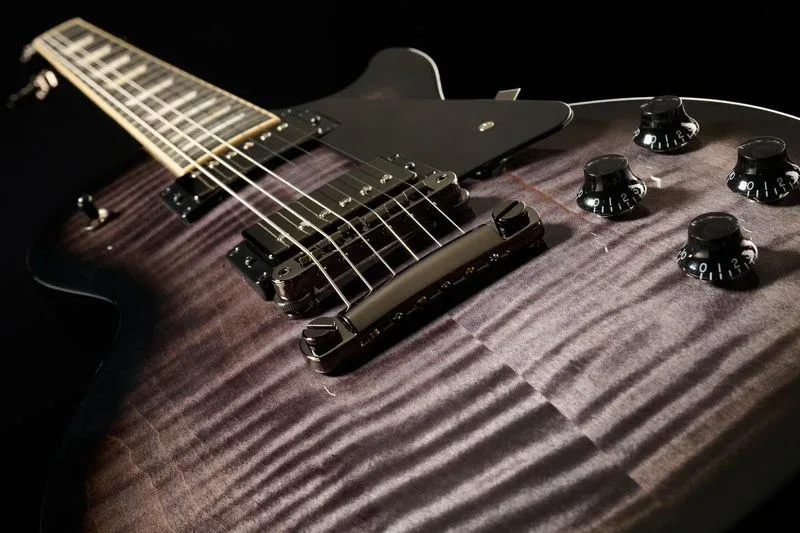
The first thing that catches the eye is the top. The AA figured maple, with a burst that runs from violet-grey in the centre to black at the edges, looks superb under the nitrocellulose lacquer. The cream binding on the body and fretboard, the mother-of-pearl logo on the headstock and the black nickel hardware complete a look that is much closer to a Standard than to the austere Studios of the past.
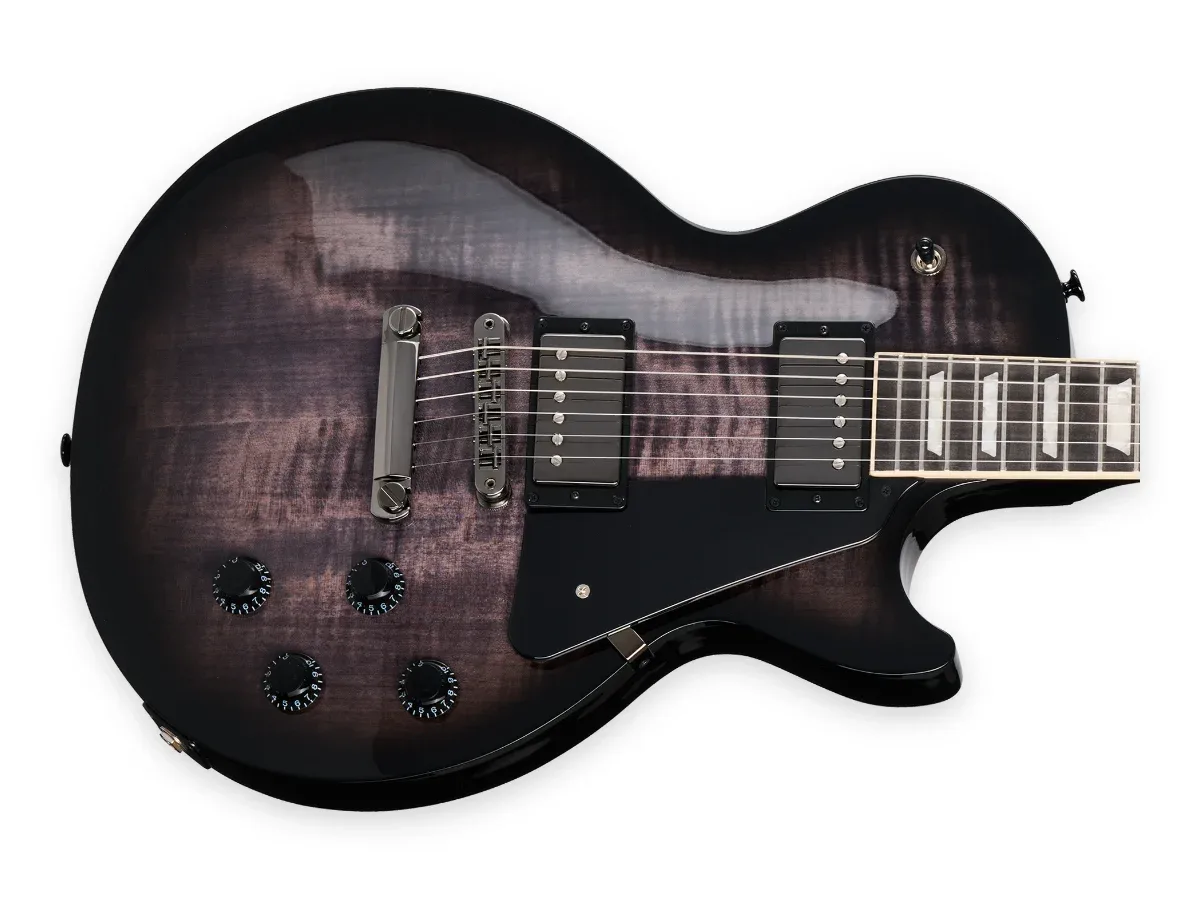
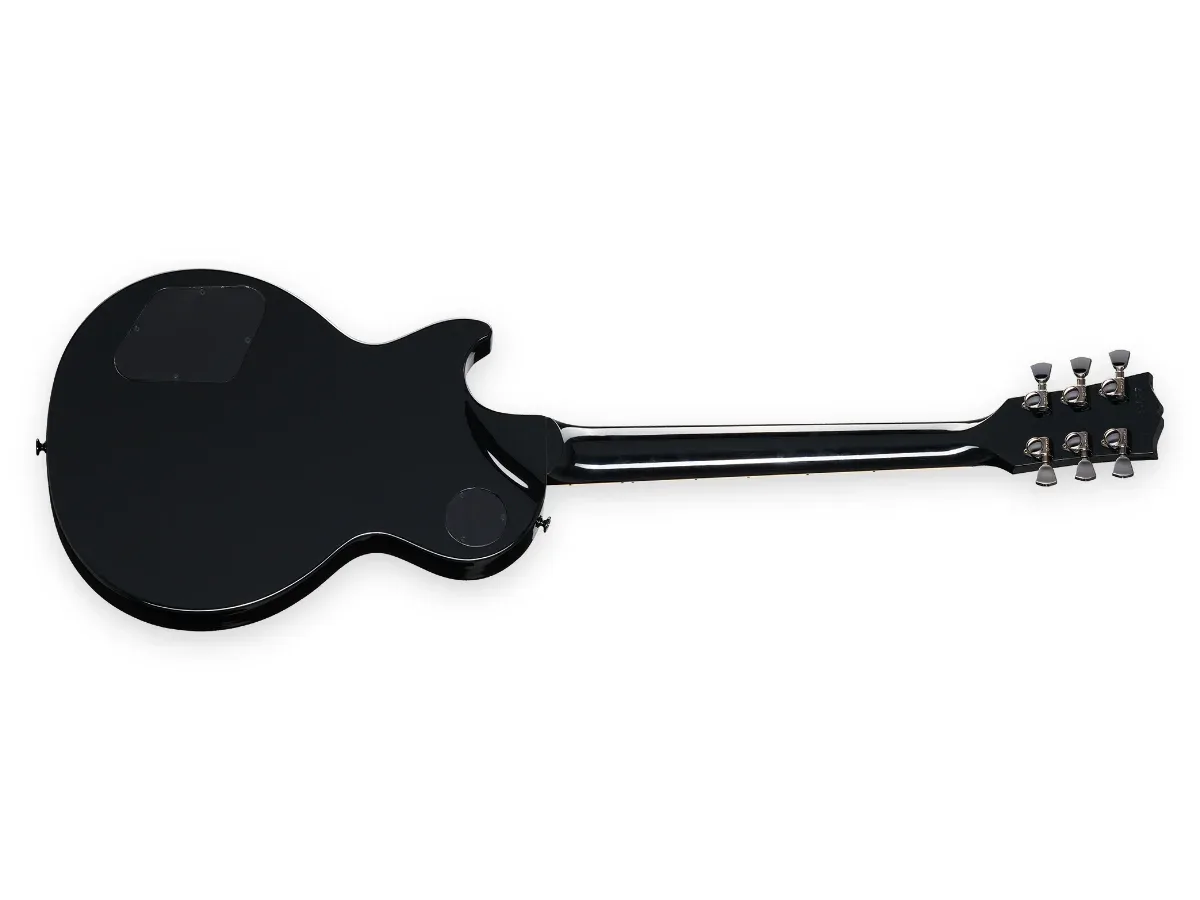
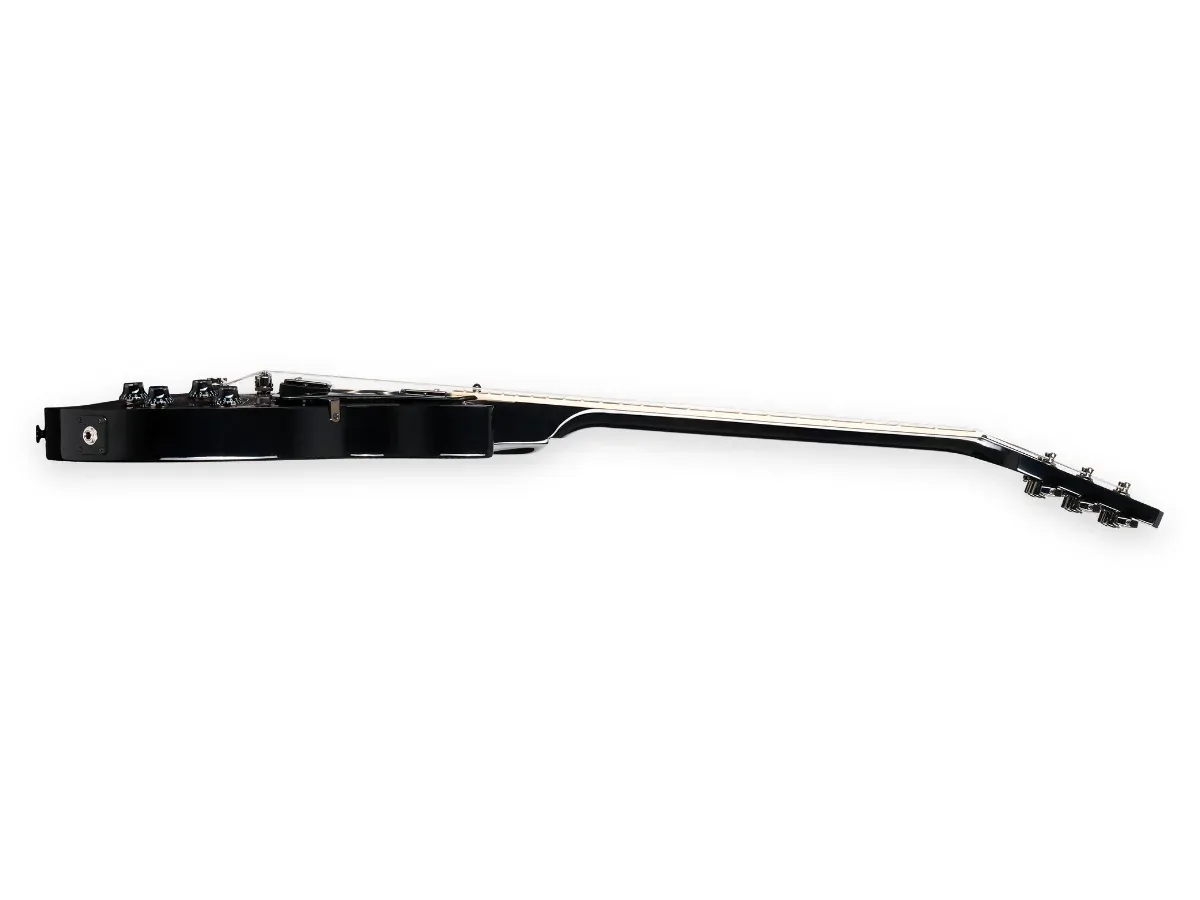
Under the top, the mahogany body uses Ultra Modern weight relief, the most extensive Gibson offers. You notice it as soon as you strap it on: the units weighed by retailers and the specialist press range roughly from 3.4 to 4 kg, clearly below what a Les Paul Standard usually weighs. After a long rehearsal, your back will thank you.
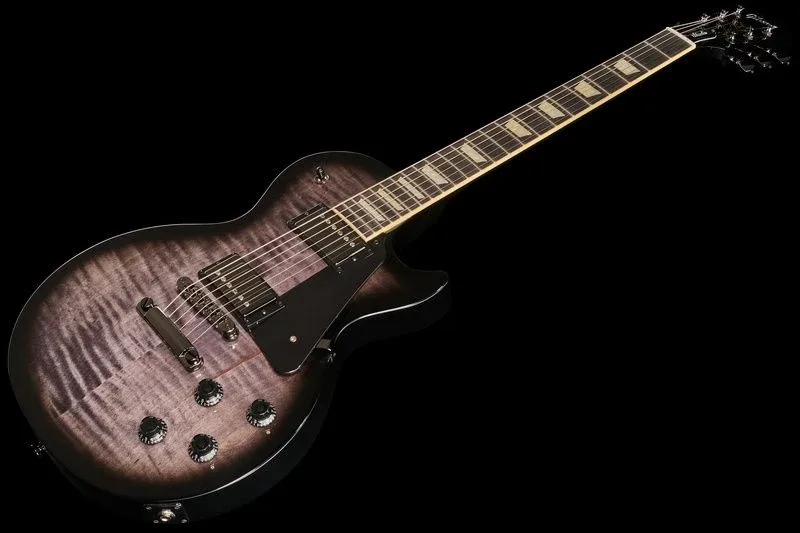
The mahogany neck has a SlimTaper profile, slim and fast, and on some units it even feels narrower than other SlimTapers from the brand. The Modern Contoured Heel smooths the joint with the body and makes upper-fret access much easier, something anyone coming from a traditional Les Paul will notice straight away. The 12"-radius ebony fretboard and 22 medium jumbo frets give a firm, precise feel that is comfortable for both chords and bends.
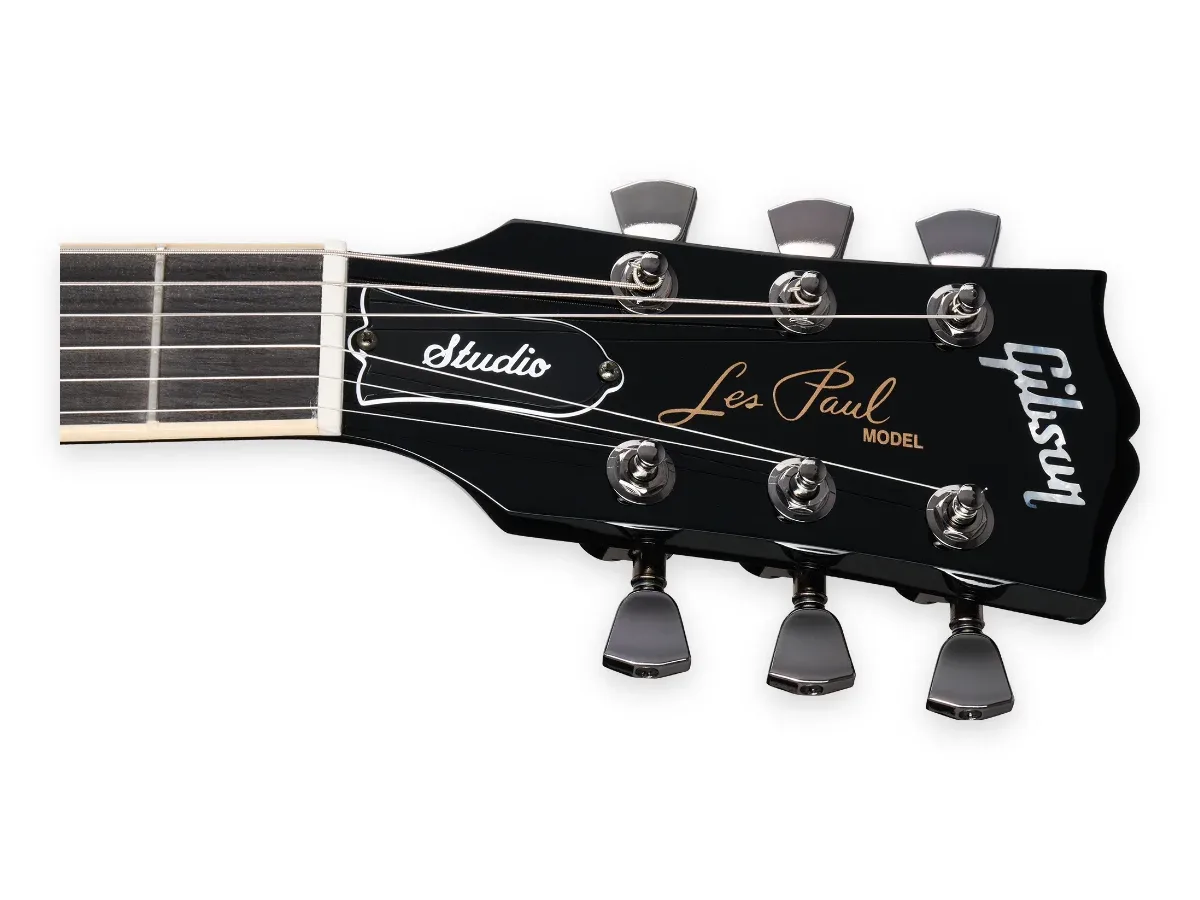
Tuning is held by Grover Rotomatic tuners with Keystone buttons, a Graph Tech nut and the Nashville Tune-O-Matic bridge and stop bar tailpiece, both in aluminium. It is a proven combination that keeps the guitar stable even with heavy bending.
The pickups: '57 Classic and '57 Classic Plus
This is one of the key changes compared with other recent Studios, which use 490R/498T or Burstbucker Pro pickups. The Session pairs a '57 Classic in the neck with a '57 Classic Plus in the bridge: two PAF-style humbuckers that Gibson builds to the specifications of the original Patent Applied For pickups, with Alnico II magnets, maple spacers, balanced coils and wax potting to prevent microphonic feedback.
The '57 Classic measures around 8 kΩ DC resistance; the Classic Plus is slightly overwound, at around 9 kΩ, to push the amp a little harder from the bridge position. Alnico II gives a smoother, slightly more compressed response than Alnico V: less aggressive in the attack treble and more vocal in the mids.
The electronics: four push/pulls, many guitars
With all the knobs pushed down, the Studio Session works like a classic Les Paul: a 3-way selector and independent volume and tone for each pickup. Pull the pots up and the extra functions appear.
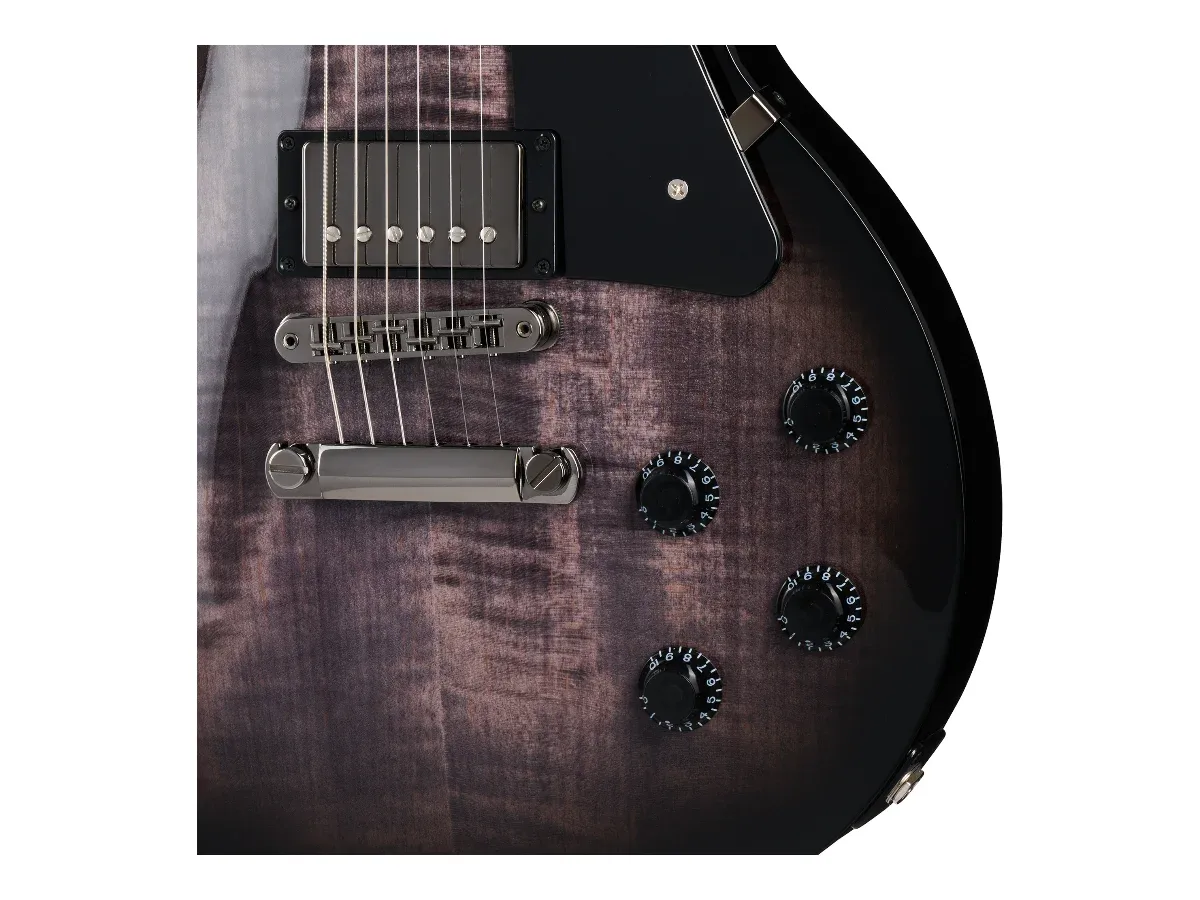
- Volumes (push/pull): coil tap. Each volume switches its pickup from humbucker to a single-coil sound. Gibson calls it a coil tap, and on current Les Paul Studios it is not a hard split of one coil: the screw coil is not completely cut out but filtered through a capacitor. That is why the "single-coil" sound keeps some body.
- Neck tone (push/pull): phase. With the selector in the middle, it reverses the phase of the neck pickup relative to the bridge pickup. This is the famous hollow, nasal Peter Green-style tone.
- Bridge tone (push/pull): Pure Bypass. It sends the bridge pickup straight to the output jack, bypassing volumes, tones and selector. You get the bridge pickup's maximum output and, at the same time, an instant "preset" for solos.
How it sounds: our impressions
The first conclusion is clear: this is a very versatile, very precise guitar with a very wide tonal range. It goes from sounds with plenty of chime, when you pull the volumes for single-coil mode, to the round, full lows you would expect from a pair of '57 Classics in humbucker mode.
The most interesting part, however, is the middle position of the selector. With normal phase, you shape the colour by balancing each pickup's volume: favour the bridge and you get treble and sparkle; lean on the neck and the sound gains low end and body. Reverse the phase and the blend becomes thinner and more nasal, and the same volume balancing reveals very useful in-between shades for funk, clean rhythm parts or effects-heavy passages.
Pure Bypass is very practical live. Pull the bridge tone knob and the level jumps instantly, because the signal no longer passes through the pots. It is perfect for a solo or a quick boost without touching the pedalboard, and for then returning to a softer rhythm sound with the volumes rolled back.
Output is very high for vintage-inspired pickups and note definition is excellent: even with gain, every string comes through in chords. It is a very airy and quite precise guitar, with a good finish, a gorgeous maple top and quality materials. It is also somewhat lighter than a Les Paul Standard, which is very welcome.
What we liked least
The chime of the single-coil sounds has a less friendly side: depending on the amp, it can turn somewhat harsh and shrill, and that harshness is sometimes hard to control. Rolling back the tone, lowering the amp's presence or blending in some neck pickup in the middle position helps.
The lows are powerful and varied, but they are not as creamy and round as those of a Les Paul Standard or Custom. That makes sense: the Ultra Modern weight relief and the more open character of this guitar give it air and definition at the cost of some mass in the low end.
If it is your only guitar, it can be a great instrument precisely because of its versatility. But it will never have the punch of a single-coil Stratocaster, nor that round, creamy sound of a Les Paul Standard or Custom. With time, commitment and the right gear (amp, pedals, EQ), you can get a huge number of high-quality sounds out of it.
Verdict
| Pros | Cons |
|---|---|
| Huge tonal range thanks to coil tap, phase and Pure Bypass | Single-coil sounds can be shrill with some amps |
| Very high note definition and output | Lows less creamy than a Les Paul Standard or Custom |
| Pure Bypass: instant level boost for solos | Single-coil mode lacks the punch of a Stratocaster |
| AA top, bound ebony fretboard and high-quality finish | No hard case (soft shell case included) |
| Lighter than a Les Paul Standard; fast neck and contoured heel |
Conclusion
The Gibson Les Paul Studio Session is probably the most complete Studio Gibson has ever made. It does not try to replace a Standard on its home turf of thick, creamy humbucker tone; instead, it offers a lighter, faster Les Paul with many more colours on its palette. For the guitarist who wants one guitar for everything, or the session player who has to cover very different styles with a single instrument, it is a very serious option. It does, however, demand some time to find the sweet spot of each sound with your amp.
Manufacturer's websites
Leer en español: Banco de pruebas: Gibson Les Paul Studio Session TEB
Photos: © Gibson and Thomann. Indicative prices checked in November 2026.


