From booth to booth, and wherever my number comes up. We run through the new gear from Fender, Gibson, Ibanez, Beyerdynamic, Laney, ENGL, DV Mark, Supro, and Schecter. To tell the truth, I don’t remember what year it was, but the first time I heard about NAMM I was very young, and it sounded to me like the Olympus of music, with its Zeus, Apollo, Dionysus, and so on, whom I replaced with my music heroes. It wasn’t until a few years later, when I was living in Los Angeles, that one of my roommates managed to go to Anaheim to see what was cooking that year. When he got home, we all grilled him, and with his answers I sculpted my picture of what NAMM must be. The following year I got a pass to cross the line and finally get into what I had wanted for so long.

In that instant, many sensations swept me from one extreme to the other. But I will never forget the first thing I thought: “I get the feeling that here I can find what I’ve been looking for musically.”
Generally, the first thing we think of when we talk about NAMM is the gear showcase you can see and play while you’re there. That premise is completely true. There are aisles and aisles full of booths, where you can see and try what you’ll be seeing in every store over the next 12 months. But in my case it wasn’t so much about the gear, but the chance to see great musicians play, not so much famous artists as many musicians who can open your ears in 8 bars. Once I get in, I realize it’s a forum where many parties are going to come to an agreement, or perhaps build new relationships. So I reached the following conclusion: “NAMM is what you want it to be.”

Going to NAMM means finding many wonderful things: gear, music, people, and so on. But also very long, very intense days, many hours on your feet, a carpet that works against you as time goes by, volume, and so on. So knowing how to ration your energy is a policy well worth keeping in mind, since at some point you may flag. In any case, it won’t leave you indifferent.
What Are We Going to Find?
So what do we see there? What can we do? As soon as you enter on the main hall floor, you start seeing booth after booth, where you’ll surely find some brands with something you wanted to check out. There you’ll see gear that will be everywhere in the coming months; at some point you’ll also see some gear from previous years for some reason, either because it’s a classic or because the brand in question wants to keep it in its current lineup. On many occasions you can meet the designers or builders of many products, even exchange a few words with them and perhaps clear up doubts firsthand. But at the same time there is a very tight schedule of demos, concerts, events, and so on, where you can see how the gear on display sounds or how it is used. At the same time you can see the level of the musicians present, which also makes the gear sound better. Every so often a more famous artist (a celebrity) may show up, usually identified by the throng of people surrounding them.
What’s New
As the reader can well imagine, it would take far too long to spell out each of the new products, projects, and so on presented at NAMM; it would take 5 entire magazines. So we’re going to focus mainly on whatever has a certain minimum relevance, and as much as our finite space allows.
The Most Eye-Catching Things at the Fender® Booth
Everyone knows the company that makes guitars, basses, amplifiers, strings, stools, T-shirts, and so on. Over all this time we can imagine the number of guitar series it has given us. One of them is the American Deluxe, which seems to have evolved into what was presented to us a few days ago as the American Elite, continuing the Deluxe saga but with new ideas.

The series consists of 3 Strats: a triple single-coil, an HSS, and a left-handed one. And two Telecasters: a Thinline and a more standard one. NoiseLess pickups, and the neck-to-body connection comes not with the contour cut that is sometimes used, but rather with a rounded heel, to make the highest frets easier to reach. A new nut for adjusting the truss rod.
For the Telecasters, a new type of bridge, and the already familiar S1 switch for getting new sounds from the pickups.
In the world of Fender amplification, Fender is proposing a new line for 2016: the BassBreaker, aimed at versatile guitar tone with character. What mainly surprises me is the intention to settle into the more rock-oriented crunch territory. These are tube amps, starting with the 007 (combo and head): a Class A amplifier, 7 watts, a single channel, solid-state rectifier, a boost option, and in the combo version a 10" Celestion. The BassBreaker 15 (combo and head). A Class A/B amplifier, 15 watts, one channel, with several speaker-type options, reverb, an effects loop; the combo has a 12" Celestion switchable between 4, 8, and 16 ohms. Sound-wise, it’s a bit like the next step after the Fender Bassman.

BassBreaker The 18/30 is a Class A/B amplifier that only exists as a two-channel combo. Kind of aiming for the Blackface sounds. To me personally it sounds a bit like an old Deluxe Blackface. A 12" Celestion speaker. The BassBreaker 45 is the big brother of the family. A Class A/B amp, 45 W, the grittiest of the family. One channel and a 12" Celestion speaker. Of course, this whole line comes with the option of buying any kind of speaker enclosure/cabinet, 1x12 or 2x12. 4x12s in general don’t seem to be enjoying their peak popularity.

In the acoustic world it presents the Paramount series. It consists of three types of guitars (PM-1, PM-2, and PM-3, and each then has its different finishes, cutaway or not, etc.). Guitars that will run from 700e to 900e. Very well finished and with a Fender/Fishman preamp. Of course Fender had many more novelties on offer, but these are the ones that stand out as the flagships of 2016.
Gibson’s® Turn
Another of the big names present in every corner of the music world at this show. Like Fender, it spreads across the Anaheim venue, and you can sample all of today’s and yesterday’s novelties and great classics.
This year Gibson steps into the arena with its Memphis line, which, although it already existed, seems to be getting a bigger push against other lines such as the Custom shop, etc. Within the Memphis line, specifically the “ES” world seems to be taking on particular prominence. Remember that the ES side tends a bit more toward semi-hollow or hollow guitars; it isn’t a strict definition, but it gives us an idea of where it’s aimed. Let’s take a light stroll through the new additions in that particular sector:
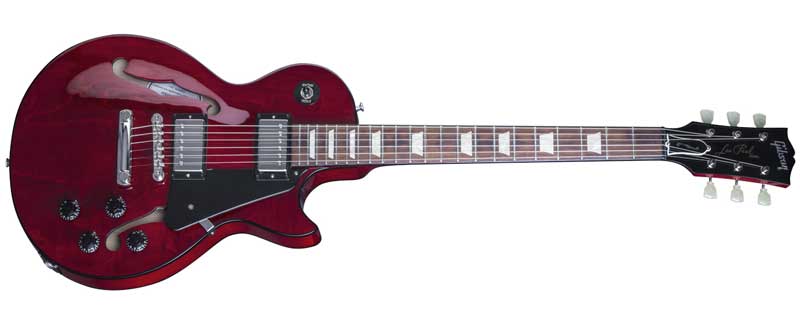
ES-Les Paul Studio: It’s a Les Paul, but semi-hollow, sitting halfway between a traditional Les Paul and a 335. Great tone, and with ’57 pickups it gives a hint of the somewhat jazzy intent we can find in the guitar.
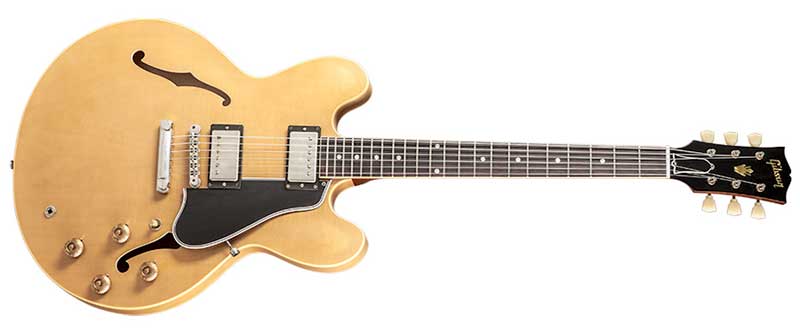
ES-335: The 335 is one of Gibson’s most powerful guitars. Versatile and astonishingly comfortable to play. This year many of the models appear unchanged but, on the contrary, new improvements have been introduced. Most of those updates go into the neck, making it a bit more modern and, if possible, even more comfortable. The pickups, for example, bring in the Burstbucker on the standard models; on the 1963 they always put in the MHS humbuckers, as on the ’58.
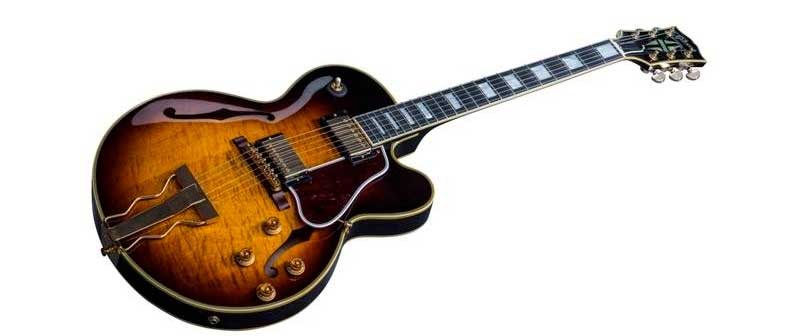
ES-175: The 175s are a benchmark in the archtop and jazz world. Although they’re designed for the bebop-style jazz, we would be surprised at the versatility they can offer. With ’57s as pickups on the standard, or the MHS on the ES-175D
ES-275: This model is indeed new at the show. A model that aims to take a step forward for the more modern jazz guitarists. A comfortable, fast neck, with easy access to the highest frets. It could perhaps be likened to the classic L5, a little smaller. Let’s say we can find it halfway between a Les Paul and an ES-355.
We could keep writing rivers of ink about Gibson without getting tired, but space is pressing.
Beyerdynamic® Microphones and Headphones
This German company, which makes atomic microphones, also has a line of brutal headphones and monitoring. This year one of the very appetizing novelties it presents is the DT 1770 PRO. The DT 770 Pro is well known to everyone, a reference in recording studios. Comfortable headphones, true to reality, where you can hear what’s there in a simple way.
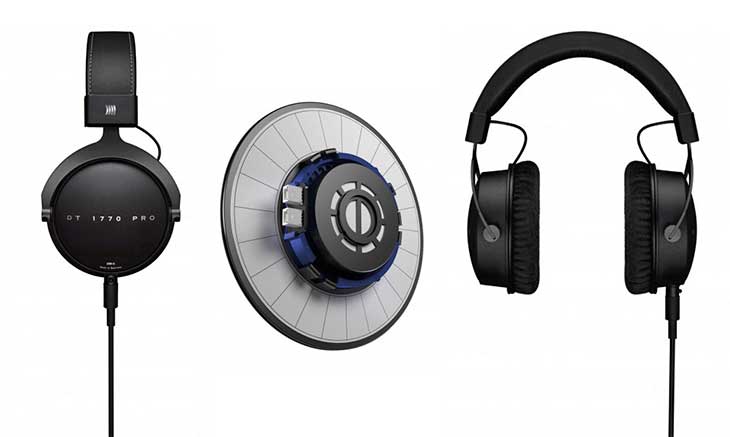
Now it presents the evolution of that same headphone with the improvements musicians, engineers, and producers have been suggesting. Extra power, with great isolation for live use. A dynamic sensitivity that goes from pianissimo to fortissimo. The 770 was already extremely comfortable, but with this version they have achieved a new improvement that is, if possible, even more comfortable. This makes it a very competitive headphone for the most demanding ears, both in the quality of what you hear and in NOT getting tired when using it over long studio or live days.
To the Booth of the Japanese Brand: Ibanez®
The great Japanese brand par excellence couldn’t miss this year’s gathering in Los Angeles. Lots of new products, and all of them looking great. Let’s start with the jazzier guitars, among which the new arrivals worth highlighting are: the new Artcore Vintage line, where we see a meeting of the classic, 335-type, with Ibanez’s modern headstock, but with a completely worn-in look. I’m referring to the ASV100FMD models, which present a totally attractive image.
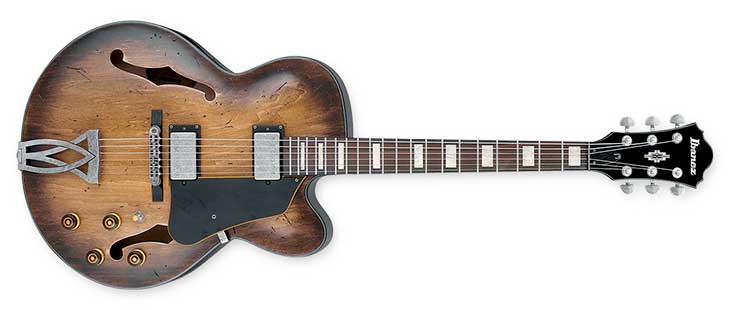
We also have the ArtCore Vintage line, where, within the 335 section, there is a natural-wood finish that, the moment you see it, makes you start thinking about which guitars you’ll sell to buy one of these. I’m referring to the ASV10 models. Attention: within the Artstar line comes the AS153B in black, which has a completely Scofield sound, brutal dynamics, and a rubbery warmth.
Within the Artcore Expressionist we have two new finishes for the AF/1F with a floating pickup. A very affordable guitar with a great sound. And the AFS75T with its vibrato and a completely attractive, darker look. At the same time the AGS73 and the AM73 appear, which have a Les Paul feel, but semi-hollow, with more air and more dynamics. A new model of the George Benson, the GB10sE.
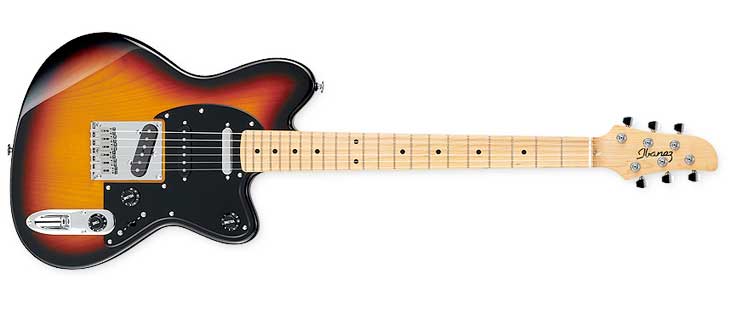
Moving on to the Talman line, which is a mix of Telecaster® and Stratocaster®, when you plug them in you’re surprised by the sound you get from a separate blend of the two guitars.
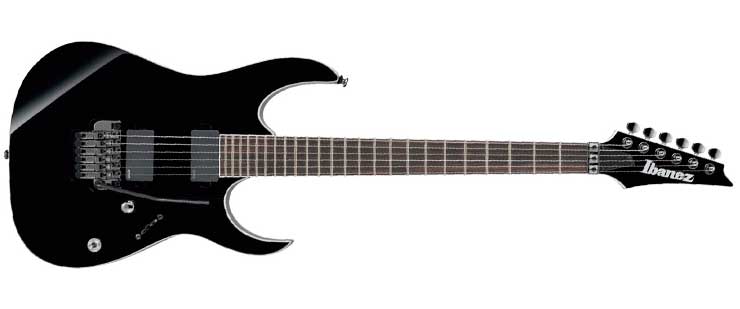
On the darker side we have the Iron Label (6- and 7-string), spectacular looking, slim so they won’t break your back, but with a super comfortable neck. Of course we know Ibanez is the big brand where the artists with the biggest names on the scene are found, whatever the style. But this year they presented the 25th anniversary of Steve Vai’s Passion and Warfare and, at the same time, his 7-string guitar. The one in flashy colors that most of us have dreamed of at some point.
Heavyweight Amplification: Supro
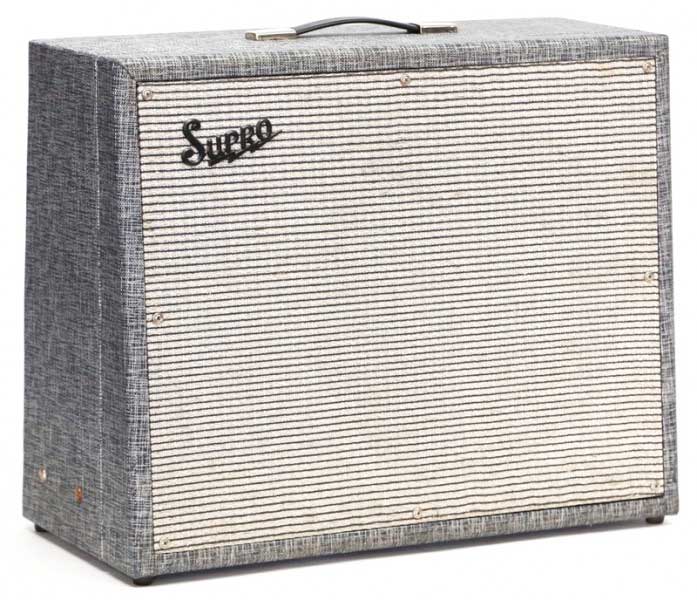
The American amp brand has been growing in popularity for a while now. In its early days we all know the connection between this amplifier and Hendrix, Page, Albert Lee, and others. It’s a piece of history, and today they’ve returned giving us that great old sound brought into 2016. They presented several new things, among them the Supro 1965T Black Magick, which is a re-creation of the one Page used in the early days of Led Zeppelin. At the same time they introduced their new line of pedals: Supro Drive.
New ENGL Pedals
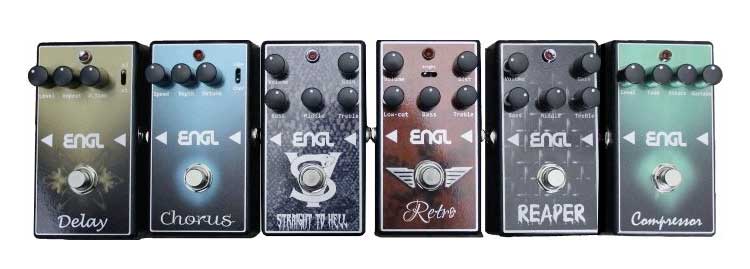
ENGL’s products are completely well known and have a loyal, specific audience. This time they presented a new line of pedals that includes: delay, chorus, 3 types of overdrive/distortion, and a compressor. Completely attractive.
What’s New from Laney®
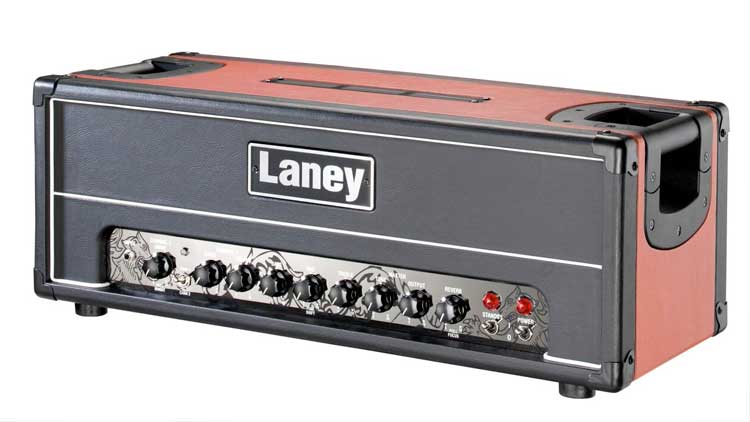
This time Laney had a whole new line of amplification ready for us: GHR. A bit following in order after the LionHeart and IronHeart. It consists of a 100 W head and a 50 W 2x12 combo. Designed for the most current rock/metal.
Two New Entries for DV MARK
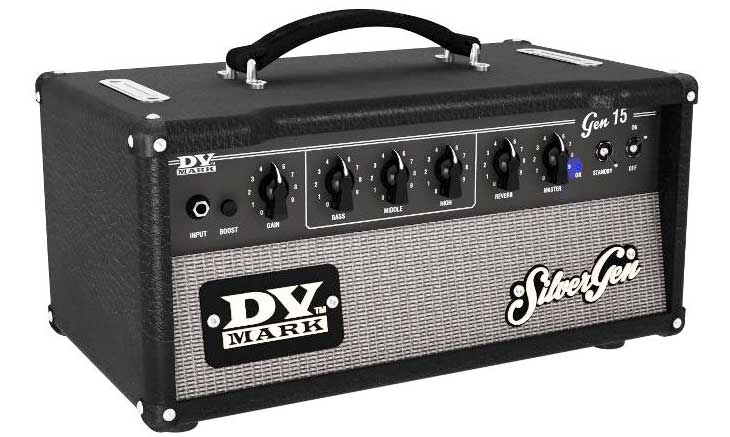
As for Markbass, we all know that no matter where you go, you’ll end up running into a bass player who has an amp from that brand. In the guitar section we must mention the new entries: the DV Micro 15, DV Gen 15, which is a 15 W Class A head, and the DV Jazz 212, a combo designed for light jazz with a 2x12 and 50 W of power, highly recommended.
The American Schecters
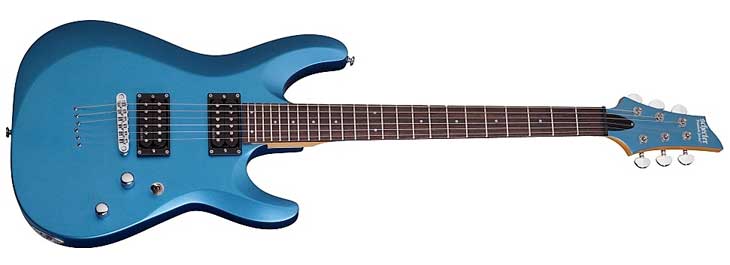
The well-known American guitar brand is celebrating its 40th anniversary. For that, it arrives with a new line of models, where we can see the Schecter Avenger 40th Anniversary, an attractive design if ever there was one. The Schecter C-1 40th Anniversary, very much in the usual vein but with a somewhat warmer sound. The C6 Plus and the Demon S-II, a model very much in the SG vein. Hellraiser C-1 and Hybrid with passive pickups in very attractive colors. The Solo II Custom, more Les Paul than ever. Tempest 40th Anniversary in very distinctive colors. The Flying V-1 Custom returns, which hadn’t been seen in a while.
Conclusion
We could write page after page about everything that goes on at NAMM, but the best advice is that if there’s any chance to go at least once in your life, you should, and so understand it through your own impressions. It will be worth it.