Today the possibilities for having a home recording studio are enormous. In fact, many of us musicians, with a little money and some digging around, can get hold of a lot of gear that until recently was within reach of only a few. But that's when we work at home, whether composing, arranging, recording an idea that's been rattling around in our heads, or simply getting it ready to take to the rehearsal space to play with the other members of the band. How many times do we mentally "preview" what is being hatched today in your bedroom, to be recorded later in a powerful studio with everything needed to make it sound like those records that land in our hands and blow our minds...
One of those mental pictures is the one I have of Kirios. It is one of the biggest recording studios in Spain, and nearly every major musical figure in the country has passed through it (something very few can boast). You could say Kirios is already part of the history of music made in Spain, and I had wanted to visit it in a special way for a long time.
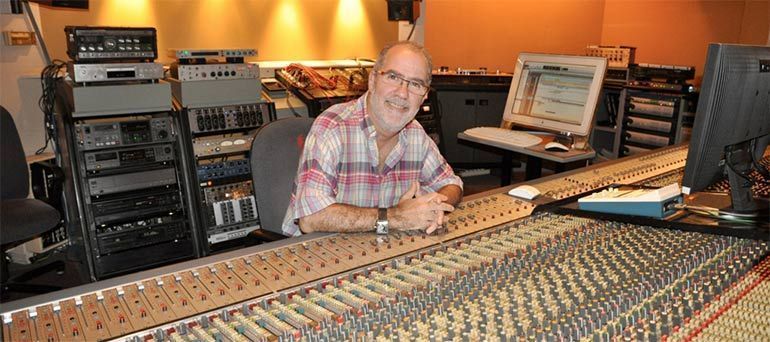
Kirios is located on the outskirts of Madrid. We made the trip out there and were able to talk with Samuel Bermejo, the studio's assistant sound engineer, and ask him a few questions...
How do you see the market for big studios?
Within the band market, there are two types of artists: the more veteran ones, and then a whole bunch of newer ones who have been coming up in recent years. For the newer artists, technology is within easy reach, homemade, so a lot of them put together their own home studio, and that's what they mostly rely on... The veteran artists, on the other hand, who have been around longer and made many recordings, prefer to keep going to the same studios as always, or the ones that have been around longest. Because they know them, because they feel comfortable working there, because they have a relationship with the people at the studio, or because they made recordings there in the past and were happy with them. As far as clientele goes, that's how I personally see it... With newer artists, big studios or ones with a bit of history, like Kirios in this case, may fall a little off their radar, or they know them less, maybe only by hearsay or reputation. They don't consider them as much, or they're used to handling their own gear, and since they see it's viable, easier and faster, they do it with their own means.
Considering the enormous number of artists out there today, solo or bands, classical, modern, fusion and so on, you can't have a mechanical work plan that is always followed to the letter, but roughly speaking...
How do you work at Kirios? Or rather, what is a typical day like here?
Obviously it depends on the type of client. At Kirios we get all kinds, from established artists who keep coming back to make a record because they like it and feel comfortable, to people who come for the first time and don't even know Kirios's long track record (maybe you mention it and it rings a bell, but they don't know the history of Kirios). Some people are surprised by where they've come to record. So obviously it depends a lot. But artists who are just starting out in recording, let's call them "low-budget," come less prepared, whether because they have less experience or for other reasons, so they let us guide them. We advise them on choosing mics and on procedures to make certain things come out better. Established artists come with a specific work plan. They know what they're going to do each day: "Today we're doing the basic tracks," "Today we're doing the guitars for three songs"... and that's how it goes, so there's less room for improvisation. They bring it more planned out, and often they already know which mics they'll use or what mixing approach they want. They've tried it before and it has given them good results. So the working day is very open-ended and depends a lot on who comes, what they bring and how many hours they need. Some people need little time, others need more hours. It depends on how complicated the work schedule they bring is. There's no clear benchmark.
Is this studio versatile enough to record classical music, jazz, electronic music, with the equipment you have at any given time...?
Yes!
To what extent is it feasible to record here some of the styles you hear in clubs or on commercial radio stations, where it's obvious it's all machines and more machines?
In that respect, electronic music and all the technology involved in making that kind of music may be something we have less of than for other kinds of music, depending on what you want to do. But we've always done things like that here. We've had clients bring their own modules, their own gear, their computer, which can be perfectly synchronized, in terms of timecode, with the equipment we have here. We use the open-reel tape machine, which is the recording medium we use at Kirios, and it can be perfectly synchronized with the gear used to make this kind of music. We have devices to generate timecode, fully up to date technologically, so we can work with it, and the same goes for mixing. So yes, people have come to do that kind of work, but perhaps fewer than those who come to record acoustically. Most of what comes to Kirios is bands with real instruments, say guitars, drums, bass, but people do come with their samplers and sequencers too, and there's no major problem there.
Let's say the Kirios client is satisfied with the final result of having come through here?
Of course... the client who comes to Kirios usually already knows the place, because Kirios is a studio with more than thirty years of history, so whoever comes here knows what's here, and many of them come for the console we have in Studio 1, for example. "I want to record with these modules and the preamps on this console," or for the studio's live room, because they know it has enormous acoustic possibilities for recording drums, orchestras and choirs. "I come because you have these old tube mics that are no longer easy to find and that give voice or instruments a very special sound, which is what I want for my record." So people who come here generally know us.
Broadly speaking, who are the most frequent clients at Kirios?
In terms of names, we can mention the Campillo brothers, Nacho and Javi from Tam Tam Go! They have worked a lot at Kirios, both on their own records and on solo albums. They decided to do some productions they had for other artists here. Others, like Los Suaves, have recorded quite a few albums here, both from their earlier days and a live album recorded with the Mobile Unit that Kirios had, which was also mixed here...
By the way, speaking of the Mobile Unit, what happened to the one you had here?
As far as I know, since this happened long before I was here, the Unit was sold.
Having a Mobile Unit is a very interesting possibility, because I remember that for one of Mari Trini's records, the Mobile Unit was taken to her home. Rafael Martínez told me this; he also worked as a producer at Kirios some years ago...
At the time it was one of the most cutting-edge proposals in terms of production. Those ideas were very good, but there wasn't demand from clients in this country. It's not the same in countries like the United States, where this kind of project works well.
Are we ready for this kind of service or not?
Personally, I think it's much less of a thing here. In the United States and in England, people love to record an album in the middle of the countryside or in a mill (laughs), out in the middle of nowhere. The Stones did it, and so on. But I don't think it has gone that far here in Spain.
Is the Spanish artist, as a rule, used to a different kind of setup perhaps?
The Spanish artist is used to working in a real studio, which is also usually somewhat on the outskirts. When an artist wants that peace and quiet, away from the city, to concentrate more on the work, they can have it at Kirios, since we're out on the outskirts. But Kirios isn't the only one; there are others. So when an artist has wanted tranquility, it's available here, and there's no need for the Mobile Unit to record their album.
When people come to record here, do they arrive with a preconceived idea, or are they usually surprised by how their work has turned out?
It depends. When regular Kirios clients come, they already know what they're going to find because they know the studio and its possibilities, and they know the engineer they'll be working with or have worked with before. So they have the reference of previous work to think that coming back to Kirios will be satisfying. It's different when more amateur people come to record their demos or pre-production, people who have spent less time in studios or have worked less in the studio. With this studio's characteristics, with its huge spaces and very professional equipment, they are surprised by how what they composed sounds. Some people are also used to hearing themselves in their rehearsal space... so when there's a real studio involved, they may be surprised by how their music sounds.
One of the important things in a studio is its recording systems, and perhaps the mother of them all is the console. Here at Kirios we know there are three studios.
What kind of gear do we have in each control room?
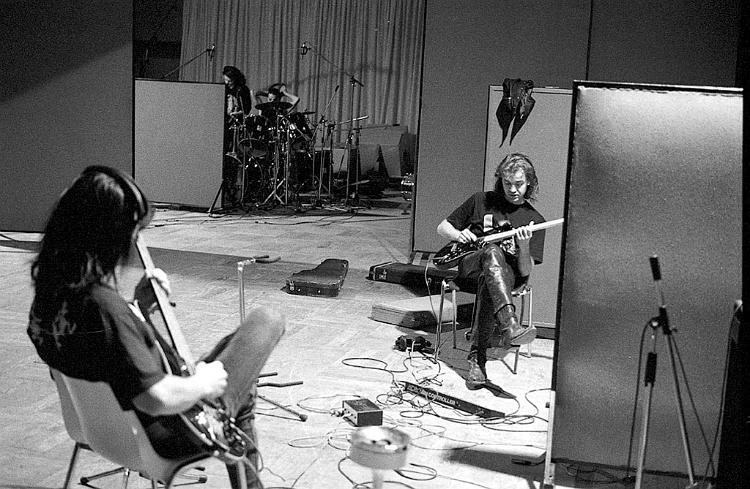
Studio 1, which is the biggest, is mainly used for tracking, because we have a very large room with lots of possibilities and acoustics that were very well studied and designed by Eastlake Audio. Anyone who wants to record a symphony orchestra can do it, and it's also great for people who like to record live, such as rock 'n' roll bands, who can do it perfectly in Studio 1. Live concerts with an audience have also been recorded, because the space allows it. We even set up a stage with its sound system as if it were a live concert. And then we have a NEVE console with tube preamps, and people love how everything that goes through that console sounds. It also has tube compressors built into the console. People who know it know it is well maintained and works perfectly. Studio 2 is mainly for recording too, but it is set up for mixing. It has an automated Solid State Logic and everything needed for mixing. Most of the outboard gear and equipment is there, and the console with automation computer is made for mixing. Studio 2 naturally has a live room with three different spaces: a marble room with very bright results, then a room entirely covered in carpet and curtains that gives us a more absorbent ambience, and then the largest, central room, which is all parquet but combines something of the other two. In short, it also has very good recording possibilities. Finally, Studio 3 is the smallest, where they usually do small-scale work. It has a Harrison console. It's the smallest of the three, but for someone who brings a backing track to record vocals or a guitar, for a demo, being smaller it has somewhat fewer possibilities.
Each studio has its own pricing policy and, leaving aside the results of the work, which we can certainly say are very good...
How feasible is it financially? Is it expensive to record at Kirios? Or can any project be worked out?
Kirios is a very affordable studio, because it delivers good quality and offers a guarantee. It's a studio with an obvious name and prestige, and considering all that, I think it's quite affordable. It's a studio where budgets are worked out case by case. It's not a closed shop in that respect: we put together many kinds of quotes depending on who comes, what client we have and what they need, and it's an open studio when it comes to quoting. There are other studios where the opposite is true, with that per-hour rate and so on...
Personally, I think there are many studios working with systems that may be semi-professional and charging by the hour at exorbitant rates, when for a little more you could record on very professional formats and equipment. We're talking about Neve, Solid State Logic. Very few studios have this kind of tool today. Besides, open-reel tape is still the best for me, or at least the most real, both for the person recording and for the person who will listen later. Some studios are recording with ADAT or hard disk. Personally I have nothing against it, but I think the quality of those formats will never reach the quality of an open-reel tape machine and the like.
It seems strange that in this digital age artists still trust analog...
Many people still look for the analog touch, and that's why many of them keep coming to Kirios and why we keep working with the analog system. We also work with digital recorders, but we stay on our own path. That's why many people come to Kirios looking for that, the warmth and realism that analog technology gives you, because what they want on their records, ultimately, is a real sound, the sound of a real record. What happens with artists is that they are inevitably influenced by the era they happen to live in. Twenty or twenty-five years ago the working philosophy was one thing; today the record business has a different working philosophy. The digital age has made it possible to meet record-industry demand at a lower cost, and production is faster and cheaper. The demand for records is enormous, and so the artist is inevitably shaped by it.
Getting the product as fast as possible in order to compete with everyone else.
Above all, Kirios is a real studio. When Kirios was born, it was conceived as a very powerful studio with lots of acoustic spaces, which I think has been lost today. There are no acoustic-room studios anymore, no design of materials to reinforce the sound of a specific instrument through the naturalness a room gives you; everything is done digitally. This will never be lost, because Kirios is a good reference.
For my part, I think so, since I consider myself a romantic about everything surrounding the music world, and besides it's important, but... Do you think Kirios is a studio that will have a long life?
I think so, because people who are in this world know that at Kirios they can find the possibilities we've talked about: acoustics, equipment, microphones. They will keep wanting to have them, even if at some point in their lives they are influenced by the new trends. They will always want a real, warm sound, and they will find that at Kirios.
Is the whole record usually produced here, or are there other ways to record and finish the product?
There's a bit of everything. We have clients who do the entire production at Kirios, others who record at Kirios for the sound it gets but look for other options when it comes to mixing, and others who come here with the master just to mix and master, and the results are also frankly wonderful.
The truth is that after talking with Samuel, we were left with a very good feeling. I say this because, as a final reflection, he compares studios like Kirios to five-fork restaurants, where the food is prepared following procedures that have nothing to do with "fast food." If we take that comparison, we realize it's true: we live in a world where everything moves very fast, there's no time for anything, and we try to get things done quickly. And he is quite right. Among big studios, Kirios in particular is a living example of a colossus for which the passage of time doesn't matter. Good things are not affected by time, since Kirios has stayed right there, delivering great work for everyone's enjoyment. Let's hope that some time from now we can return to this "Temple" and again question what interests us, and surely we'll find a lot of information from the people who work here, since they are always a few steps ahead of everyone else and always alert to the latest advances in order to get better results in their productions. The only way to stay that way is to keep working the way they have so far. Many thanks to everyone at Kirios for their kind attention.