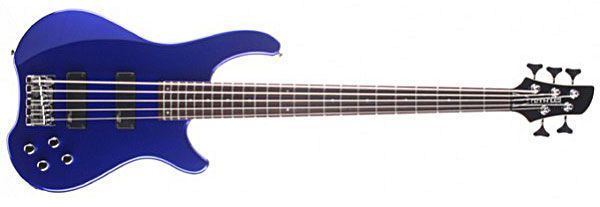
The electric bass is a great unknown for many people. Playing a good or a bad instrument makes a qualitative difference to the result and the tonal nuances. It sometimes seems, especially among less experienced musicians, that the bass is given less importance than it really has. It seems that the thick, or rather low, sound of an average instrument does the job.
If we run an experiment in the studio, we realize how important and necessary it is to record with a good bass.
In our case, within one song, we recorded a bass track with a medium/low-quality instrument without active electronics, EQing it as well as possible and aiming for the best possible result. Then we muted that track and recorded a second take with our guest (Fernandes Tremor 5D). The change was more than significant, because even without doing anything (in EQ or dynamics), the blend with the kick drum, the warmth and solidity of the lows, and its definition and nuances noticeably enriched the whole recording.
Besides feeling more inspired while playing, because we could hear ourselves better or felt more powerful, the subsequent mixing work was made enormously easier, and we also got a far more striking final result.
The importance of definition
From personal experience, I know that definition is essential. When we work with a mediocre bass, without active electronics or lacking meat, I try to reinforce the punch with more gain and more low frequencies, and then trim the peaks with compressors and limiters. Well, besides being a lot of work, the finished mix comes across as decent but lacking meat. The reason? A considerable lack of definition in the bass lines. You get a sum of low frequencies that reinforce the rhythmic patterns, but the bass has no "color" of its own.
With a tool like this, you notice big changes that make the bass a fully expressive element in its own right, even without melodic flourishes.
I've focused this argument on the studio since that's where we did our test bench. It's logical to think the same will happen live. If we want a good result for our audience's ears, the definition and presence of the bass are absolutely key.
Finish and looks
Its looks feature sleek yet aggressive touches thanks to the cuts and shapes of the body (and headstock). I've mentioned my fondness for Fernandes styling before, in that their models are original, hard-hitting, aggressive and modern without becoming crude and "flashy." This means you can have a hard-rocking look if you like, but with a certain subtlety and elegance for the times when you'd rather go more unnoticed.
Feel
This is an important factor. Given the thickness of the strings, it's especially welcome, at least in my case, that the instrument is well designed and easy to play. The Fernandes Tremor gave us delicacy when bringing out the smallest nuances, harmonics, glissandos, etc. I find it an easy bass to play and, in short, comfortable.
The electronics: EMG 35J/40J active circuit
This is undoubtedly one of the richest aspects of the instrument. Its active circuit gives us an excellent response, achieving great tonal balance, plenty of definition and a measured thickness that floods the performance with low end.
Thanks to the pots and electronics, we can try out various configurations, which lets us fit the bass parts into very different contexts and styles. In fact, we recorded several takes in opposite settings, going from heavy metal to pop, from pop to fusion, ethnic grooves... in every case we found a good configuration and a perfect response.
The five strings
Finding a balanced five-string really does have its complications. With many models from different brands, this can happen: you're working with medium EQ and preamp settings, and suddenly, when you hit the fifth string, it lashes the speaker cones hard enough to blow your hair back. For me this causes a serious comfort problem, because you become "afraid" of the fifth string and always have to play it very carefully so as not to overemphasize it and cause overly wild signal changes. With that in mind, your playing is more inhibited and, in short, it creates an extra worry you don't need.
On the F. Tremor 5 DeLuxe, I noticed a certain taming of this fifth element. The issue is well handled and, although we can't completely stop keeping an eye on its excess power, with some EQ and dynamics adjustments we can play passages without worrying about it.
Conclusions
Around €1,600. Sigh; it was clear this wasn't a bass with a carefree price tag. To be fair, we have to consider what it offers and what it costs, and compare its price with what the competition offers. And when I say offers, I don't just mean price, but also the quality of the instrument. In short, this bass is a serious and completely professional alternative. Raising the money needed to buy a bass like this is no easy task, but once you have it, I very much doubt you'll regret the effort.


