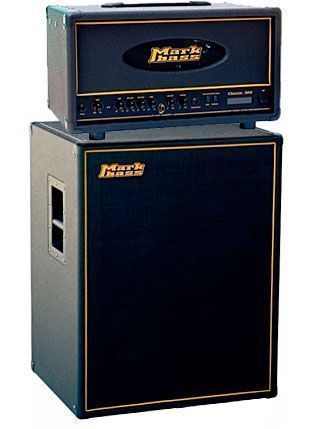
 Classic 300
A perfect example of how efficient it can be to combine tradition with technology. The heart of this head is its tubes. Its brain is the microprocessor. The tubes warm up the sound and give it its vintage, aged, warm flavor. The futuristic microprocessor is conceptually its antithesis, allowing excellent configuration and customization of the sound, as well as warning us when a tube needs replacing. 300 W of bass power.
Classic 104
The defining feature of these sealed cabinets is their neodymium speakers, specially made for the unit's low-end needs. Once again we find Mark Bass's philosophy of bringing the present and the future together in its designs. A manageable cabinet, considering its size, that gives us all the meat we ask of it.
The Mark Bass philosophy
It's always interesting to read a little about a brand's philosophy and goals. Beyond commercial positioning, you can detect what the manufacturer intends with its products. Another matter is what we deduce for ourselves when testing the instruments or gear, and whether our view matches what the designer proposes.
Who does it want to build for? Beginners, professionals, the wealthy, those looking for the cheapest option? Is it trying to innovate, or instead to restore classic values? In short, what product line does the company offer us? Let's look for answers.
Digging into the philosophy of this Italian company, we find a clear intention: to merge the best of “classic tone” with cutting-edge technology. Few musicians or engineers are unaware of the preference for “vintage” when it comes to, for example, tubes or truly legendary amplification systems that deliver warm, thick sounds that are almost impossible to get with modern emulation circuits. That said, it is true that there are aspects of these flagship products that ought to be improved. For example, an old, superb amp that gives off unbearable heat, adds unwanted noise of all kinds, or significantly shortens tube life doesn't exactly have desirable virtues.
Markbass looks to technology for solutions to every aspect that can be improved, without sacrificing the tone and punch of the best amplifiers of the past. Personally, I think that's a smart move.
Among the highlights, besides what has been mentioned, the company itself cites its concern for a fresh, recognizable and dynamic look, and the real satisfaction (as seems obvious) not only of musicians but also of recording studios and sound engineers. They also place special emphasis on not coloring or distorting the instrument's original sound. For me this is essential, since it gives us independence with respect to the bass. In other words, I find it especially interesting that the amplifier's response is as flat as possible. As I once heard it put, a “very true sound.” In my view, the amplifier should then give us the possibility of shaping this “original” sound into whatever we need for each situation or context.
It's a tough challenge: achieving this uncolored sound while adding the brand's own character and personality. Markbass claims to have achieved it, and says it is proud to be “competing” among the best bass amplification brands in the world.
Unboxing
When I received the packages, I thought two things. The first was the “hassle” of moving such a large rig for the test bench. The second, a tremendous urge to plug in the bass and give those eight 10” speakers a real workout. A 300 W head and a cabinet that handles 1,200. (Smile) What can I tell you that you don't already know? That adrenaline rush in front of an amp as big as you is, I think, well known to everyone.
The first set of feelings I described resolved itself pleasantly. Why? Because of the manufacturer's foresight in adding sturdy wheels to the bottom of the cabinet, as well as including a hefty grip. In other words, a solid handle to pull it by. It seems like a minor detail, but planning the layout of the wheels and handle well to lighten the load is no small thing. If wheels + handle are well placed, the effort of whoever is hauling it pays off. When we're out gigging, and especially when packing up already worn out, this detail is anything but secondary.
Hooking it up
As I was setting up the rig, head on top of the cabinet, cabling and so on, I was thinking about the punch the first slap hit of the tests would deliver. I placed a chair in front of the amp. Sitting there with the bass, the head was higher than my head. I imagined my “hair being blown back” by the sound pressure that, even switched off, “the beast in question” promised.
Something I dislike about many amplifiers of this size and power is noise: the hum or little extra noises that often appear. Call me obsessive, but I hate it. Nor do I like having to play flat out all the time. Sometimes I feel like running through something I haven't mastered, that I want to improve or practice. It usually bothers me to do this kind of thing at high volume. With many of the large tube amplifiers I've tried, playing at half throttle is almost impossible. Here came my second surprise. When I switched it on, the digital display started telling me the status and warm-up of the tubes. Interesting. Right after that, with the amp now up and running, do you know what happened? Silence. That's what happened. Not the slightest noise. I thought the cabinet was badly connected or... who knows. But no: when I lifted my left hand from the fingerboard, where it had been resting on the bass until then, the sound of the strings flowed. My comment may seem exaggerated to you, but an amplifier that roars like a beast when you play yet gives you absolute silence when you stop is a great satisfaction for me. Especially in rehearsal or in the studio.
The sound
Given its extremely professional specs, this amplifier could give us plenty to talk about on a technical level. For the purists and experts, I recommend a careful read of the spec sheet, or even downloading the manual.
There you can see all the technical details of impedances, frequency responses, sensitivity, supported connection types (professional in any case), etc. In my case, I focused more on the privilege of being able to try this rig personally. A cabinet and head with performance and a price like this (approx. €4,440) don't come within reach every day. What interested me were the real-world details of the test: the sound, the noise, the heat of the power supply, the versatility of the EQ, and so on.
I have to sum up the tests in a single word (two for a certain well-known bullfighter): impressive. Astonishing power. As you all know, uncontrolled force is of little use. There are some (quite a few) guitar or bass amplifiers with plenty of power but that are uncontrolled, muddy or not at all flexible. For me, the most valuable things about this rig were three:
First, its professional behavior when it comes to tonal versatility. I mean the precision of its controls, EQ and gain. We took the bass sound from one extreme to the other: round, dark, creamy, biting, shrill, neutral. There wasn't a corner of the rainbow I couldn't find in this pair (cabinet + head).
Second, the power. Obviously this is a professional rig that requires suitable spaces. Although it can work at moderate volumes, this is heavy artillery. For those who need professional power with control, this is a perfect tool.
Third, character, punch and strength. Playing through this amplifier, we get something quite hard to achieve (you need a good bass too): lows with great punch and body, yet perfectly defined. I tested this amp with a five-string. Even the open fifth string was “under control,” without any compression at all.
I could talk about more of its charms, such as its portability or attractive design, but I think the photos and previous comments have already covered those aspects.
Head controls and curiosities
Although I'm not particularly fond of the “manual rundown” in test reviews, given the quality of the rig we'll take a quick look at its rear and front panels. The goal is to sum up its control options at a glance.
Front panel
On this panel you'll find the following tools/options
a) ¼ jack input
b) Gain control
c) Four-band equalizer
d) Line out control
e) Master
f) Footswitch input
g) BIAS switch. Changes the tubes' operating mode from “high fidelity mode” to “long tube life” mode.
h) Standby
i) LCD display. Shows various data the microprocessor is able to collect: numerical information in tube test mode, a digital VU meter, etc.
j) On/off switch
Rear panel
On the rear panel of the Classic 300 you'll find the usual connection options (speaker/cabinet output, line out, effects send and return, etc.) as well as some special features, such as its tuner output, pre/post EQ switch, “TEST MODE” selector for checking the tubes via the microprocessor, ground lift switch (useful for compensating possible hum related to the grounds of external equipment on the line output), and its RS-232 port, which lets the authorized service center connect and check for possible faults via a PC.
Conclusions
I did the test with a Fernandes Gravity Deluxe five-string bass. That means a bassist would have to invest a total of roughly €5,700 to get the sound I got in this ISP bench test. How to sum it up? I was left drooling. A cannon of a rig. Given the money involved, it's clear that it's within reach of only a few. This is a fully professional, high-end rig.
I think it's important to stress that power isn't everything. Many beginners crave enormous amplifiers that blow your hair back. Over time you discover that quality and control are the top priorities. Even so, achieving such a round, compact and lavish sound has a lot to do with the tube design, the power, the construction of the cabinet and all those extremely well-crafted details. After the tests, I believe the manufacturer's goal was well achieved. It fuses the energetic warmth of a hard-hitting tube amp with cutting-edge technology, capable even of testing our tubes to give us “info” about their condition at any moment.
Setting aside the effort it may take to save up all this money, and considering that this is basically a rig for professionals, I have to conclude that it is a magnificent head and cabinet combo. It certainly deserves all my praise. Beastly.
