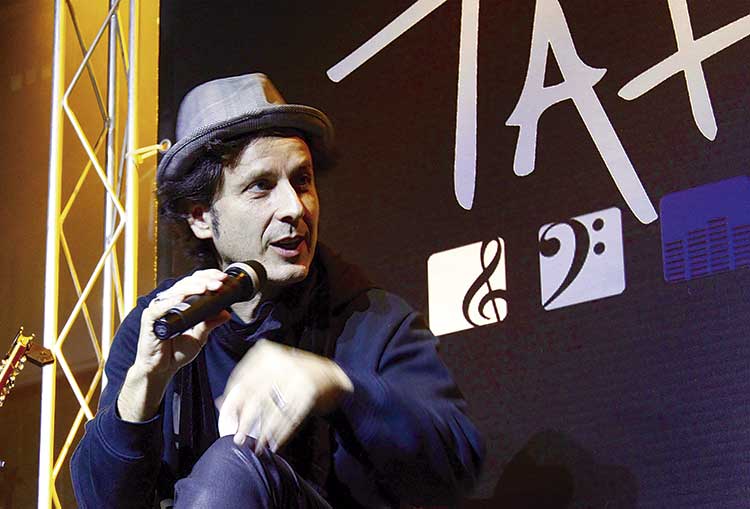
On October 12, in the Joaquín Sabina Hall of the TAF Official School of Modern Music www.TAF.es a surprise awaited us. It wasn't a conventional master class or clinic, but rather a conversation between Coti and the more than 200 attendees, in a tone that could be described just like his latest album, "Cercanías y Confidencias" (Closeness and Confidences).
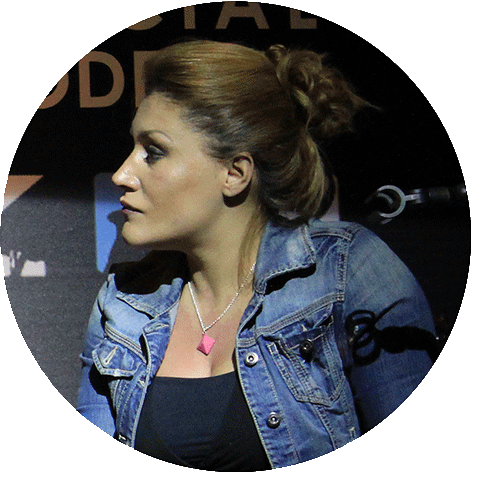 The interview, conducted by Vanessa Blanco, guided us through the work of Coti who, accompanied by his guitar, gradually unfolded his story, his reflections, his anecdotes and his life as a producer and artist, but above all as a musician and songwriter, passing on the maxim that in music the only thing that counts is study and daily effort. The simplicity and warmth with which the afternoon unfolded made us feel as if we were in our own living room.
Coti told us about his songs, the ones he has performed and the ones he has written for other artists, and he told us how he wrote them. But most importantly, he talked about the creative process, defined "as a whole" that feeds on everything we see, read and hear and on what we have created before: "It doesn't matter if we write 20 songs, or invent metaphors that end up in a drawer; doing all that is what exercises us and leads us to write an interesting song."
That "whole" is "a mix of things that nourish us with emotional and cultural content, but to compose, the most important thing is preparation, study and writing from sincerity." Studying composition techniques, knowing harmony, chords and modulations, and analyzing works we like to understand how they develop and what makes us like them gives us the means to capture emotional content in a song.
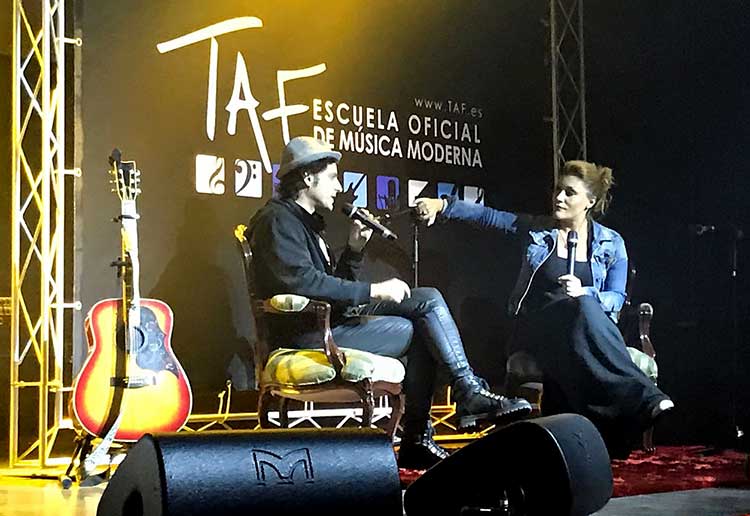
For him, "Tango was a subject of analysis, as was studying different poets and writers to understand how they make rhymes, metaphors and comparisons." His words make it clear that composing "isn't a second of inspiration, nor do muses intervene; the fundamental pillar of composing is the study of harmony." Assuming that some of the attendees weren't musicians, he showed us different voicings of the same chord that suggested different melodies, completely changing the atmosphere, and as an example he played part of his song "Si te vas" in A major and A minor.
Creative moments can be moments of great joy but also of great frustration: "creative moments are tortuous because often you want to achieve something and you're not getting there; you have to work hard so that the idea we have in our head resembles what we put on paper. It's a process of back and forth, because when we compose we have the power to make any decision, and that's the hardest part." And so we come back to the starting point about work: you can write many songs that end up being rehearsals for another one yet to be written, which is the synthesis of all the previous ones, and that's why it's important for a musician or writer to know how "to tell the difference between sketches and what's really worthwhile."
A work must have those different levels, so that it raises doubts, moves people, provokes, makes you think and, above all, can be universal
Coti writes for many established artists and believes that "the song is a living genre where every performer, and even every listener, gives it a connotation." "Songs have to have different levels of understanding." A work must have those different levels, so that it raises doubts, moves people, provokes, makes you think and, above all, can be universal. Many of his songs have verses that make us wonder, what did he mean? And that question is what he wants to provoke when someone listens to his songs: "I like double and triple meanings so everyone can give it their own meaning," and he showed us this by performing "Nada fue un error," one of his most popular songs.
"Not everyone who starts studying music has to become a musician; studying music has a very positive effect on people's development"
Coti plays several instruments, although the one he feels is an extension of himself is the guitar. As a child he played around with music and instruments, but it wasn't until he was 10 that he began formal training, where his teacher played a very important role. When you learn to play an instrument you go through moments of frustration because the process is slow, and there's no other way, since besides the musical and technical concepts you also have to develop physical agility and coordination that can only be achieved through repetition (8 hours doing scales, he tells us). "Instant methods for learning to play an instrument in 3 months are a lie." In music, "Results are never immediate. There are few things you get only with time, and they're the most valuable things. The only way to learn to play an instrument is through time, study, dedication and sacrifice." The audience, mostly TAF students, musicians and parents, smiled, because that's the only path: a teacher at the school must teach concepts in the most enjoyable way possible and boost motivation, but the result is only achieved through dedication.
It's important to keep in mind that studying music doesn't have to have a single goal: "Not everyone who starts studying music has to become a musician; studying music has a very positive effect on people's development." Studying music helps us develop creativity and emotional intelligence as well as cognitive abilities: memory, attention, language, perception and problem solving. Studying music can open up various professional fields to us, but more importantly, there's our personal development and the benefits it brings us. Coti tells us how important it is to teach, through schools, parents and teachers, to "admire not only the result but the journey; unfortunately people think more about the result and the finish line. Our goal should be to follow the process of learning, enjoy it and share it." You have to go step by step, but even though the process is long, sometimes it's not so slow if you devote a little time to it every day. "When we're children we're all talented and creative; the important thing is to be able to play with music and keep asking for more. Playing with music should be a philosophy."
"Technique on its own is useless; technique must be a means of expression, because if it's empty it conveys nothing to anyone"
As a musician, Coti explains that music is understood on 2 levels: on the one hand, the sensory level, in terms of sensitivity, what a song conveys and says to us; and on the other, the technical side that is learned: recognizing the instruments playing, whether they're electronic or acoustic, the registers, chords, scale degrees, etc.... And by understanding music on these 2 levels we realize that "Technique on its own is useless; technique must be a means of expression, because if it's empty it conveys nothing to anyone." In music, simplicity often conveys and says more than complex things: "I like simplicity written by complex songwriters or poets." And leaving the audience to process and interpret his words, he launched into a tango that led us to the theme of love and heartbreak, so often used in music because "it's a feeling that unites all human beings, and that's why it's the most common theme in popular song, whether Rock, Flamenco, Bossa, Tango…"

Besides producing other artists, Coti produces his own records: "the producer's role on a record is so important that I don't delegate it to anyone." But sometimes it's hard to define a producer's job, because their responsibility in the project can vary depending on the artist/band and on their own personal background: some producers are musicians and therefore take more part in music-related decisions, while other producers are great engineers and make decisions about the sound. Sometimes you come across singers who aren't musicians, and it's the producer who makes decisions about keys, tempos and instrument arrangements. "The producer could be defined as the coach of a team who, in theory, has to bring out the best and can do a lot with little, or nothing with a lot." As a producer, Coti is more hands-on with the music, and the musician defines himself as "an omnipresent producer; I take part in the songwriting or even record instruments."
"the producer's role on a record is so important that I don't delegate it to anyone"
As an artist, our guest tells us it's just like any other job: it has its good and bad sides, but the important thing is to focus on the positive: "you have to focus your energy on communicating, on touching people and sharing music, and not on fears and frustrations."
Coti is currently on a solo acoustic tour presenting "Cercanías y Confidencias" in theaters all over Spain, under the management of Krea Eventos. On stage he plays several instruments (piano, ukulele, harmonica, bandoneon and guitar) and gives us his essence as a songwriter, creating an intimate atmosphere.
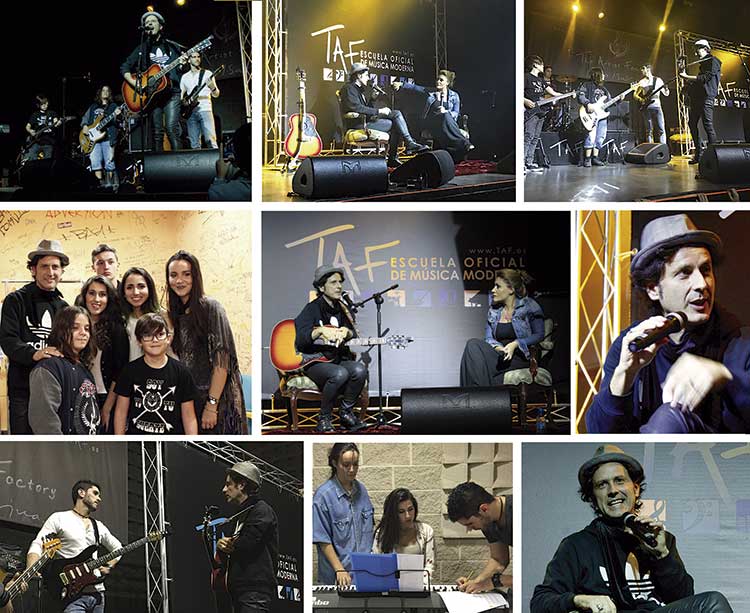
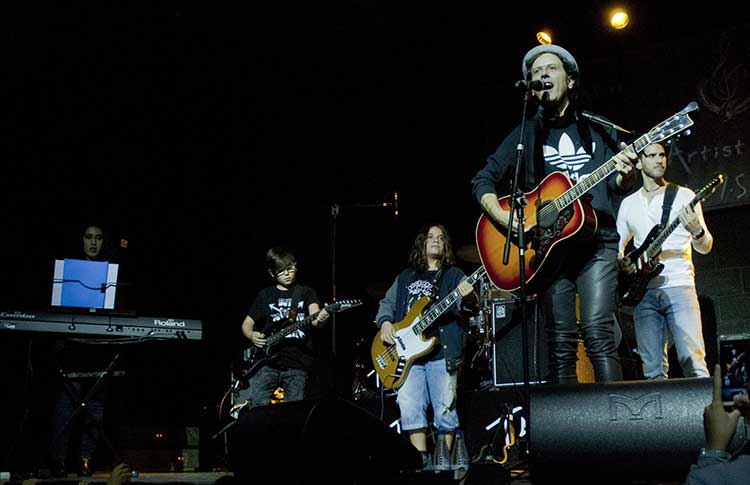
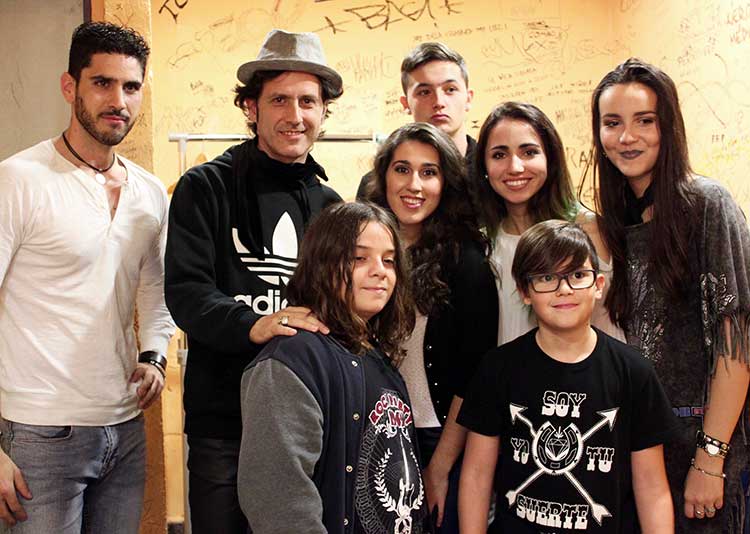
To close the event, it took only a couple of days of rehearsal for the combo, directed by renowned guitarist César Gálvez and made up of TAF students, to be able to accompany Coti on the song "Si te vas." It was a high point in which the students rose to the occasion, showed ease on stage, and you could tell they were enjoying the moment. As the voice of the afternoon said, "Everything is small steps that add up, sometimes imperceptible steps that in the long run make a path."
Coti was very approachable with the students and gave them a lot of confidence with his words and by rehearsing with them
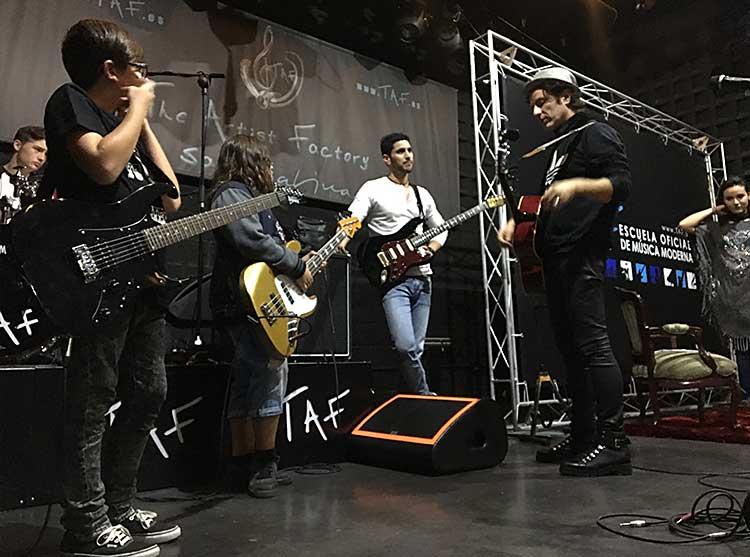
Earlier in the afternoon, the combo students had sound-checked with Coti. During the check you could sense the students' nerves because, although it was a familiar stage, they had to apply everything they had learned, both musically and in terms of stage presence, in front of Coti. What made them most tense was not knowing how to respond to a request, but at all times they knew how to respond both to Coti's requests and to the sound engineer's, because at TAF they're also taught what goes on behind a live show. Coti was very approachable with the students and gave them a lot of confidence with his words and by rehearsing with them. When they finished the sound check and rehearsal, the students realized they were doing the same thing they do in class with their teacher and that they were able to speak the same language because they had prepared beforehand.
The attendees left happy and you could sense the emotion. Surely they had heard many of these things from their teachers before, but Coti gave us an afternoon of truths and motivation, reaching the conclusion that the path is the same for everyone: there's no one brilliant who doesn't have many hours of study and practice behind them, born of motivation. And like the title of one of his songs, we would have liked to keep listening to him for "50 horas" (50 hours).
Combo
Directed by César Gálvez
Drums: Ethan Otermin
Bass: Lucas Menéndez
Guitar: Alejandro Pedrera
Backing vocals: Jimena and Montse Vilaplana
* Photos: Patricia Valdivieso


