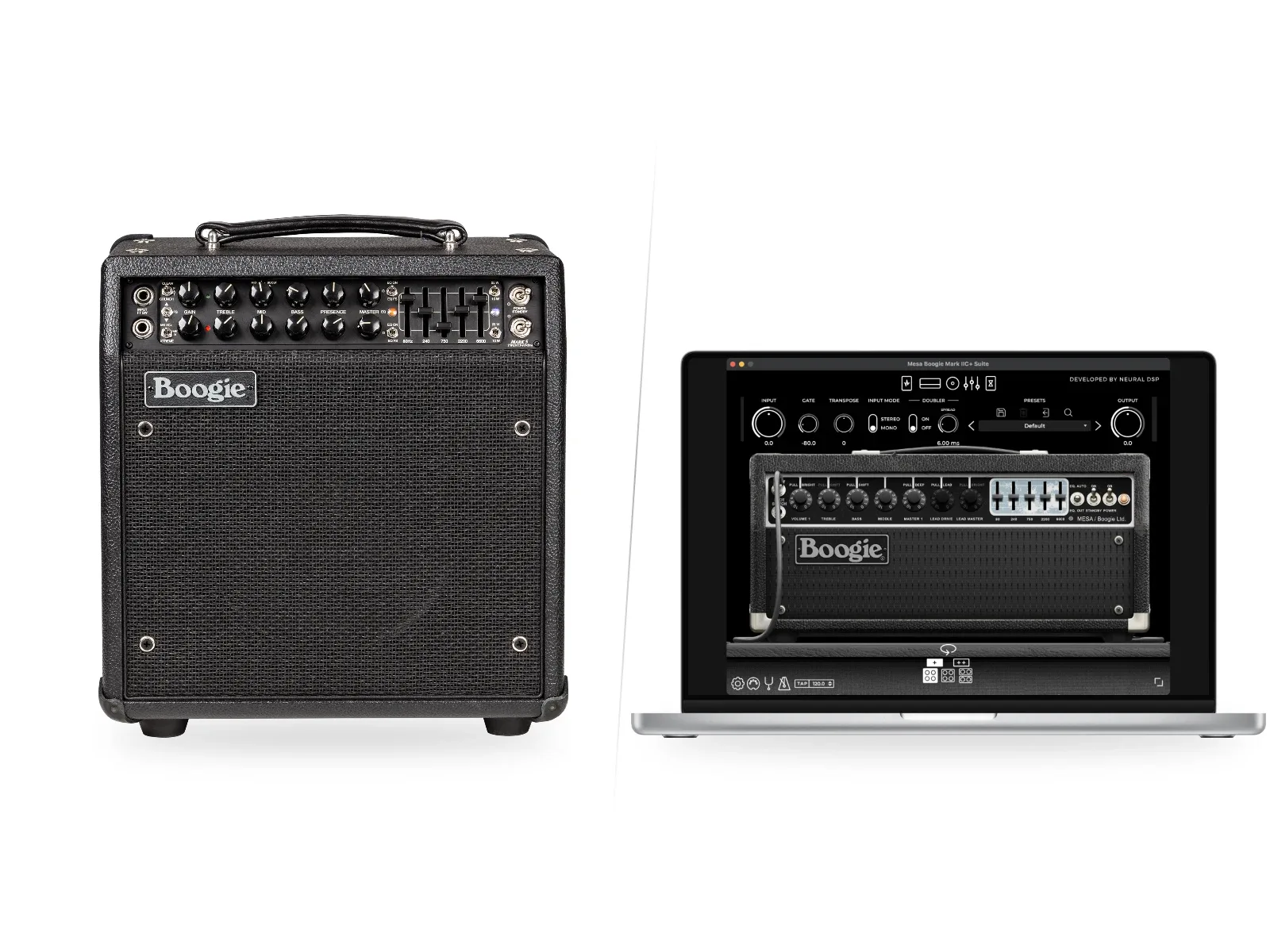
It is the question almost every guitarist who plays at home ends up asking: a good valve combo or a computer running amp simulators? Until recently the answer came down mostly to budget. Today another factor weighs just as much, if not more: sounding great at living-room volume, or in silence on headphones, without the neighbours knocking on the door. We look at both routes with specific gear, indicative prices for November 2026 and what is worth knowing before spending a single euro.
The problem: valves want volume
A valve amplifier sounds the way it does when it is working: once the power stage starts to saturate, the speaker really moves air and the room gives part of that sound back. And 20 W of valve power, however modest it looks on paper, is enough to keep up with a drummer in the rehearsal room. In a flat, that sweet spot arrives long before the rest of the building is happy about it.
Manufacturers have responded with three solutions worth telling apart: power reduction (the amp is still all-valve but delivers fewer watts), cabinet-emulated outputs (for headphones or for recording without a microphone) and the option to disconnect the speaker with an internal load so you can play in silence. The computer offers something else: modelling all of that behaviour in software and listening on headphones or monitors at whatever volume you like.
Option A: valve combos designed for home
These four combos cover everything from classic British crunch to high gain, and all of them have some way of bringing the volume down without losing their character. Prices are those of European online retailers at the time of writing (VAT included) and may vary.
Marshall Origin20 Combo
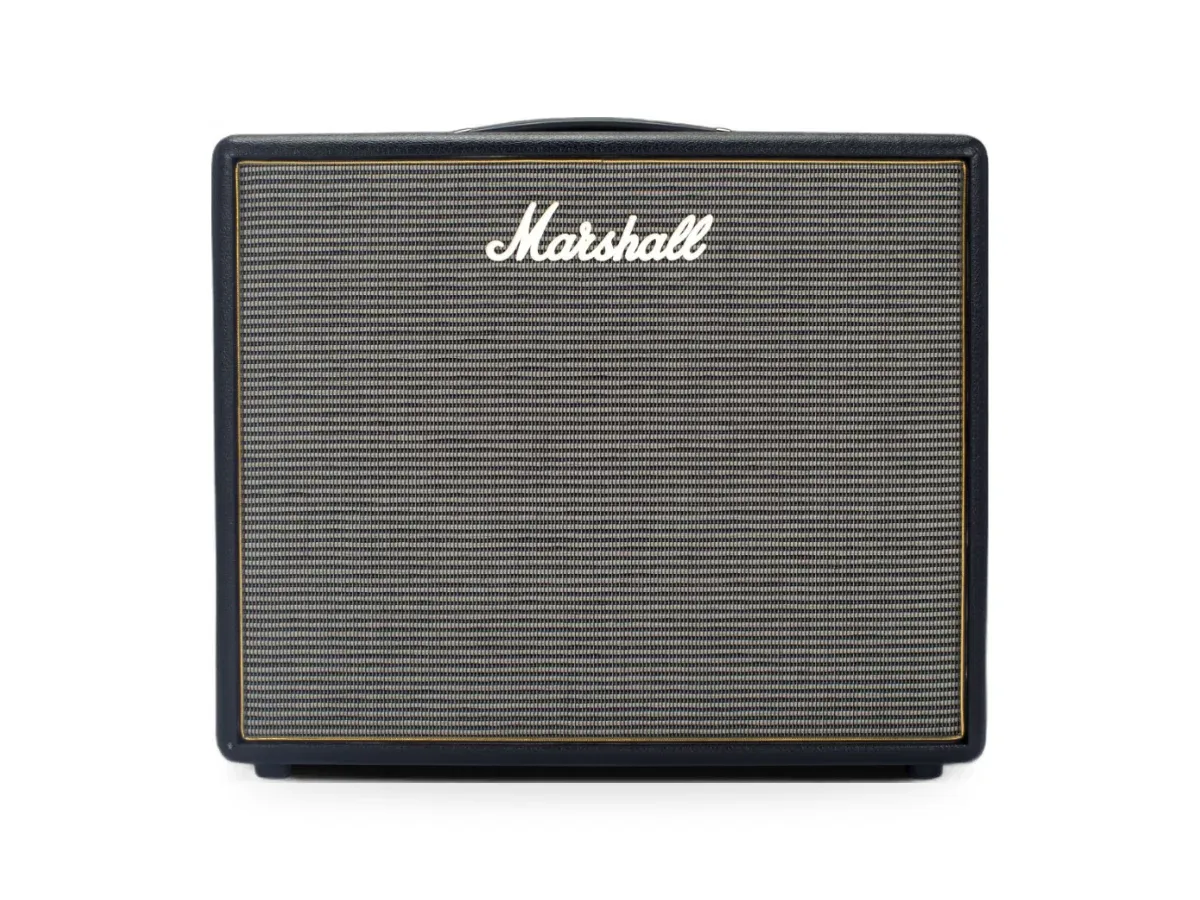
The entry point to Marshall's Plexi sound: a single channel with two EL34s, a 10" Celestion VT-Junior speaker and a Tilt control that blends the "normal" and "high treble" inputs of the classic 1959. Its trump card for home use is Powerstem, which takes it from 20 W down to around 3 W or 0.5 W without changing the amp's character. It has an effects loop, a footswitchable boost (footswitch included) and a DI output. What it lacks is a headphone output, so total silence is not its strong point. It weighs 13.9 kg. Indicative price: around €540.
Marshall DSL20CR
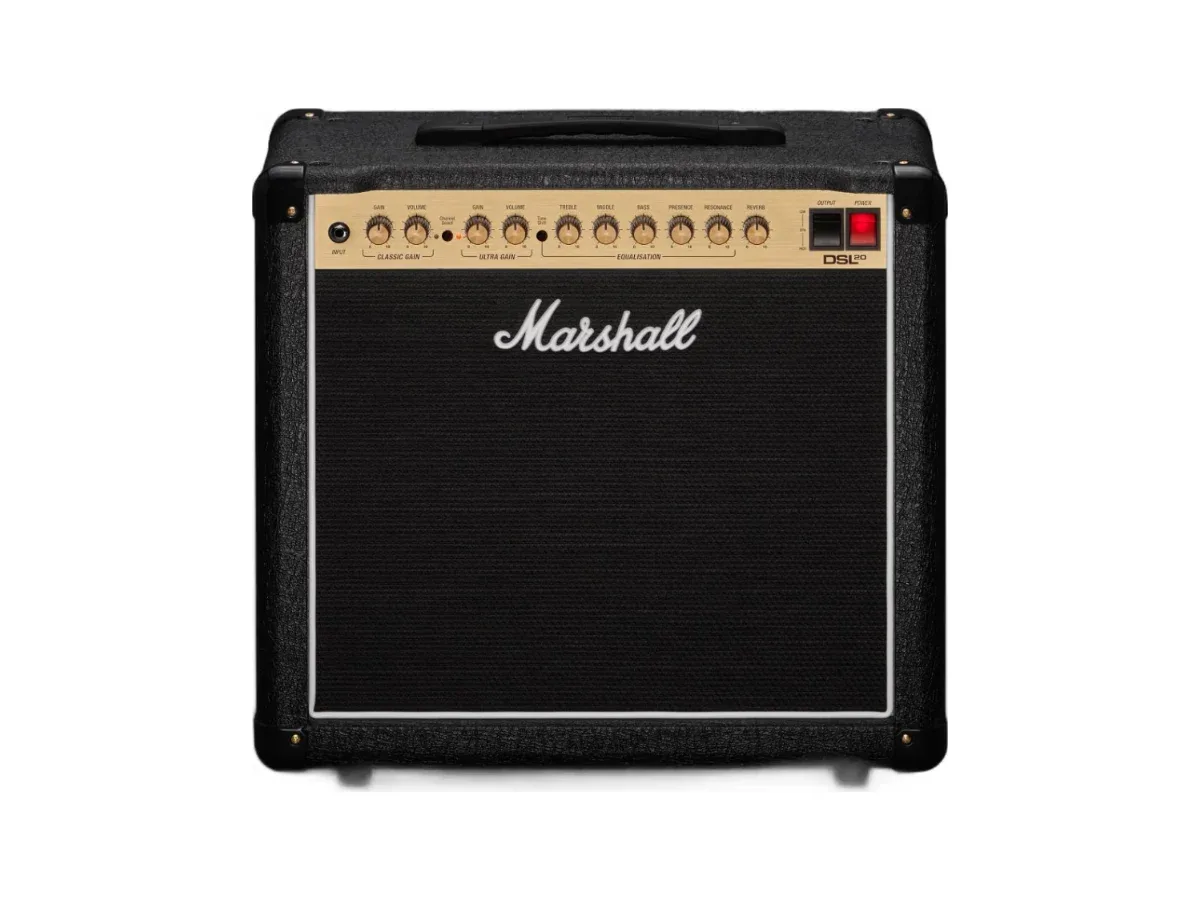
Two channels (Classic Gain and Ultra Gain), digital reverb, a 12" Celestion Seventy-80 and two EL34s with a low-power mode that halves the output (to around 10 W). The key feature for the home player is its Emulated Out with Softube cabinet simulation: a mini-jack output that works both for headphones and for sending the signal straight to an audio interface to record without a microphone. Footswitch included; it weighs 17 kg. Indicative price: €540–550.
ENGL Ironball E600 Combo
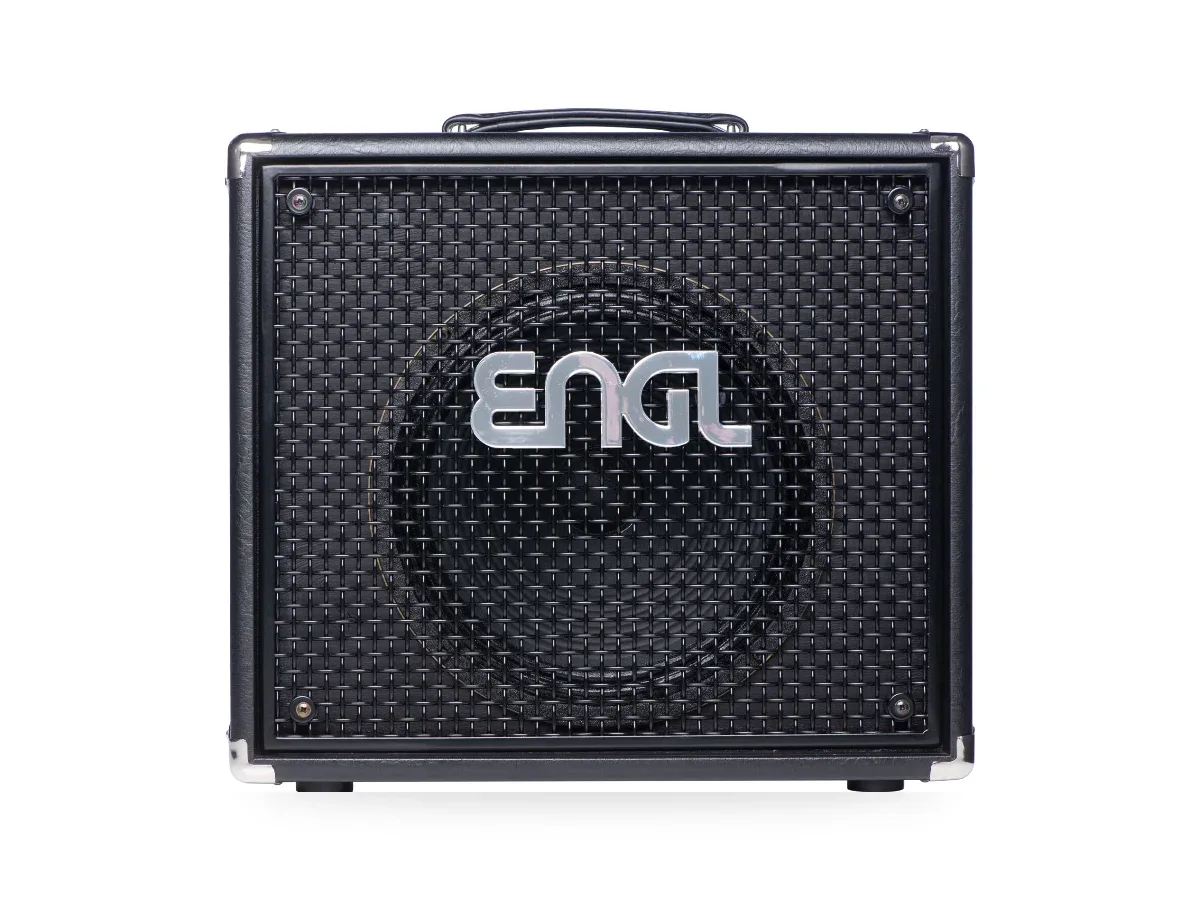
Made in Germany, with two EL84s, a 12" Celestion Vintage 30 and two channels with independent gain, reverb and an effects loop. Its built-in Power Soak takes the output from 20 W down to 5 W or 1 W, and it also offers a headphone output and a balanced line output with cabinet emulation, so you can play in silence or record directly. It is the most complete option in its price range for anyone after high gain without giving up full-bodied cleans. Indicative price: €1,050–1,110.
Mesa/Boogie Mark Five:25 Combo
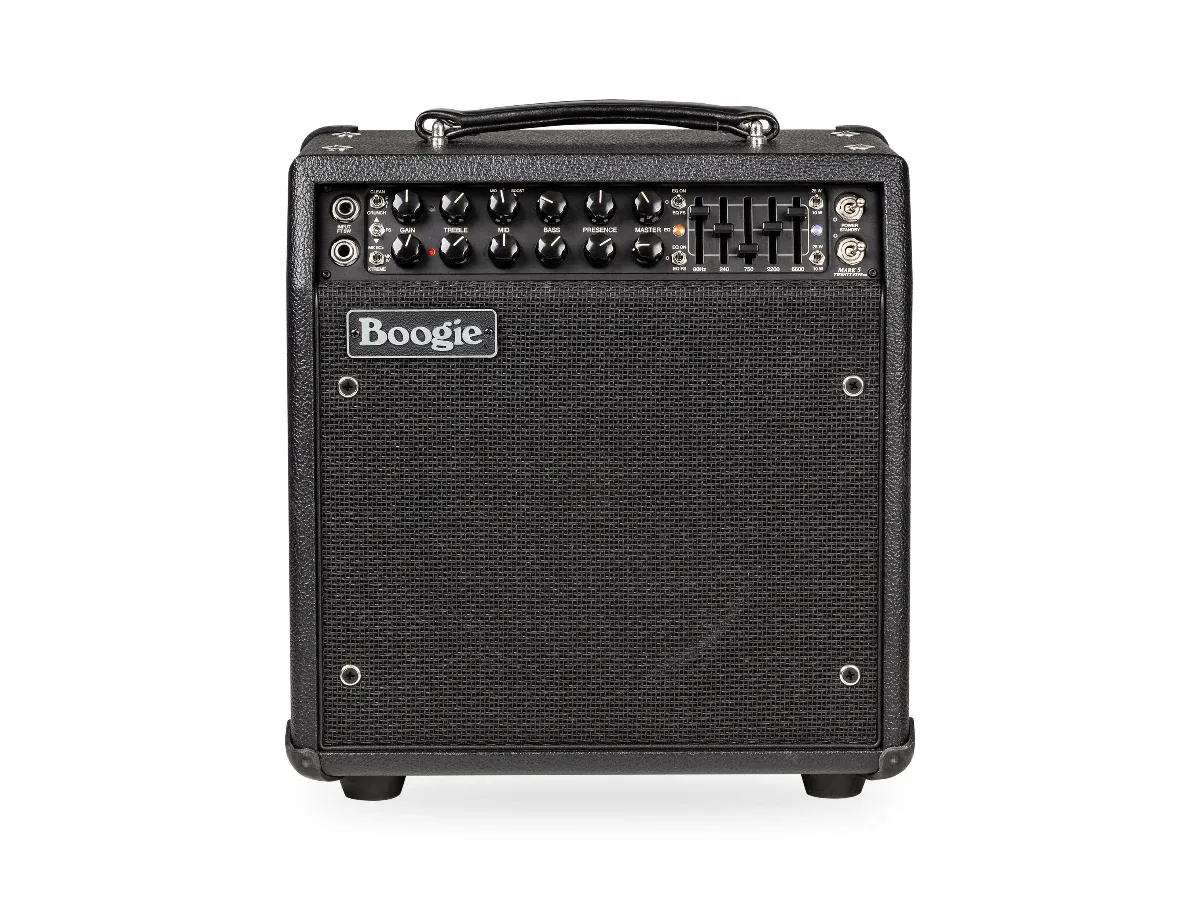
The Mark series squeezed into 10.9 kg: two channels with three modes each (Clean, Fat and Crunch; Mark IIC+, Mark IV and Xtreme), a five-band graphic EQ, spring reverb, two EL84s and a 10" Celestion G10 Creamback. Power is selectable per channel (10 or 25 W) and, above all, it features CabClone: open- or closed-back cabinet simulation with an internal load, a headphone output and a speaker switch for playing or recording in complete silence. It is by far the most expensive: official price €2,899, and around €2,550–2,650 from online retailers.
Option B: the virtual studio
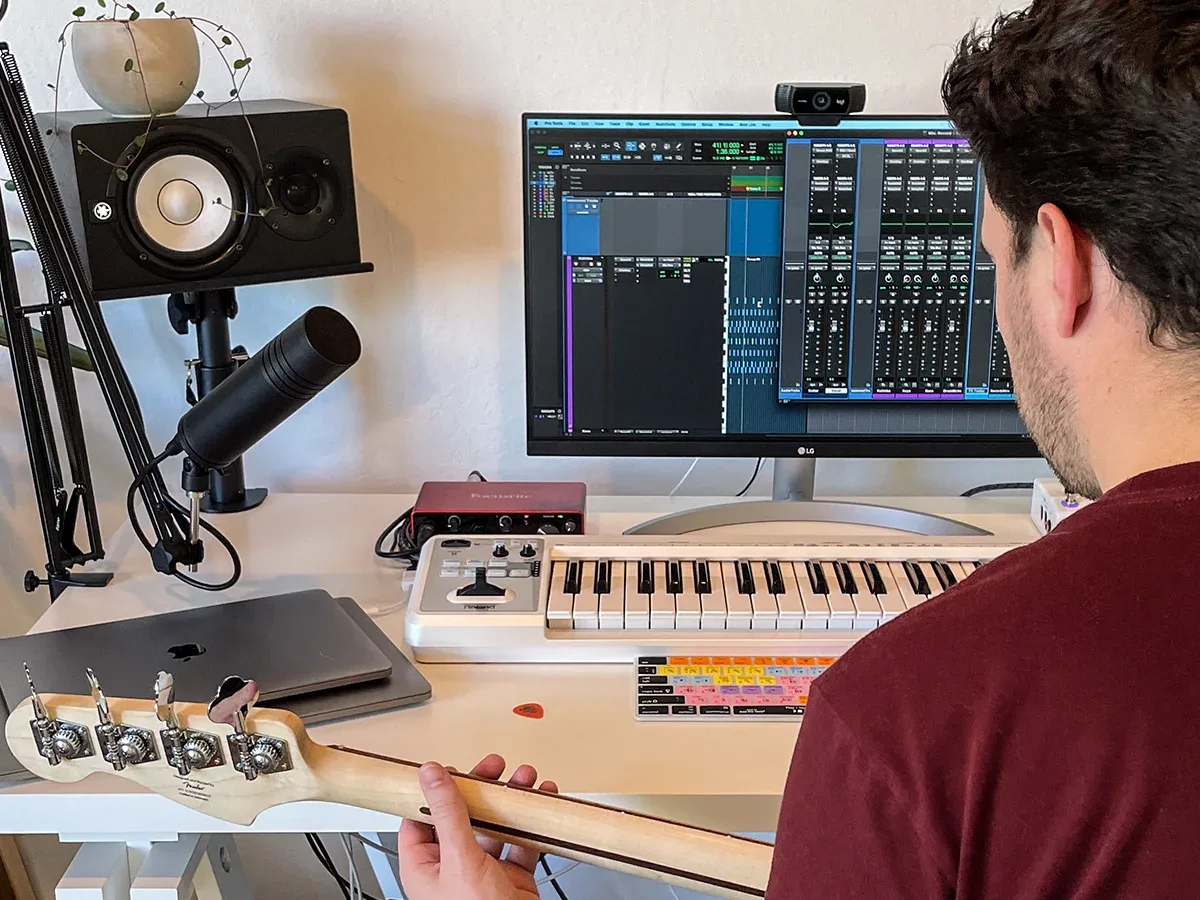
The alternative is to turn the computer into the amplifier. The signal chain is simple:
- Guitar → instrument (Hi-Z) input on an audio interface.
- Interface → computer, where a DAW (or the plugin's standalone version) loads the amp simulator.
- Output → headphones or studio monitors, at whatever volume the time of day and the neighbours allow.
The tricky part is latency: the delay between picking a string and hearing the sound. For a natural feel it pays to work with a low buffer (64 or 128 samples at 48 kHz) and to monitor through the plugin itself; if you notice a delay, lower the buffer or close other processes. With a current computer and a decent interface, most players will not notice any difference from an amp.
Pro Tools Intro: the free DAW
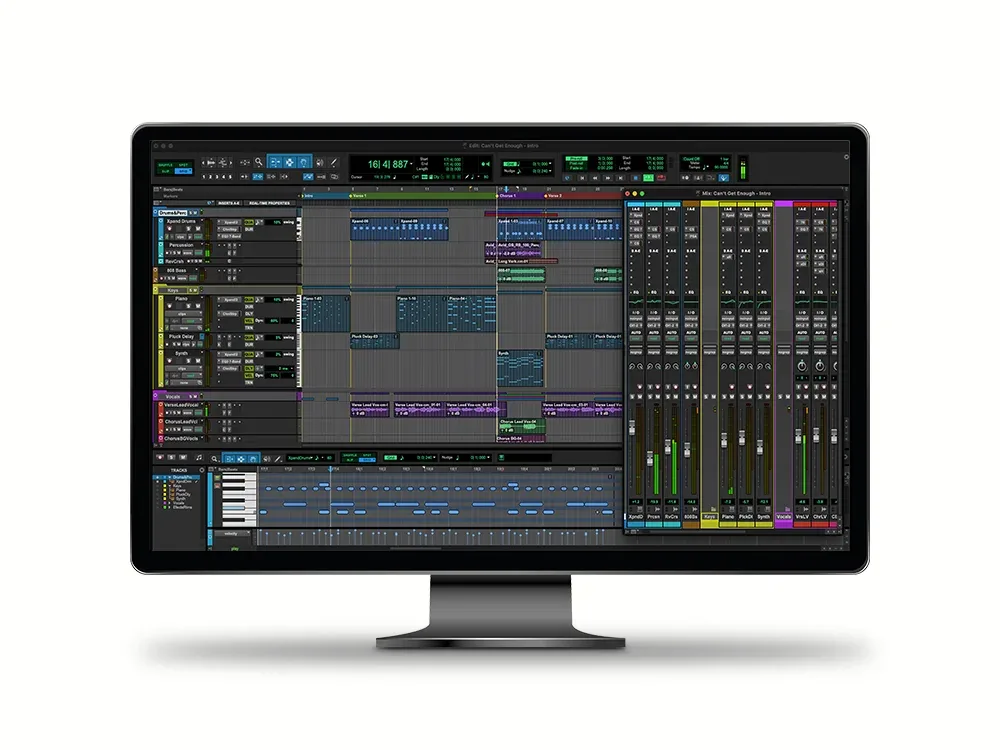
Avid offers Pro Tools Intro free of charge: up to 8 audio tracks, 8 instrument tracks and 8 MIDI tracks, 4 aux tracks, 4 simultaneous inputs and 36 bundled plugins. For recording guitars, a vocal and a backing track it is more than enough, and everything you learn carries over to the paid versions, the standard in many professional studios.
UAD Lion '68 Super Lead
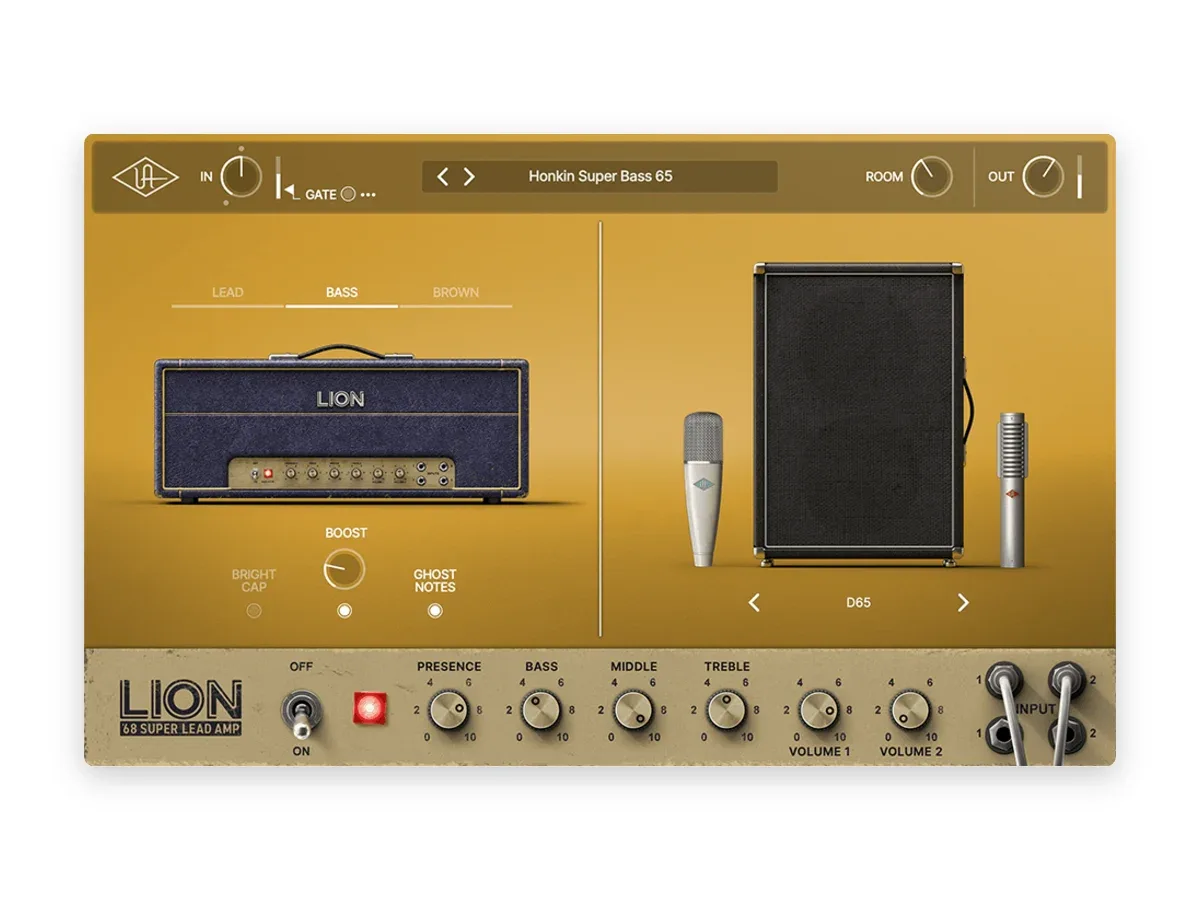
Universal Audio's recreation of a 1968 Marshall Super Lead, the sound of British rock from the late sixties and seventies. It is a native plugin: it runs on the computer's processor with any interface, with no UA hardware required. Its list price is $299, but UA discounts it very often; at the time of writing it is $29 in its online store. Note: do not confuse it with the hardware pedal of the same name, or with the UAD-2 versions of the Plexi, which do require Universal Audio hardware.
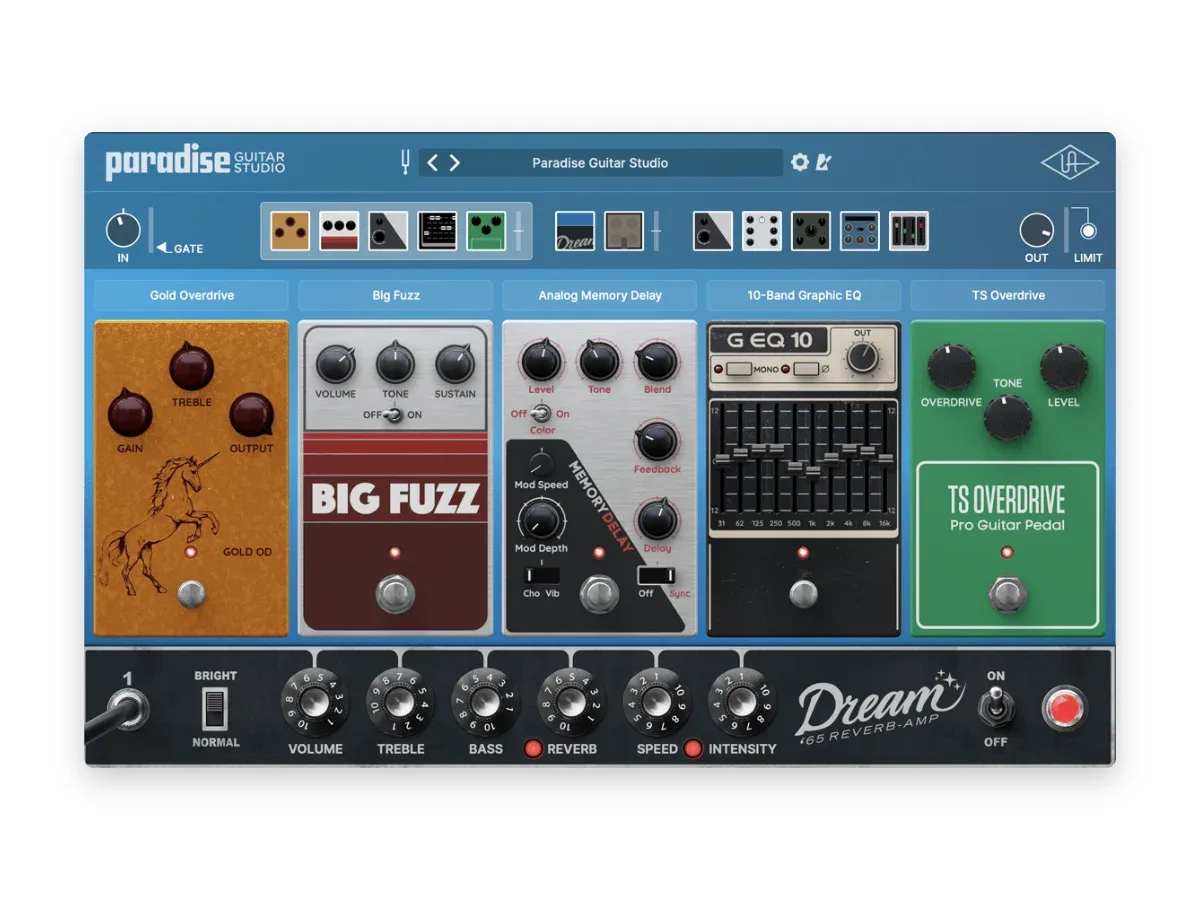
UA Paradise Guitar Studio
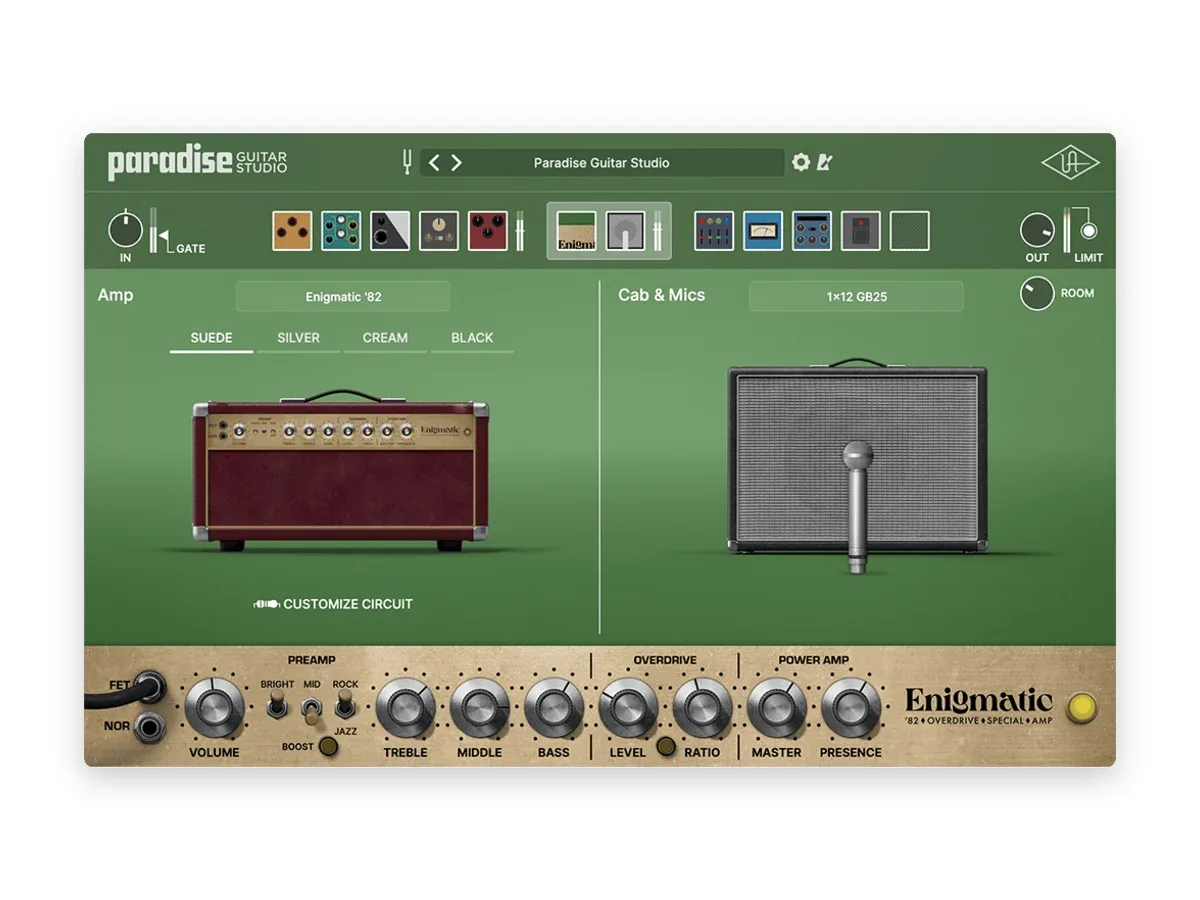
A complete guitar environment: amplifiers (including variants of the Lion '68 and the Fender-inspired Showtime '64), pedals, cabinets and microphones in a single window. It is also native, needs no UA hardware and is included in the UAD Spark subscription. List price $199, with frequent offers; right now, $99 in UA's store.
Neural DSP Mesa Boogie Mark IIC+ Suite
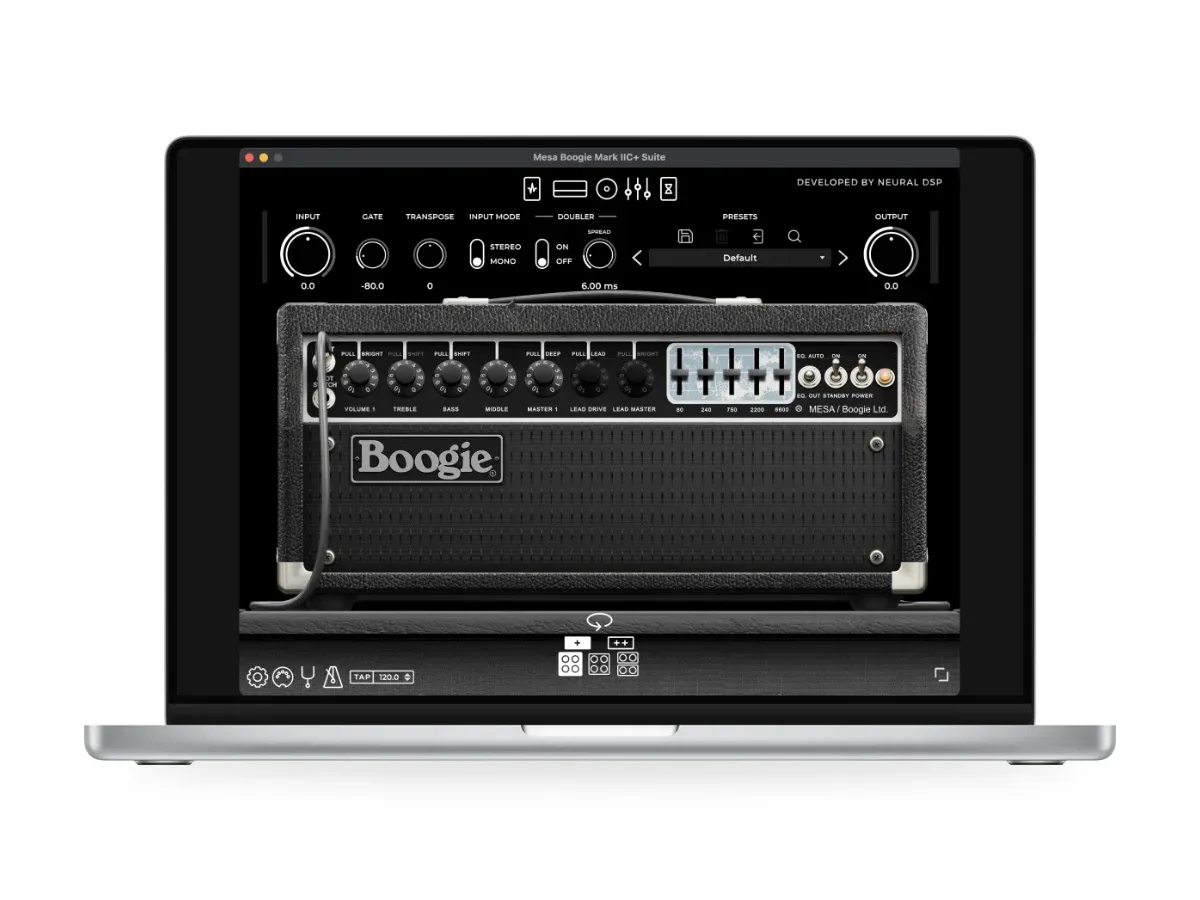
Developed together with Mesa/Boogie, it recreates the Mark IIC+ and the IIC++ modification, with a graphic EQ and a cabinet module offering hundreds of impulse responses, three cabinets and ten virtual microphones, plus the option to load your own IRs. It works as a plugin (VST, AU, AAX) or as a standalone application, with no DAW needed, which makes it ideal for practice. Price: €119 ($99).
Neural DSP Soldano SLO-100 X
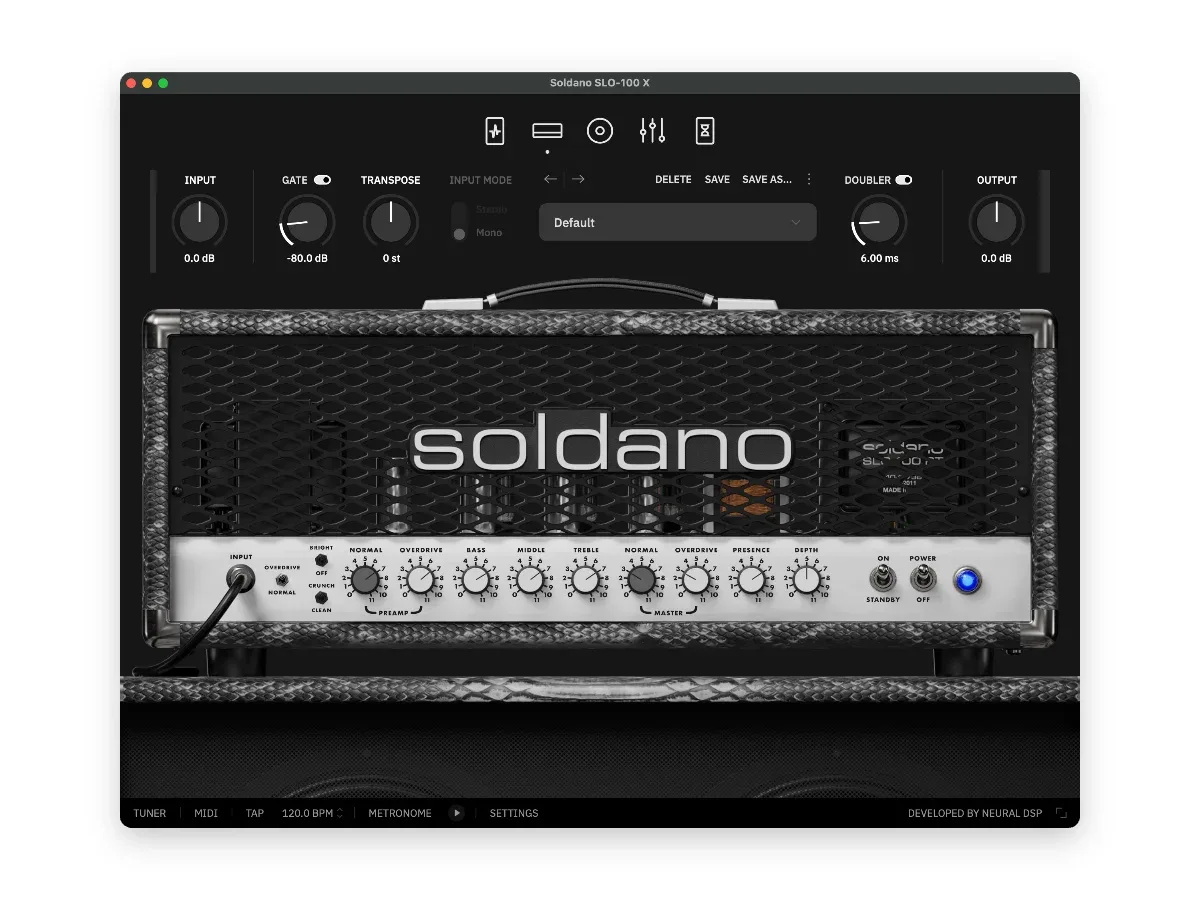
The 2024 overhaul of the plugin based on the Soldano SLO-100, the amplifier that defined American high gain. Two channels, four pre-effects, a graphic EQ, cabinet simulation, transpose, doubler, tuner and metronome. It also runs in standalone mode. Price: €99.
What each route costs
| Set-up | What it includes | Indicative cost |
|---|---|---|
| Basic virtual studio | An interface you already own + Pro Tools Intro + Lion '68 | From around €30 |
| Complete virtual studio | Pro Tools Intro + Paradise Guitar Studio + one Neural DSP plugin | €200–250 |
| Entry-level combo | Marshall Origin20 or DSL20CR | Around €540–550 |
| Mid-to-high-end combo | ENGL Ironball E600 | Around €1,050–1,110 |
| Premium combo | Mesa/Boogie Mark Five:25 | Around €2,550–2,900 |
Combo or computer: head to head
| Valve combo | Computer + simulators | |
|---|---|---|
| Feel when playing | Moving air, physical response, feedback | Very close on headphones; depends on latency |
| Volume at home | Limited even with power reduction; silence only on some models | Total: from zero to as loud as you like |
| Range of sounds | That of the amp | Dozens of amps, pedals, cabinets and microphones |
| Recording | Microphone or emulated output | Direct, and you can change the amp afterwards |
| Rehearsals and gigs | Ready to play with a band | Needs a computer, interface and PA or monitors |
| Investment | From €540 to almost €2,900 | From €0–30 if you already own an interface |
Recording a real amp without a microphone
Choosing a combo does not mean giving up on recording at home. Miking an amp is still the benchmark (a dynamic mic close to the grille, slightly off the centre of the cone), but it means turning the volume up. The alternative is emulated outputs:
- Marshall DSL20CR: Emulated Out with Softube simulation, usable for headphones and for recording.
- ENGL Ironball E600: balanced line output with cabinet emulation and a headphone output.
- Mesa/Boogie Mark Five:25: CabClone with an internal load; you can disconnect the speaker and record in complete silence.
- Marshall Origin20: DI output and power reduction down to 0.5 W, but no headphone output; to record in silence you would need to add an external load or IR box.
Our recommendation
To get started, the logical order is the virtual studio first: an interface with an instrument input, Pro Tools Intro and one or two simulators deliver professional-quality sound on headphones, let you record from day one and cost a fraction of a good combo. The valve amp comes later, once rehearsals and gigs arrive: that is where the physical feel and independence from the computer still make the difference. And if you do choose an amp, make sure it has an emulated output or a silent mode: that is what lets it live happily in a flat.
Manufacturers' websites
- Marshall Origin20 Combo
- Marshall DSL20CR
- ENGL Ironball E600 Combo
- Mesa/Boogie Mark Five:25 Combo
- Avid Pro Tools Intro
- Universal Audio UAD Lion '68 Super Lead Amp
- Universal Audio Paradise Guitar Studio
- Neural DSP Mesa Boogie Mark IIC+ Suite
- Neural DSP Soldano SLO-100 X
- Celestion (speakers mentioned)
- Softube (emulation in Marshall's Emulated Out)
Leer en español: Amplis de válvulas o plugins: sonido premium sin molestar a los vecinos
Photos: © Marshall, ENGL, Mesa/Boogie, Avid, Universal Audio and Neural DSP. Indicative prices checked in November 2026 at European online retailers and on manufacturers' websites.